



Introduction: The Growing Scrutiny of Global Arms Supply Chains
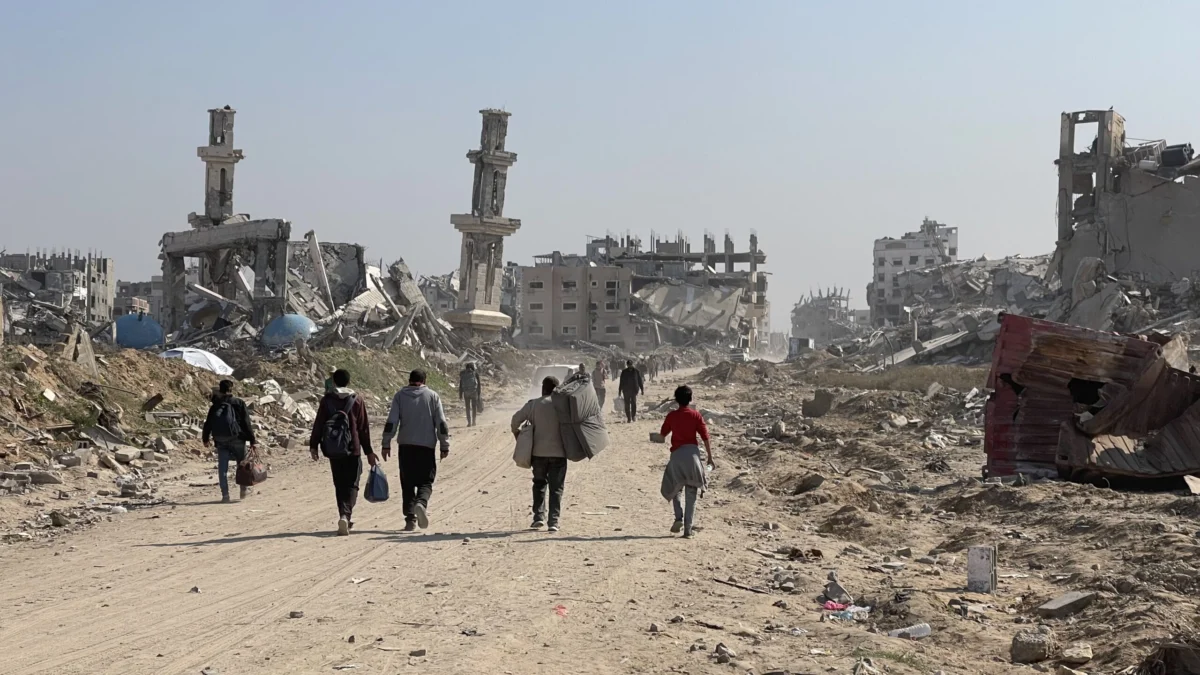
As the humanitarian crisis in the Gaza Strip enters a devastating new phase, the international community is increasingly scrutinizing the role of global supply chains in the ongoing conflict. A landmark report released this week by Amnesty International has placed India under the spotlight, alleging that the country’s continued export of military-grade components to Israel may constitute a breach of international law. The rights group asserts that these exports risk rendering India complicit in what many international observers and human rights organizations have characterized as a genocide in Gaza.
The report serves as a stark reminder of the "enforcement gap" at the heart of international humanitarian law. While various nations have moved to restrict or halt defense cooperation with Israel, India has maintained—and in some sectors, deepened—its strategic defense partnership with the Israeli state. This divergence between India’s geopolitical trajectory and the growing consensus among human rights monitors highlights a critical tension: the responsibility of sovereign states to regulate private military industries in the face of mass-atrocity crimes.
The Core Allegations: Material Support for Conflict
Amnesty International’s investigation, which synthesized public trade data and corporate export manifests, paints a disturbing picture of the scale of Indian material support for the Israel Defense Forces (IDF). Despite global warnings regarding the commission of war crimes and crimes against humanity, Indian corporate entities have consistently facilitated the flow of hardware essential to the conflict.
The report highlights that the Indian government has failed to implement robust regulatory frameworks to oversee these private arms exports. Instead, the administration has signaled a commitment to strengthening defense ties. Since October 7, 2023, the data indicates that Indian manufacturers have supplied:
- 390,516 units of small arms parts intended for military-grade weaponry.
- 564,970 components for explosive ordnance, specifically including drone warheads.
- 298 distinct components critical for the maintenance and deployment of military vehicles.
Amnesty International noted that these figures are conservative, as they intentionally excluded shipments identified as being for defensive anti-missile systems or civilian-use technology, focusing strictly on offensive military capability.
Chronology: A Trajectory of Deepening Ties
To understand the current crisis, one must look at the timeline of the conflict and the parallel evolution of India-Israel defense relations.
The Catalyst: October 2023
The war began on October 7, 2023, following a coordinated cross-border assault by Hamas into southern Israel. The subsequent Israeli military response—a campaign characterized by intense aerial bombardment and ground maneuvers—was immediate. Within weeks, the humanitarian situation in Gaza deteriorated rapidly, leading to the first major calls from the international community for a ceasefire and an arms embargo.
Escalation and the Global Response
Throughout 2024 and 2025, the intensity of the conflict remained high. By April 2024, United Nations experts were already issuing urgent warnings that arms trading with Israel must cease, citing the duty of states under the 1949 Geneva Conventions to prevent the transfer of materials that would be used to violate international humanitarian law (IHL).
By September 2025, the international landscape had shifted significantly. Spain, a major European player, announced a total arms embargo, explicitly linking the move to the necessity of halting the destruction in Gaza. Despite these international shifts, India continued its defense cooperation, a trend that Amnesty International now flags as a significant departure from the growing global standard for accountability.
The Present Status: July 2026
As of July 2026, the human cost of the conflict has reached a staggering magnitude. Official tallies report 74,348 fatalities in Gaza. The demographics of this toll—which includes 20,179 children, 12,500 women, and 262 journalists—underscore the intensity of the military operations and the lack of distinction between combatants and non-combatants.
The Legal Framework: Obligations and Violations
The Amnesty International report rests on a foundation of international treaty law and customary practice.
The Geneva Conventions
Under the Geneva Conventions of 1949, states have a positive obligation to "ensure respect" for the law. This includes a prohibition on the transfer of weapons, ammunition, or components where there is a "clear risk" that they will be used in violation of IHL. Crucially, this obligation exists regardless of the exporter’s stated intentions; the objective risk of harm is the legal threshold.
The Genocide Convention
The 1948 Convention on the Prevention and Punishment of the Crime of Genocide imposes a duty on all signatories to prevent genocide. By providing the military components that facilitate the destruction of a protected group, Amnesty argues that India is failing in its treaty-bound duty. This is particularly relevant given the ongoing proceedings in international courts, where the threshold for "plausible" claims of genocide has been met.
The Arms Trade Treaty (ATT)
A significant point of contention is India’s refusal to accede to the Arms Trade Treaty. The ATT is the primary international instrument regulating the flow of conventional arms. Because India is not a signatory, it operates outside the treaty’s transparency and risk-assessment requirements. Amnesty International strongly urges the Indian government to accede to the ATT, arguing that such a move would not only align India with international law but also serve as a necessary safeguard against future complicity in mass atrocities.
Implications: Global Pressure and Domestic Responsibility
The findings of the report have far-reaching implications for India’s standing on the world stage and for the future of private-sector arms regulation.
Implications for Indian Industry
The report directly challenges Indian private corporations to reconsider their profit models. While these companies often frame their activities as standard commercial transactions, Amnesty’s report makes it clear that in the current legal climate, "business as usual" may expose these entities—and the state officials who oversee them—to future litigation and international sanctions.
The Diplomatic Fallout
India’s refusal to halt exports could lead to increased diplomatic friction with nations that have already implemented embargoes. Furthermore, as the legal definitions of "complicity" in genocide evolve in international courts, the political risk for India’s current administration grows. The perception of India as a provider of "war-enabling technology" in a region plagued by humanitarian disaster could impact its aspirations for greater influence in global governance and multilateral forums.
Conclusion: A Call for Immediate Action
Amnesty International’s concluding message is both urgent and unequivocal: India must immediately cease all transfers of arms and munitions to Israel. The organization maintains that continued exports constitute a clear violation of the duty to prevent genocide and a breach of the Geneva Conventions.
The report serves as a final warning to the Indian government. The path forward requires a re-evaluation of the current defense strategy—one that prioritizes adherence to international law over the preservation of commercial and bilateral military partnerships. As the death toll in Gaza continues to climb, the international community is watching to see whether India will align itself with the growing consensus for accountability or continue down a path that risks severe legal and moral repercussions.
In the final analysis, the situation in Gaza is not merely a regional conflict; it is a stress test for the global rules-based order. By failing to regulate its arms exports, India is now at the center of this test, and its future actions will determine whether it acts as a responsible stakeholder in the international legal community or as a contributor to one of the most documented humanitarian tragedies of the 21st century.
