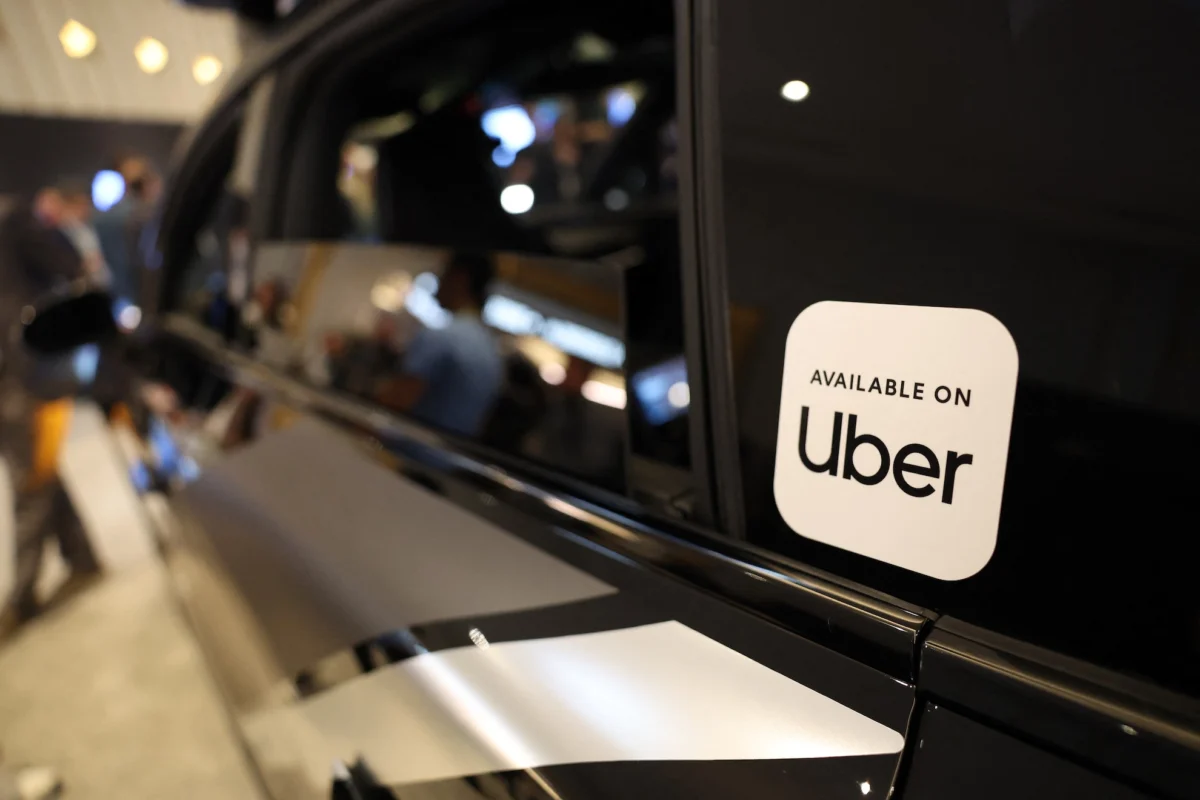
Inside the ride-hailing giant’s aggressive global spree of investments, alliances, and fleet partnerships spanning more than 30 autonomous vehicle companies.
Main Facts
In the high-stakes race for autonomous vehicle (AV) supremacy, Uber Technologies Inc. has engineered one of the most remarkable strategic pivots in corporate history. Once determined to build its own self-driving cars from scratch—a costly and controversial endeavor that nearly derailed the company—Uber has abandoned its proprietary ambitions in favor of a highly lucrative role: the ultimate global aggregator of autonomous technology.
Over the past two years, under the leadership of CEO Dara Khosrowshahi, Uber has partnered with, and in many cases directly invested in, more than 30 autonomous vehicle, trucking, and delivery companies. By positioning its ride-hailing and delivery application as the premier demand-generation engine for driverless fleets, Uber has created an asset-light ecosystem. Rather than competing with AV developers, Uber has made itself their most indispensable partner.
This global strategy spans passenger robotaxis, class-8 autonomous freight trucking, sidewalk delivery robots, and aerial drones. From Silicon Valley to Munich, Abu Dhabi, and Tokyo, Uber’s network has become the default operating system for the commercialization of autonomous driving.
Chronology: The Rise, Fall, and Resurrection of Uber’s AV Ambitions
The path to Uber’s current multi-partner strategy is marked by a dramatic historical arc of regulatory battles, tragedy, corporate restructuring, and eventual financial pragmatism.
[2014] Uber ATG founded under Travis Kalanick; recruits Carnegie Mellon robotics team.
  │
[2016] Acquires self-driving truck startup Otto; begins public testing in CA, AZ, and PA.
  │
[2017-2018] Waymo lawsuit settled; Kalanick resigns; fatal Tempe, AZ pedestrian crash.
  │
[2020] Dara Khosrowshahi executes "Reset"; sells ATG to Aurora; retains equity stakes.
  │
[2022] Uber slowly re-enters the AV market via select delivery and ride-hailing pilots.
  │
[2024-2026] Deal flow explodes; multi-billion dollar commitments signed with Rivian, Lucid, Wayve, and WeRide.
The Era of Hubris: Uber ATG (2014–2020)
Under co-founder and former CEO Travis Kalanick, Uber viewed autonomous vehicles as an existential necessity. In 2014, the company established the Uber Advanced Technologies Group (ATG), famously poaching dozens of researchers from Carnegie Mellon University’s robotics department. In 2016, Uber accelerated its timeline by acquiring Otto, a self-driving truck startup founded by former Google engineer Anthony Levandowski.
However, the program quickly unraveled due to three defining crises:
The Waymo Lawsuit (2017): Alphabet’s self-driving division sued Uber for trade secret theft, resulting in a high-profile legal battle and a settlement that cost Uber $245 million in equity.
Leadership Turmoil (2017): Kalanick was ousted as CEO following a series of corporate scandals, leaving the AV program without its primary champion.
The Tempe Tragedy (2018): An autonomous Volvo XC90 operated by Uber struck and killed Elaine Herzberg in Tempe, Arizona. The safety driver was distracted, exposing deep systemic flaws in Uber’s safety culture and halting public testing.
The Great Reset (2020)
Faced with mounting losses and investor pressure to achieve profitability, new CEO Dara Khosrowshahi executed a dramatic reset. In late 2020, Uber divested from its capital-intensive "moonshots." It sold Uber ATG to self-driving startup Aurora Innovation, offloaded its Jump micromobility unit to Lime, and sold its Elevate air taxi business to Joby Aviation. Crucially, Uber did not exit entirely; it retained significant equity stakes in each of these buyers, laying the groundwork for its future platform play.
The Return as a Marketplace (2022–Present)
By 2022, Uber began quietly signing partnerships with third-party AV developers. What started as a trickle became a flood. By mid-2026, Uber had positioned its app as a universal marketplace where any viable AV developer could plug in their hardware to instantly access Uber’s massive consumer base.
Supporting Data: Inside Uber’s Global AV Portfolio
Uber’s partnerships are not uniform; they are strategically tiered into direct equity investments, commercial fleet integrations, and geographical joint ventures. Below is the comprehensive breakdown of Uber’s self-driving network as of mid-2026.
1. Robotaxis and Passenger Vehicles
Waymo
The bitter rivalry between Uber and Alphabet’s Waymo officially transformed into a commercial alliance in May 2023. The companies launched a pilot in Phoenix, Arizona, allowing users to hail Waymo robotaxis directly through the Uber app. In late 2024, they expanded to Austin, Texas, and Atlanta, Georgia, where Waymo robotaxis were made exclusively accessible to riders via Uber.
However, the partnership has proven volatile. In May 2026, the companies terminated their Phoenix-based operations, and Waymo has actively sought to exit its broader commercial contract with Uber, which is legally scheduled to run through May 2028.
Cruise
In August 2024, Uber and General Motors-backed Cruise announced a major partnership to deploy Cruise robotaxis on the Uber app by 2025. The deal was designed to rehabilitate Cruise’s image following a catastrophic 2023 accident in San Francisco. However, the alliance dissolved in December 2024 when GM pulled the plug on Cruise’s commercial robotaxi operations due to ballooning costs, folding the division back into its internal engineering unit.
Lucid Motors
Uber has committed substantial capital to luxury electric vehicle maker Lucid Motors. In July 2025, Uber announced a $300 million investment alongside a commitment to purchase 20,000 Lucid Gravity SUVs over six years. These vehicles are to be outfitted with Nuro’s self-driving system.
In April 2026, Uber expanded its bet, injecting an additional $200 million and increasing its minimum vehicle order to 35,000 units, which now includes Lucid’s upcoming mid-sized platform. Uber now holds an equity stake of more than 11% in Lucid.
Rivian
In March 2026, Uber signed an unexpected, blockbuster deal with EV maker Rivian worth up to $1.25 billion. Uber made an initial $300 million direct investment in the automaker and committed to purchasing 10,000 fully autonomous R2 SUVs. The vehicles, powered by Rivian’s proprietary self-driving software, are scheduled to roll out in San Francisco and Miami in 2028, with plans to scale to 25 cities across North America and Europe by 2031.
Zoox
Amazon-owned Zoox entered the Uber ecosystem in March 2026. The two companies formed a strategic alliance to deploy Zoox’s purpose-built bi-directional robotaxis on the Uber app, starting in Las Vegas in late 2026 and expanding to Los Angeles in 2027.
WeRide
Guangzhou-based WeRide is one of Uber’s most active international partners. The partnership began in Abu Dhabi in late 2024, progressing from human-supervised safety operations to fully driverless rides by November 2025.
In May 2025, Uber invested $100 million in WeRide to expand robotaxi services to 15 additional global cities by 2030, including Madrid and Zurich. In February 2026, the companies committed to deploying at least 1,200 robotaxis across the Middle East (Abu Dhabi, Dubai, and Riyadh) by 2027.
May Mobility
May Mobility partnered with Uber in May 2025, launching autonomous micro-transit shuttles on the Uber platform in Arlington, Texas. The companies plan to scale this model to "thousands of AVs" across various U.S. transit deserts over the coming years.
Momenta
In May 2025, Chinese autonomous driving startup Momenta agreed to integrate its software-driven robotaxis into the Uber app. The companies scheduled public testing with safety drivers in Munich, Germany, for 2026, with plans to roll out across Europe.
Baidu
In July 2025, Uber and Chinese tech giant Baidu announced a multi-year strategic partnership to deploy thousands of Baidu’s Apollo Go robotaxis on the Uber network in markets outside of mainland China and the United States. While the companies announced plans to test Apollo Go vehicles in London in the first half of 2026, those tests have yet to officially begin.
Motional
Motional, a joint venture backed by Hyundai, signed a landmark 10-year commercial agreement with Uber in October 2022. Following a major corporate restructuring and pivot to an AI-centric platform in 2024, Motional’s self-driving Hyundai Ioniq 5s were officially integrated into the Uber app in Las Vegas in March 2026, operating with human safety monitors behind the wheel.
Mercedes-Benz
In January 2026, Mercedes-Benz collaborated with Nvidia to build a luxury robotaxi service using self-driving S-Class sedans, confirming that these vehicles will be deployed exclusively on the Uber ride-hailing network.
Autobrains
In June 2026, Israeli developer Autobrains partnered with Uber to launch an OEM-agnostic robotaxi program in Munich, utilizing Autobrains’ agentic AI driving system running on Nvidia’s Drive Hyperion platform.
2. Autonomous Freight and Logistics
Aurora Innovation
Uber’s relationship with Aurora is rooted in the 2020 sale of Uber ATG. Uber holds a massive 19.7% Class A equity stake and 6.9% voting power in Aurora via its holding company, Neben Holdings. In June 2024, Uber Freight expanded its partnership with Aurora, moving from pilot programs to commercial round-trip driverless freight hauls between Dallas and Houston.
Partnering since 2023, Volvo and Uber Freight transitioned their alliance into commercial operations in 2025. Volvo’s VNL Autonomous trucks, integrated with Aurora’s self-driving technology, now regularly haul commercial freight on key Texas shipping corridors.
Torc Robotics
In December 2025, Daimler-owned Torc Robotics entered a data-sharing partnership with Uber Freight. Torc leverages Uber Freight’s vast freight network data and shipping patterns to identify the most commercially viable lanes for its autonomous trucking deployment.
3. Last-Mile and Sidewalk Delivery
Partner
Technology Type
Primary Markets
Key Milestones
Serve Robotics
Sidewalk Robot
United States
Spun out from Uber-owned Postmates in 2021; public in 2024 with Uber backing.
Avride (Nebius)
Sidewalk Robot / AV
Austin, Dallas
Secured $375M in joint funding from Uber/Nebius; under NHTSA investigation in 2026.
Cartken
Sidewalk Robot
Miami, Virginia, Osaka
Partnered in 2022; pivoted to industrial robotics in 2025 but maintains last-mile.
Coco
Sidewalk Robot
Los Angeles, Miami
Launched in LA in 2024; expanded to Miami in April 2025.
Starship Technologies
Sidewalk Robot
UK, Europe, US
Partnered in Nov 2025; UK/Europe rollouts in 2026; US expansion in 2027.
Flytrex
Aerial Drone
United States
Partnered in Sept 2025, supported by an undisclosed equity investment from Uber.
4. Hardware, Software, and Fleet Operators
Nvidia
In October 2025, Uber and Nvidia announced a deep integration utilizing Nvidia’s Hyperion autonomous platform. As part of this deal, Stellantis committed to delivering 5,000 Nvidia-powered AVs to Uber’s network.
In March 2026, the partnership expanded to launch a global fleet of Nvidia software-driven AVs powered by "Alpamayo"—Nvidia’s human-like AI driving models. The service is scheduled to debut in Los Angeles and San Francisco in early 2027 before scaling to 28 cities globally by 2028.
Wayve
Uber participated in UK-based Wayve’s massive $1.2 billion funding round in February 2026, contributing a $300 million investment tied to commercial milestones. In March 2026, the companies announced plans to deploy self-driving Nissan Leaf EVs on Uber’s network in Tokyo. In June 2026, Stellantis joined the alliance to co-develop and deploy Wayve-powered robotaxis across Europe and North America.
Waabi
Founded by former Uber ATG chief scientist Raquel Urtasun, Waabi secured a $250 million milestone-based commitment from Uber in January 2026 as part of a $1 billion funding round. The capital is directly allocated to deploying Waabi-powered robotaxis on the Uber platform.
Fleet Management Partners (Avomo, Hertz, Tawasul)
Because driverless cars still require physical maintenance, Uber has established a robust network of fleet management partners:
Avomo (formerly Moove Cars): Uber acquired a 30% stake in 2021. Avomo manages depot services, cleaning, charging, and maintenance for the Waymo-Uber fleet in Austin and the WeRide-Uber fleet in Madrid.
Hertz: Partnered in April 2026 alongside Oro Mobility to manage day-to-day depot operations and charging for Uber’s premium Lucid/Nuro robotaxi fleet.
Tawasul & New Horizon: Manage local fleet logistics for Uber’s WeRide and Baidu Apollo Go operations in the Middle East.
Official Responses and Regulatory Context
Despite the rapid expansion of these partnerships, Uber and its allies face significant regulatory hurdles and shifting corporate alliances.
In May 2026, the National Highway Traffic Safety Administration (NHTSA) opened a formal safety investigation into Avride following a series of minor crashes and a pedestrian injury involving its autonomous vehicles. In response, an Avride spokesperson stated:
"We are cooperating fully with federal regulators to demonstrate the safety and redundancy protocols of our autonomous system. Safety remains our absolute priority as we scale our operations in Texas."
The sudden termination of the Phoenix partnership between Waymo and Uber in mid-2026 raised industry eyebrows. Waymo, which operates its own standalone ride-hailing app, has sought to distance itself from Uber to avoid cannibalizing its own platform. Waymo representatives declined to comment on active contract negotiations but emphasized:
"Our focus remains on delivering safe, rider-first autonomous experiences in our key commercial markets."
Uber CEO Dara Khosrowshahi has consistently defended the company’s open-platform philosophy, stating during an investor call:
"Building a self-driving car is an incredibly capital-intensive endeavor. By opening up our network—which processes tens of millions of rides a day—we provide AV companies with immediate scale and demand, while avoiding the massive R&D risks of building hardware ourselves. We are the bridge to the autonomous future."
Implications: Why Uber is Winning the AV Transition
Uber’s pivot from a developer to an aggregator has fundamentally reshaped the economics of the autonomous vehicle industry.
By selling ATG in 2020, Uber transferred billions of dollars in annual research and development liabilities off its balance sheet. Instead of spending capital on sensors, cameras, and lidar, Uber now invests strategically in the most promising players (e.g., Lucid, Rivian, Wayve, and Waabi), ensuring it maintains equity upside without the operational burn rate.
2. The Power of "Liquid" Networks
Autonomous vehicle companies have realized that building a self-driving car is only half the battle; the other half is matching that car with a rider efficiently. Uber’s massive, highly liquid network of riders and eaters provides instant density. For an AV company, launching on Uber is significantly cheaper than building a competing ride-hailing brand from scratch.
3. Geographical and Fleet Redundancy
By partnering with over 30 companies, Uber has insulated itself from individual corporate failures. If one partner struggles—as Cruise did in late 2024—Uber can seamlessly shift its volume to competitors like WeRide, Zoox, or May Mobility. This diversified portfolio ensures that no matter which AV technology ultimately triumphs, the ride itself will be booked on Uber.