




The global transportation sector is navigating a complex period of transition, characterized by starkly contrasting regulatory actions, multi-billion-dollar corporate maneuvers, and a strategic recalibration of the electric vehicle (EV) transition. While federal agencies are moving to clear regulatory pathways for autonomous vehicle (AV) commercialization, local municipalities and state-level actors are increasingly pulling emergency brakes due to safety and infrastructure concerns.
Concurrently, legacy automakers are quietly moderating their public enthusiasm for all-electric lineups, drone delivery is undergoing a major consolidation of corporate interest, and unconventional infrastructure funding reallocations are signaling a potential shift toward advanced air mobility (AAM). This comprehensive report analyzes the current state of mobility, mapping out the regulatory, financial, and operational forces shaping the future of transit.
Main Facts: The Bifurcation of Mobility Regulation and Sectoral Shifts
The contemporary mobility landscape is defined by several pivotal developments across autonomous driving, corporate finance, and alternative transportation.
1. Autonomous Vehicles: The Federal-Local Divide
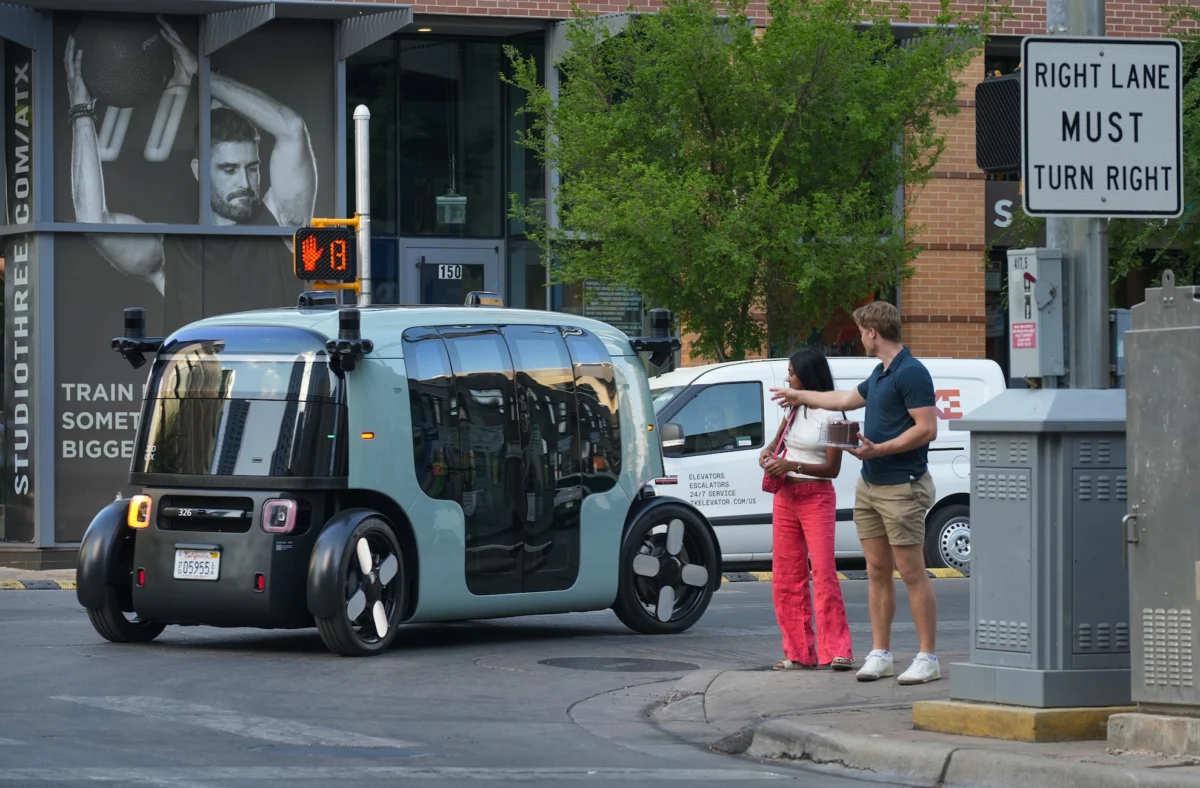
The autonomous vehicle industry is experiencing a regulatory paradox. On the federal level, the National Highway Traffic Safety Administration (NHTSA) is actively working to reduce bureaucratic red tape to accelerate AV deployment. A primary example is the agency’s decision to grant Amazon-owned Zoox a temporary exemption from eight Federal Motor Vehicle Safety Standards (FMVSS). This exemption allows Zoox to operate its purpose-built, bidirectional robotaxi—which lacks traditional manual controls like steering wheels and pedals—for commercial, passenger-paying services, starting in Las Vegas.
Conversely, state and local authorities are intensifying their oversight. In California, operators like Alphabet’s Waymo are facing severe pushback over municipal disruptions. Following a series of incidents where robotaxis blocked traffic and interfered with emergency services, local lawmakers are demanding tighter controls, culminating in proposed federal legislation to establish baseline safety standards for AV-emergency responder interactions.
2. Strategic Corporate Financing and Mergers
Capital continues to flow into high-valuation mobility plays, though often from non-traditional or highly concentrated sources:
- Lucid Motors: The luxury EV manufacturer secured further backing from Saudi Arabia’s royal family. Prince Al Waleed bin Talal Al Saud acquired a 5% stake (approximately 19 million shares) in the company, reinforcing the Kingdom’s deep financial commitment to the automaker.
- The Boring Company: Elon Musk’s tunneling venture is reportedly in negotiations to raise $4 billion in a funding round that would value the enterprise at $20 billion.
- Terminal: The telematics infrastructure startup raised $20 million in Series A funding, led by Battery Ventures, highlighting the growing demand for standardized data pipeline tools in commercial fleet management.
- Tesla-SpaceX Merger Rumors: Speculation regarding a structural tie-up between Tesla and SpaceX has intensified following reports that Tesla is evaluating the sale of its Chinese business operations to streamline regulatory and financial pathways ahead of a potential merger.
3. The Great EV Narrative Decline
An empirical analysis of corporate communications reveals that legacy automakers are talking about EVs far less than they did during the peak of the pandemic-era investment boom. A study of earnings call transcripts from General Motors (GM) and Ford over the last seven years reveals a marked decline in the frequency of EV-related mentions, signaling a pragmatic pivot toward hybrid models and capital preservation.
Chronology of Events: The Push and Pull of Autonomy
The current friction within the mobility sector is the result of overlapping operational milestones and regulatory reactions. Below is the timeline of recent events:
[Late May] ── Waymo suspends highway/freeway testing due to safety concerns near construction zones.
     │
[July 4] ─── Waymo robotaxis suffer software/operational immobility in heavy SF holiday traffic, blocking key roads.
     │
[Mid-July] ── SF Mayor Daniel Lurie formally petitions state regulators to tighten AV operating rules.
     │
[Late July] ─ Rep. Kevin Mullin introduces a bill for national AV safety standards regarding emergency vehicles.
     │
[Late July] ─ NHTSA grants Zoox its landmark 8-point FMVSS exemption for commercial passenger operations.
     │
[Late July] ─ Waymo announces the resumption of autonomous freeway testing; London AV testing heats up.- Late May: Waymo suspends its autonomous freeway operations. The decision followed internal evaluations of how its sensor suites and software stack navigated high-speed construction zones and temporary lane configurations.
- July 4: During Independence Day celebrations in San Francisco, multiple Waymo vehicles become gridlocked, lose power, and obstruct traffic. The incident sparks immediate local outrage and highlights the vulnerability of driverless fleets during high-density urban events.
- Mid-July: San Francisco Mayor Daniel Lurie formally petitions California state regulators, demanding more stringent operational thresholds and immediate penalties for AV companies that disrupt municipal services.
- Late July: Representative Kevin Mullin (D-Calif.) hosts a joint press conference with local leaders to introduce federal legislation establishing strict safety standards for how autonomous vehicles must yield to and interact with first responders.
- Late July (Concurrently): The NHTSA issues its landmark decision granting Zoox a temporary exemption from traditional vehicle design standards, paving the way for the launch of its commercial service in Las Vegas.
- Late July (Concurrently): Waymo announces it is returning its robotaxis to freeways, indicating confidence in its updated software patches. Simultaneously, London emerges as a major global testing ground as Baidu, Uber, and Waymo prepare for European deployment.
Supporting Data: Funding Surges and EV Discourse Declines
To understand the structural shifts in the transportation ecosystem, it is necessary to examine the underlying financial and communication data.

The Corporate Communication Pivot
While legacy automakers publicly maintain their commitment to electrification, their executive discourse tells a different story. In collaboration with financial research firm Hudson Labs, a multi-year analysis of quarterly earnings call transcripts for Ford and General Motors was conducted.
The data reveals that mentions of "EV," "electric vehicle," and "battery plant" peaked between late 2020 and mid-2022. Since then, the frequency of these terms has declined by over 40% in quarterly briefings. Instead, executive focus has shifted to terms like "capital discipline," "hybrid flexibility," and "free cash flow."
Relative Mention Frequency of "EV/Electrification" in GM & Ford Earnings Calls (Indexed)

  100 |          /---
   80 |         /
   60 |   /----/
   40 |  /                      /---
   20 | /                ------/     ____
    0 |_______________________________________
       2018   2020   2021   2022   2023  2024
Unconventional Infrastructure Allocations
A stark example of changing state-level priorities is found in Florida’s management of federal funding. Under the federal National Electric Vehicle Infrastructure (NEVI) formula program, Florida was awarded $200 million intended to build out high-speed highway charging stations for passenger EVs.
Rather than deploying these funds to expand the automotive charging grid, the state government has reallocated the entire $200 million package to construct 32 specialized landing pads equipped with high-power charging stations for electric vertical take-off and landing (eVTOL) aircraft. This move indicates a calculated bet on advanced air mobility over terrestrial EV infrastructure.
Global Market Milestones and Private Capital
Despite the narrative cooling around mainstream EVs, specific segments and premium brands continue to show resilience:
- Ferrari: Despite initial pushback from purists regarding its first all-electric model, the Luce, Ferrari secured its entire annual sales target for the vehicle within just two months of opening the order books.
- Tesla: The Texas-based automaker manufactured its 10 millionth electric vehicle, highlighting its scale advantage over legacy competitors.
- The Boring Company: A potential $4 billion capital raise at a $20 billion valuation indicates that private equity still holds high expectations for specialized urban transit infrastructure.
Official Responses and Regulatory Stances
The friction between different levels of government has generated strong reactions from public officials and corporate leaders alike.
Federal Optimism
The NHTSA’s decision to grant Zoox its FMVSS exemption represents a deliberate effort by federal regulators to maintain U.S. leadership in autonomous technology. Federal regulators argue that progress should not be bottlenecked by safety standards designed for human-driven vehicles.
In its official filing, the NHTSA emphasized that the exemption is conditional, requiring Zoox to provide continuous safety reports and real-time operational data to ensure passenger protection.
Municipal Frustration
On the local level, officials are expressing frustration with what they view as federal overreach at the expense of municipal safety. During the press conference introducing his new AV safety bill, Representative Kevin Mullin stated:

"We have seen a disturbing, and frankly, an unacceptable number of incidents where autonomous vehicles inadvertently interfere with emergency responders. While we support innovation, it cannot come at the expense of public safety and the ability of our first responders to do their jobs."
San Francisco Mayor Daniel Lurie echoed these sentiments, arguing that local authorities must have the power to regulate, fine, or temporarily halt robotaxi operations when they disrupt municipal services or block emergency routes.
Corporate Reassurance
AV operators are working to reassure both the public and local regulators. Waymo issued a statement confirming that its return to freeway driving is backed by millions of simulated miles and improved edge-case software updates designed to detect and respond to complex construction setups.
Similarly, Zoox characterized its NHTSA exemption as a major milestone, with representatives stating that paid commercial rides in Las Vegas are "imminent" and will operate under strict safety parameters.
Implications: The Reconfigured Horizon of Transportation
The current trends in the mobility sector point to several key developments over the next decade:
1. Regulatory Fragmentation
The clash between federal promotion and local restriction of AVs is likely to result in a fragmented regulatory landscape. If federal minimum standards are not established soon, a patchwork of state and municipal rules could emerge. This would make it difficult for AV operators to scale their services across state lines, as a vehicle software stack optimized for San Francisco might face entirely different legal and operational constraints in New York, Chicago, or Miami.
2. The Rise of Alternative Air Infrastructure
Florida’s decision to divert NEVI funding from highway EV chargers to eVTOL landing pads could set a precedent for other states. If advanced air mobility is recognized as a viable solution for regional congestion, federal funds originally intended for highway electrification may increasingly find their way into the aviation sector. This could slow the deployment of rural and highway EV charging networks, further complicating the transition to passenger electric cars.
Federal Funding Shift:
[NEVI Formula Funds] ──┬──> Traditional EV Charging Stations (Slowing deployment)
                       └──> eVTOL Vertiports & AAM Infrastructure (Florida Precedent)
3. A Pragmatic Auto Sector
The reduction in EV-related discussions during earnings calls by major automakers like Ford and GM points to a more pragmatic phase of electrification. Rather than aiming for rapid, all-electric transitions, legacy manufacturers are focusing on hybrid drivetrains and optimizing combustion engine profitability to fund gradual EV development. This shift could prolong the transition to zero-emission fleets, but it may also prevent severe financial losses for legacy brands during periods of fluctuating consumer demand.
4. Consolidated Ecosystems
The rumored Tesla-SpaceX merger and DoorDash’s move to build its own drone delivery hardware suggest a trend toward deeper vertical integration. The future of mobility may not belong to single-focus automotive or software companies, but to highly integrated conglomerates that control energy generation, aerospace technology, satellite communications, and autonomous terrestrial fleets. This consolidation could make it increasingly difficult for smaller, specialized startups to compete without substantial backing from major sovereign or corporate investment funds.
