


By Investigative Desk
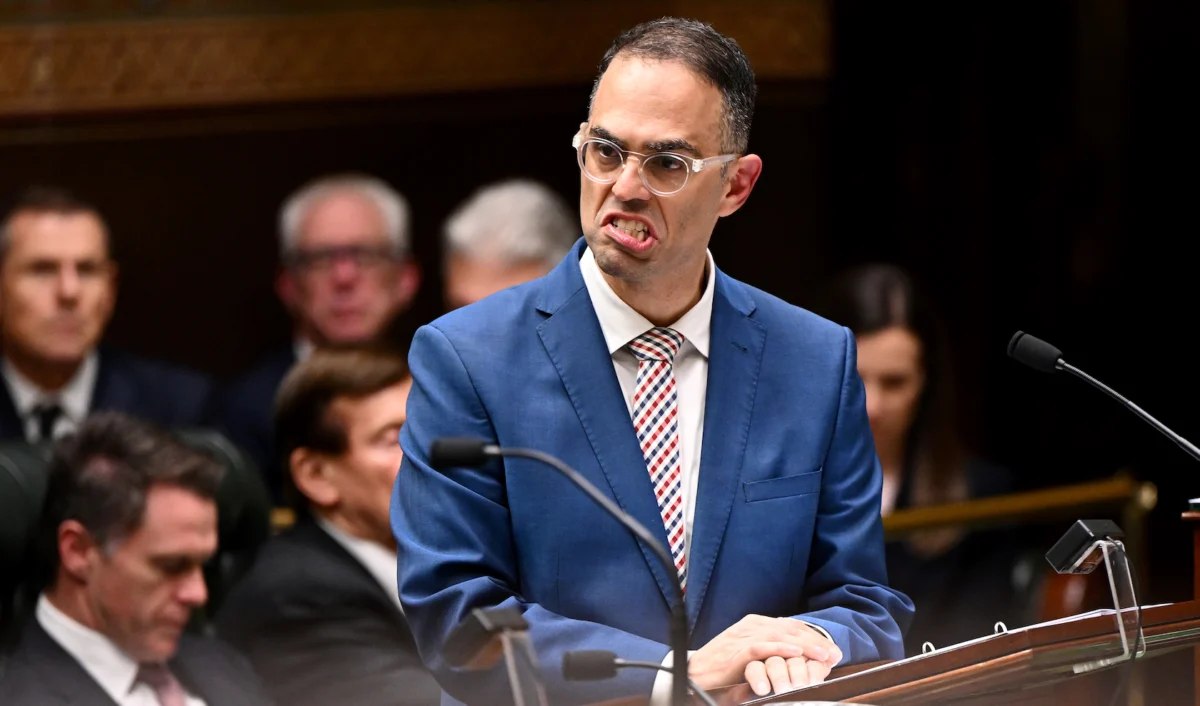
As Australia’s transition to electric vehicles (EVs) accelerates at a record-breaking pace, a looming fiscal crisis has emerged at the intersection of climate policy and infrastructure funding. The New South Wales government, led by Treasurer Daniel Mookhey, has drawn a line in the sand: if the federal government does not move to implement a harmonized national road-user charge, the state is prepared to unilaterally impose a per-kilometre tax on EV drivers by July 2027.
The proposal, which aims to claw back $440 million in revenue over three years, has reignited a fierce debate over how the nation should fund its road networks as the traditional fuel excise—which currently accounts for billions in federal revenue—begins to evaporate.
The Core Proposal: Bridging the Fiscal Gap
The fundamental issue facing state treasuries is the "fuel excise cliff." For decades, the federal government has collected a levy on every litre of petrol and diesel sold, a portion of which is distributed to the states for road maintenance and infrastructure development. However, as the uptake of battery electric vehicles (BEVs) and plug-in hybrid electric vehicles (PHEVs) grows, the volume of fuel excise revenue is projected to shrink significantly.
NSW Treasurer Daniel Mookhey recently confirmed to a state parliamentary inquiry that the government is actively modeling a per-kilometre charge. The objective is clear: to ensure that EV owners, who currently bypass the fuel pump and therefore contribute nothing to road upkeep via the excise, pay their "fair share" for the usage of public infrastructure.
The state’s target is ambitious, aiming to secure $440 million in revenue within the first three years of the scheme’s implementation. Yet, the mechanism for collection remains shrouded in uncertainty. Whether through odometer readings, GPS tracking, or annual registration levies, the logistical challenge of implementing such a system is as significant as the political backlash it is likely to generate.
A Brief Chronology of the Road-Charge Conflict
The journey toward this legislative standoff has been fraught with legal and political landmines.
- 2021: The Victorian Precedent: The Victorian government became the first in Australia to introduce a road-user charge for ZEVs (Zero and Low Emission Vehicles). It was touted as a necessary step to future-proof infrastructure funding.
- 2023: The High Court’s Hammer: The Victorian legislation faced a landmark legal challenge. In a move that shocked state governments across the country, the High Court of Australia ruled that the tax was unconstitutional. The court found that the levy constituted an "excise," a power that, under Section 90 of the Constitution, is reserved exclusively for the Commonwealth government.
- 2024: The EV Sales Surge: As the High Court ruling effectively dismantled state-based road taxes, EV sales in Australia reached a tipping point. In June alone, EVs accounted for 23% of all new vehicle sales, with PHEV sales more than doubling year-on-year.
- 2026 (June): The NSW Inquiry: During a high-profile inquiry into infrastructure funding, Treasurer Daniel Mookhey signaled that NSW is unwilling to let the issue rest. Despite the High Court ruling, Mookhey indicated that NSW is exploring "constitutional pathways" to introduce a charge, provided the federal government remains inert.
Supporting Data: The EV Revolution vs. The Infrastructure Budget
The pressure on state budgets is driven by the sheer velocity of the EV transition. Industry data shows that the "tipping point" for adoption has arrived sooner than many Treasury officials anticipated.
- Market Penetration: In June 2026, nearly one in four new cars sold in Australia was electric. This rapid shift, while beneficial for emissions targets, creates a "revenue hole" that grows exponentially as the legacy internal combustion engine (ICE) fleet is phased out.
- The PHEV Factor: Plug-in hybrid vehicles present a unique challenge. While they consume less fuel—and thus contribute less to the excise—they still exert the same, if not greater, weight-related wear and tear on roads compared to standard hybrids.
- The $440 Million Metric: The $440 million figure cited by the NSW Treasury is based on projections of fleet growth over a 36-month period. It is intended to cover the maintenance backlog of regional and metropolitan roads that are currently reliant on federal infrastructure grants.
Official Responses: Canberra vs. Macquarie Street
The relationship between the NSW government and the federal government in Canberra has become increasingly strained regarding this policy.
The State Position:
Treasurer Daniel Mookhey has been vocal about the "inevitability" of the charge. Speaking to the inquiry, he emphasized that the state is not necessarily looking for a fight, but rather a solution. "We would prefer the federal government to lead on this," Mookhey stated. "A national scheme is the most efficient way to manage this transition, preventing a patchwork of state-based laws that could distort the market."
The Federal Position:
Canberra has remained notably coy. While officials acknowledge that the fuel excise is a declining asset, there is little political appetite to introduce a federal "EV tax" during a cost-of-living crisis. The federal government is currently balancing its commitment to decarbonization with the fiscal reality of funding the nation’s transport arteries. By leaving the "heavy lifting" to the states, the Commonwealth avoids immediate electoral backlash, though it risks a continued constitutional stalemate.
Implications: What This Means for the Australian Motorist
If the NSW government proceeds—and assuming they navigate the constitutional hurdles that toppled Victoria—the implications for the average motorist will be profound.
1. The Death of the "Free Ride"
For years, the exemption from fuel excise was a primary marketing tool for EV manufacturers, helping to offset the higher upfront cost of electric vehicles. A per-kilometre charge effectively removes this incentive, potentially cooling the demand for EVs among price-sensitive buyers.
2. Privacy and Surveillance Concerns
If the government moves toward a system based on GPS tracking or mandatory, real-time odometer reporting, it will raise significant questions regarding data privacy. Will the government be tracking every movement of the average citizen? How will that data be stored and protected? These questions remain unanswered in the current proposal.
3. Regional Disparity
A flat per-kilometre rate could be highly regressive for regional and rural Australians. Unlike city dwellers, who may have access to public transport alternatives, regional drivers often cover vast distances. A per-kilometre charge could disproportionately impact the cost of living for those in the bush, potentially leading to a fresh wave of political unrest.
4. The Constitutional Loophole
The central question remains: how can NSW do what Victoria could not? Legal experts suggest that the NSW government may be looking at "registration fees" or "road access licenses" that are structured differently than the Victorian model. By framing the charge as a fee for service rather than an excise on goods, the state hopes to circumvent the High Court’s previous ruling. However, critics argue this is merely a semantic shift that will inevitably end up back in the High Court.
The Road Ahead: A National Consensus or a Legal Quagmire?
As the 2027 deadline approaches, the pressure on the federal government to intervene is mounting. If Canberra refuses to act, NSW is prepared to test the limits of its constitutional authority.
The transition to electric vehicles is an environmental triumph, but it is proving to be a fiscal nightmare for state governments accustomed to the reliable revenue of the petrol pump. Whether the solution is a federal-led national scheme or a series of state-based battles, one thing is certain: the era of "free" road usage for electric vehicles is drawing to a close.
For the Australian taxpayer, the next three years will be defined by this tug-of-war. As the government grapples with how to maintain the roads of the future, the primary challenge will be ensuring that the solution does not stifle the very innovation that the nation has spent a decade trying to encourage. The $440 million currently being sought by NSW is just the beginning of a much larger, and perhaps more costly, national debate.
