




Executive Summary: The Algorithmic Disruption
For decades, the "blue link" was the undisputed currency of the digital travel economy. Companies like Booking Holdings, Expedia Group, and Airbnb built empires on the back of Google’s search dominance, perfecting the art of Search Engine Optimization (SEO) to ensure they remained the primary gateways for global travelers. However, the introduction of Google’s AI Overviews—generative summaries that sit atop search results—has fundamentally altered the terrain.
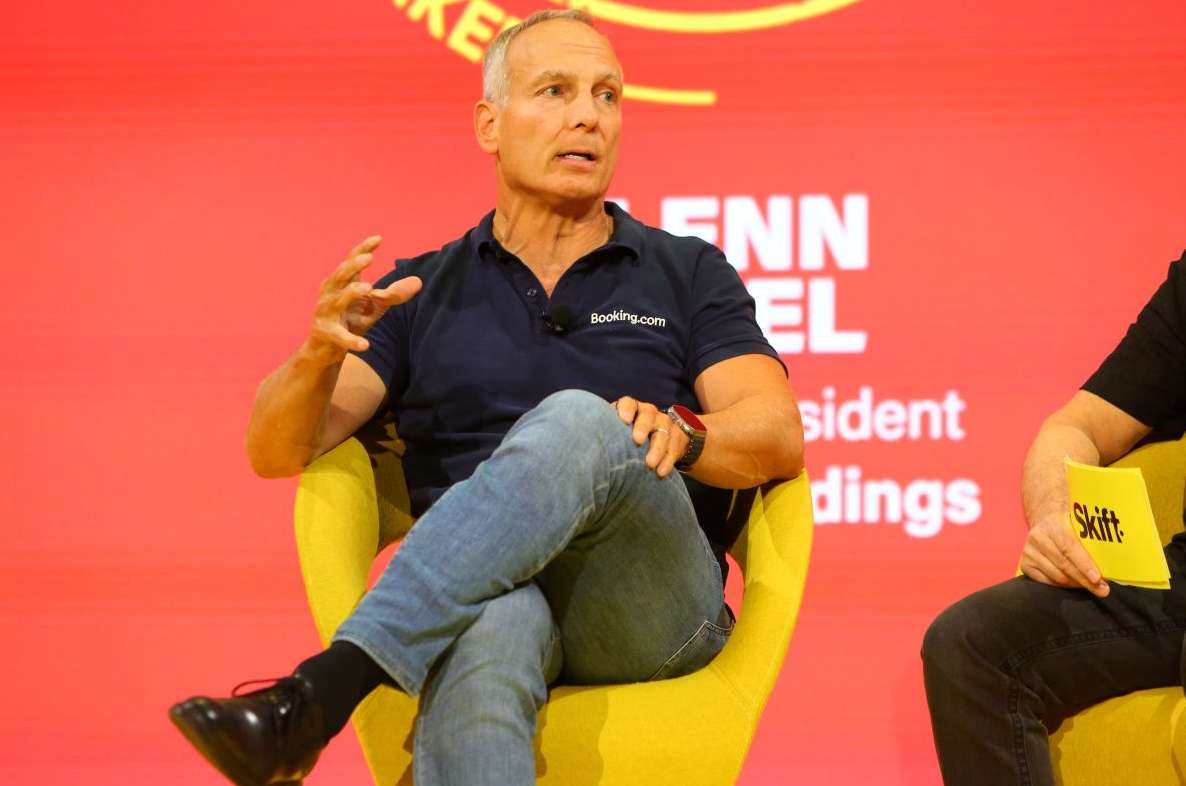
During its second-quarter earnings call, Booking Holdings CEO Glenn Fogel offered a candid admission that sent ripples through the travel-tech sector: the company is experiencing measurable pressure on organic search traffic due to Google’s AI-integrated interface. While the impact remains marginal in the context of Booking’s massive total transaction volume, the warning is clear. The industry is currently engaged in a high-stakes race to adapt to a world where search is no longer a list of links, but an AI-generated conversation.
Chronology: The Evolution of Search and the Arrival of AI
To understand the gravity of Fogel’s comments, one must look at the timeline of the travel industry’s symbiotic, yet often tense, relationship with Google.
1. The Era of the Blue Link (2000–2015)
In the early 2000s, Google acted as a simple index. Travel companies spent millions on SEO to rank at the top, capturing "organic" traffic that was essentially free after the initial optimization cost. This was the golden age of travel affiliate marketing and direct traffic.
2. The Rise of Vertical Integration (2016–2022)
Google began to pivot toward becoming a travel destination itself. The introduction of Google Flights and Google Hotels pushed third-party links further down the page. Travel companies shifted their focus toward massive paid search (PPC) campaigns to remain visible above the fold, essentially paying a "Google tax" to maintain their market share.
3. The Generative Pivot (2023–Present)
Following the emergence of OpenAI’s ChatGPT, Google launched its Search Generative Experience (SGE), now rebranded as AI Overviews. By synthesizing information from multiple websites into a single, concise summary, Google effectively keeps the user on its platform, reducing the incentive for the user to click through to an external travel site. This shift represents the most significant change in search architecture since the inception of the search engine.
Supporting Data: The Cost of Visibility
Booking Holdings is a titan of the travel industry, with a market capitalization and marketing budget that dwarfs most competitors. When Fogel speaks, the industry listens.
- Marketing Expenditure: Booking Holdings spends billions annually on marketing, a significant portion of which is dedicated to paid search.
- The Organic Gap: While paid search remains the primary driver of traffic, the "organic" channel is the bedrock of long-term profitability. If AI Overviews suppress organic clicks, companies are forced to compensate by increasing their spend on paid search, potentially squeezing margins.
- The AI Impact: Industry analysts estimate that for every percentage point of organic traffic lost to AI summaries, travel firms must spend millions more in paid advertising to maintain the same customer acquisition cost (CAC). Fogel’s acknowledgment confirms that this "pressure" is no longer theoretical—it is showing up on the balance sheet.
Official Responses: The Leadership Perspective
The response from the C-suite at major travel conglomerates has been one of cautious observation mixed with strategic pivots.
Glenn Fogel’s Stance
During the Q2 earnings call, Fogel noted, "I do believe that some of the changes that were made in the display at Google definitely put some pressure on SEO." However, he was careful to add context. For Booking, organic traffic is a significant but not sole driver of business. The company’s brand loyalty and direct traffic—users who type ‘Booking.com’ directly into their browsers—serve as a buffer against search engine volatility.
The Broader Industry Sentiment
Other industry leaders, including those at Expedia Group and Tripadvisor, have echoed similar concerns in private forums. The consensus is that AI Overviews represent a "moving target." Because the algorithms governing AI summaries change almost weekly, there is no "silver bullet" for SEO optimization. You cannot optimize for a summary that is dynamically generated based on a variety of intent signals.
Implications: A New Frontier for Travel Strategy
The transition to AI-driven search forces travel companies to rethink their entire digital marketing strategy. If the traditional funnel—Search -> Click -> Book—is being disrupted, what replaces it?
1. The Rise of the "Brand-as-Destination"
If users no longer need to click through to a search engine result page to find an answer, travel brands must become the primary destination for the user. This means investing heavily in app ecosystems and loyalty programs. When a user is already inside the Booking.com or Expedia app, Google’s AI Overviews become irrelevant.
2. The Content Quality Arms Race
As AI models consume web content to generate summaries, the nature of that content must change. Generic travel guides—the kind that were once the bread and butter of SEO—are now being cannibalized by AI. To remain relevant, travel brands are shifting toward:
- Unique, proprietary data: Providing insights that AI cannot easily scrape or synthesize.
- User-generated content (UGC): Authentic reviews and personal stories that AI models struggle to replicate with the same level of emotional resonance.
- Hyper-personalization: Using AI internally to offer the customer a better experience than a generic search summary ever could.
3. The New SEO: "Answer Engine Optimization" (AEO)
While SEO focused on keywords and backlinks, the new paradigm is "Answer Engine Optimization." This involves structuring data so that it is easily ingestible by Large Language Models (LLMs). By providing clear, structured data (Schema markup), travel companies can increase the likelihood of their content being cited as a source within an AI Overview. Being a source is the new "ranking #1."
Challenges and Future Outlook: The Silver Bullet Myth
Is there a way to dominate the AI landscape? Many digital marketing firms are promising "AI-readiness," but the reality is more complex. As Fogel hinted, the platforms are evolving too quickly for any static strategy to hold.
The Problem of Attribution
When an AI Overview provides a summary, it often cites multiple sources. Tracking the ROI of these citations is incredibly difficult compared to the binary nature of a link click. This lack of clear attribution makes it harder for CMOs to justify marketing spend to their boards.
The Regulatory Wildcard
The impact of AI Overviews is also drawing the attention of antitrust regulators. The Department of Justice and the European Commission are increasingly looking at whether Google’s use of AI to "scrape and summarize" content constitutes an unfair trade practice. If Google is forced to share revenue with the publishers whose content powers its AI, the financial landscape of travel search could shift once again.
The Human Element
Despite the technological shifts, travel remains a deeply human, emotional, and high-stakes purchase. People rarely book a $5,000 vacation based solely on an AI summary. They want to see photos, read verified reviews, and feel secure in their transaction. The brands that succeed in the coming decade will be those that use AI to facilitate the search, but rely on brand trust to close the booking.
Conclusion: Adapting to the Algorithmic Tide
The comments from Booking Holdings’ CEO serve as a wake-up call to the entire travel industry. The era of relying on Google as an infinite, free funnel of traffic is drawing to a close. The future belongs to brands that can navigate the dual challenge of being highly visible in an AI-summarized world while simultaneously building direct, unmediated relationships with their customers.
As platforms like Google, OpenAI, and Perplexity continue to iterate, the definition of "prominence" will continue to evolve. For travel companies, the goal is no longer just to rank; it is to remain indispensable. Whether through exclusive inventory, superior loyalty programs, or technological innovation, the battle for the traveler’s attention has moved from the search bar to the conversational interface. Those who fail to adapt to this shift risk being relegated to the background of the very AI summaries that are currently rewriting the rules of the game.
The industry remains in a period of intense experimentation. There is no silver bullet, but for the giants of the travel world, the time to build a post-SEO strategy is not tomorrow—it is now.
