





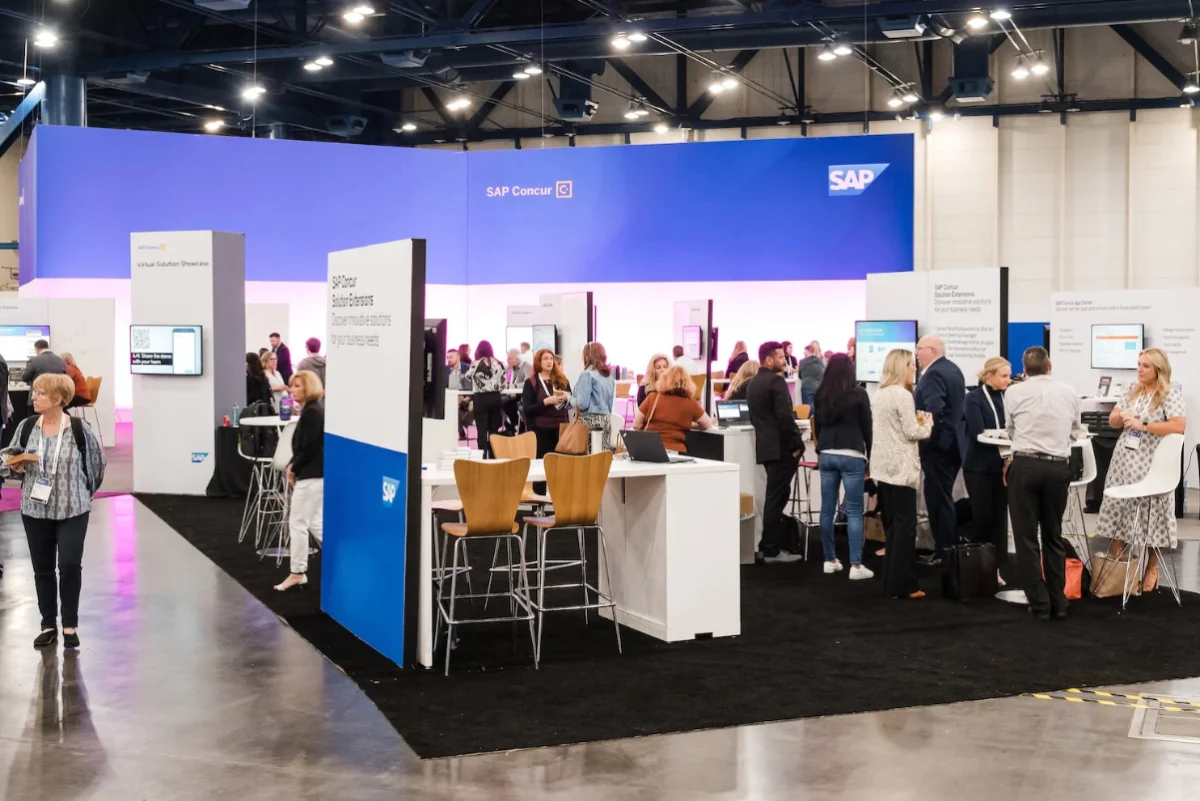
In a significant push to reshape the corporate travel landscape, SAP Concur, a global leader in travel, expense, and invoice management, unveiled a comprehensive suite of artificial intelligence (AI) tools this Monday. Moving beyond its traditional focus on individual travelers and travel managers, the company is now pivoting toward the high-stakes world of corporate finance and administrative automation.
The announcement signals a new era for SAP Concur, one characterized by deeper data integration and proactive policy enforcement. The most notable release is a strategic “leakage-reporting” tool, developed in collaboration with American Express Global Business Travel (Amex GBT), which addresses one of the most persistent pain points in corporate finance: off-platform spending.
The Main Facts: A New AI-Driven Ecosystem
SAP Concur’s latest product rollout is not merely an incremental update; it is a foundational shift in how organizations manage the lifecycle of corporate spending. The new releases include four core pillars:
- AI-Assisted Approval Manager: This tool automates the review process for expense reports, flagging anomalies, duplicate entries, or policy violations before they reach human eyes, thereby reducing the burden on finance departments.
- Expense-Policy Benchmarking: Leveraging vast datasets, this tool allows companies to compare their internal travel policies against industry standards, identifying where they may be overly restrictive or dangerously lax.
- Virtual Card Management: A modernized approach to payment security, allowing companies to issue temporary, one-time-use digital cards for specific trips, mitigating fraud risks and simplifying reconciliation.
- The Amex GBT Leakage-Reporting Tool: Perhaps the most significant development, this feature provides a centralized view of "leakage"—travel spend that occurs outside of a company’s managed travel program.
By integrating these features, SAP Concur is moving closer to its vision of a “touchless” travel and expense environment, where AI handles the administrative heavy lifting, leaving finance teams to focus on strategic cost optimization.
A Chronology of Integration: The Path to the 2025 Alliance
The genesis of these tools lies in the historic 2025 alliance between SAP Concur and Amex GBT. For years, the travel industry operated in silos; Concur held the expense data, while Amex GBT held the booking and fulfillment data. This fragmentation created a "blind spot" for CFOs and travel managers, who were often unable to see where their employees were booking until the expense report was submitted—if at all.
- Early 2024: Industry analysts began noting that "leakage" was reaching record levels as employees sought more flexibility in their booking habits post-pandemic.
- January 2025: SAP Concur and Amex GBT formally announced a strategic partnership aimed at combining travel, expense, and marketplace data. The goal was simple: to create a single source of truth for corporate travel spending.
- Mid-2025: Technical teams from both organizations worked to integrate API layers that allow data to flow seamlessly between the two platforms, ensuring that a booking made via Amex GBT is automatically reconciled against a corporate policy set within Concur.
- Monday’s Launch: The unveiling of the leakage-reporting tool marks the first major commercial output of this partnership, effectively closing the data loop that has plagued the industry for over a decade.
Supporting Data: The Cost of Invisible Spending
The necessity of these tools is underscored by startling statistics regarding corporate travel "leakage." SAP Concur reports that at some organizations, more than 30% of travel bookings occur outside of managed channels.
When employees book directly through airline websites, consumer travel apps, or local agencies, they often bypass the negotiated corporate rates and safety protocols established by their companies. This "invisible" spending creates several operational risks:
- Financial Impact: Companies lose the ability to capture negotiated discounts, leading to higher-than-necessary travel costs.
- Duty of Care: If an employee books a trip outside of the managed system, the company has no way of knowing where that traveler is during an emergency or geopolitical crisis.
- Compliance Failure: Off-platform spending often masks tax compliance issues, particularly regarding VAT reclamation and cross-border travel regulations.
By bringing this 30% of "shadow" spend into the light, SAP Concur is offering finance teams a level of granular visibility that was previously impossible. For a mid-sized firm spending $10 million annually on travel, a 30% leakage rate represents $3 million of unmanaged risk and lost efficiency.
Official Responses and Strategic Vision
SAP Concur executives have framed this release as a necessary evolution of the "intelligent enterprise." In a press statement following the launch, the company emphasized that the goal is not to punish employees, but to empower finance teams.
"The disconnect between where travel is booked and where it is expensed has been a significant drain on corporate productivity," said a spokesperson for SAP Concur. "By leveraging AI to synthesize data from our alliance with Amex GBT, we are enabling finance leaders to see the full picture of their spend in real-time. This is about transforming expense management from a reactive, manual chore into a proactive, data-driven strategic asset."
Industry observers have reacted positively to the news. "The partnership with Amex GBT is the missing piece of the puzzle," noted a senior analyst at a leading business travel consultancy. "For years, we’ve talked about ‘managed travel’ as an ideal. With these new tools, SAP Concur is finally moving toward a reality where the system knows more about the spend than the person who spent it, which is exactly where the technology needs to be."
Implications for the Future of Finance and Travel
The introduction of these tools carries significant implications for three primary stakeholders: the CFO, the Travel Manager, and the End User.
For the CFO
The era of the "monthly report" is effectively ending. With AI-assisted benchmarking and real-time leakage detection, finance teams can now intervene in spending patterns as they happen. This shift moves the finance function from a custodial role (auditing receipts) to a strategic role (optimizing procurement).
For the Travel Manager
Travel managers will see a reduction in the "noise" of travel policy management. Instead of spending hours investigating why a traveler went off-platform, the AI will automatically tag the transaction and, in some cases, provide a policy-compliant alternative in the future. This allows them to focus on high-level negotiations with suppliers and improving the traveler experience.
For the Employee
While there may be concerns about increased scrutiny, the benefits for the traveler are equally compelling. An AI-driven system that works correctly should result in faster reimbursement times. By automating the approval process, the friction that often delays payment for business travelers can be eliminated, ensuring that employees are reimbursed quickly for their out-of-pocket expenses.
Conclusion: A Paradigm Shift in Corporate Oversight
As the corporate world navigates an increasingly complex global economy, the demand for transparency and efficiency in travel spending has never been higher. SAP Concur’s latest announcement is a clear signal that the future of travel management lies in the marriage of deep data integration and machine learning.
By effectively addressing the "leakage" issue and providing finance teams with the tools to benchmark and manage expenses in real-time, SAP Concur is not just updating software; it is setting a new industry standard. The integration with Amex GBT serves as a blueprint for future collaborations, proving that when platforms stop operating in isolation, the entire corporate ecosystem stands to gain.
As these tools roll out to customers, the market will be watching closely to see if they can truly achieve the "touchless" ideal. If successful, the days of manual expense auditing and "shadow" booking may soon become a relic of the past, replaced by an era of automated, transparent, and intelligent corporate governance.
