




By Mihai Coca-Constantinescu
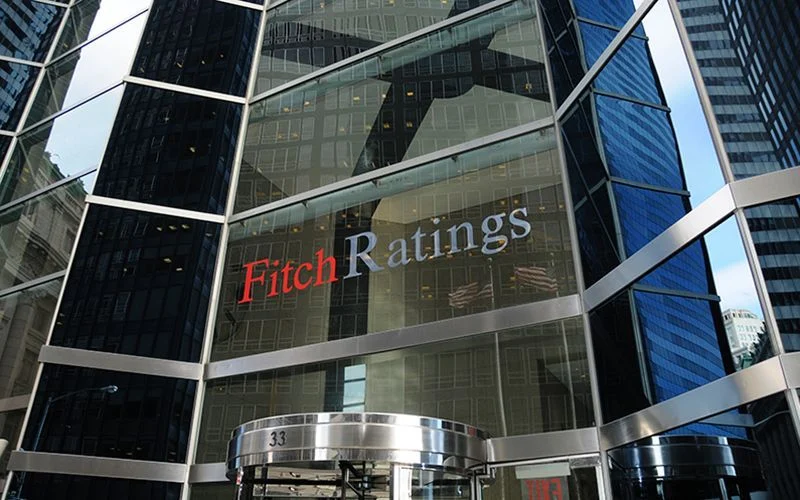
On July 31, 2026, the international financial community breathed a collective sigh of relief as Fitch Ratings announced its decision to reaffirm Romania’s sovereign credit rating at BBB-. This crucial decision keeps Romania at the lowest rung of the “investment grade” ladder, successfully avoiding a descent into “junk” status—a designation that would have signaled heightened financial risk and triggered a sharp increase in government borrowing costs.
For a nation currently grappling with a collapsed governing coalition, persistent inflation, and the logistical strain of climate-induced energy instability, the Fitch decision serves as a vital, albeit fragile, lifeline. While the reaffirmation preserves investor confidence in the short term, the agency’s decision to maintain a “Negative Outlook” serves as a stark reminder that Romania’s fiscal health is inextricably linked to the integrity of its legislative processes and its ability to meet rigorous European Union commitments.
The Landscape of Financial Stability: A Chronology of Recent Events
The summer of 2026 has been a crucible for the Romanian state. The timeline of recent developments illustrates the precarious balance between administrative functionality and political volatility:
- May 2026: The collapse of the four-party governing coalition leaves the country in a state of administrative limbo. A caretaker government, led by Prime Minister Ilie Bolojan, is tasked with maintaining essential state functions.
- Early July 2026: Persistent heatwaves and historic low water levels on the Danube River significantly disrupt nuclear and hydroelectric power generation. The resulting energy deficit forces the state to procure expensive imports, placing upward pressure on already high inflation rates.
- July 31, 2026: Fitch Ratings releases its assessment, maintaining the BBB- rating but keeping the outlook negative, citing a projected 2026 budget deficit of 5.9% of GDP and inflation hovering near 7.6%.
- August 1, 2026: President Nicușor Dan addresses the nation, urging stakeholders to distinguish between “political noise” and legislative reality, while highlighting the successful passage of the Urban Planning Code.
- August 2026 (Forthcoming): Parliament is scheduled to deliberate on critical PNRR-linked legislation, including the National Integrity Agency (ANI) bill, the Biodiversity Law, and the Public Sector Wage Law.
Supporting Data: The Mechanics of the PNRR and Fiscal Reality
Romania’s economic trajectory is inextricably bound to the European Union’s Recovery and Resilience Facility (RRF). The National Recovery and Resilience Plan (PNRR) acts as both a financial pillar and a reformist roadmap. It provides billions of euros in grants and low-interest loans, which are essential for financing modernization projects and managing public debt.
However, these funds are not unconditional. They are tethered to a precise schedule of statutory milestones. As of August 2026, the Romanian government faces a daunting list of legislative requirements. According to Fitch, the primary risks to the sovereign rating include the widening budget deficit and the inability to implement structural tax reforms. The 5.9% GDP deficit target is already a point of contention with the European Commission, which demands greater fiscal consolidation to ensure long-term sustainability.
Furthermore, the domestic economic climate is dampened by persistent inflation. The reliance on energy imports—compounded by climate-related environmental pressures on domestic production—has eroded consumer purchasing power. For the average citizen, the macro-economic “stabilization” touted by government officials is often eclipsed by the daily reality of rising costs.
Official Responses: The President’s Appeal for Pragmatism
In his address on August 1, 2026, President Nicușor Dan sought to decouple the country’s financial stability from the theater of political infighting. Addressing both international investors and the domestic populace, President Dan emphasized that the state remains committed to its international obligations.
“We must learn to distinguish between political action and political noise,” the President stated, attempting to reassure markets that the machinery of government continues to grind forward despite the absence of a stable parliamentary majority. He pointed to the recent passage of the Urban Planning Code as evidence that the legislative process, while strained, is not paralyzed.
The President acknowledged the severity of the economic headwinds, particularly regarding inflation, but maintained that the macroeconomic baseline is stabilizing. By framing the current turmoil as a transient political phase rather than a systemic institutional failure, the President aimed to mitigate the risk of capital flight and restore a sense of predictability to the investment environment.
Legal and Constitutional Implications: The Rule of Law as an Economic Variable
The current political crisis in Bucharest exposes a fundamental legal reality: economic stability is inextricably tied to the predictability and integrity of the legislative process. Under Romania’s Fiscal Responsibility Law (Law No. 69/2010), the state is legally mandated to maintain fiscal discipline and publish medium-term frameworks. However, these requirements are frequently bypassed in favor of Emergency Ordinances (Ordonanțe de urgență ale Guvernului).
While the use of Emergency Ordinances allows for rapid action in a crisis, it creates a culture of provisional governance. This reliance on executive decrees, rather than parliamentary debate, undermines constitutional predictability. When investors look at Romania, they look for a stable legal environment. The frequent resort to "temporary fixes" rather than lasting statutory reform creates a perception of risk that complicates long-term capital allocation.
Furthermore, the impending autumn evaluation by the European Commission adds a layer of urgency. If the parliamentary gridlock continues, and the remaining PNRR milestones—specifically the public sector wage reform and integrity regulations—are not met, the Commission has the authority to suspend fund disbursements. Such a suspension would be catastrophic, forcing the state to issue debt at significantly higher interest rates. This, in turn, would necessitate painful cuts to public expenditures, including essential areas such as judicial administration, legal aid, and social infrastructure.
Challenges Ahead: The Road to 2027
As the autumn months approach, the Romanian political landscape remains fragmented. The debate over the 2027 state budget will be the ultimate test of the caretaker government’s efficacy. With party dynamics shifting and the specter of early parliamentary elections looming, achieving a cross-party consensus on fiscal consolidation will be difficult.
For the government, the immediate priority is clear: translate the President’s assurances into tangible legislative output. The upcoming deliberations on the National Integrity Agency (ANI) and Biodiversity bills will serve as a bellwether for the country’s commitment to its European obligations.
The international investment community will be watching these developments closely. While the reaffirmation of the BBB- rating provides a temporary shield, it is not a permanent guarantee. Romania’s ability to move beyond the current political malaise and adhere to the rigorous requirements of the PNRR will determine whether it can maintain its investment-grade status in the long term.
Ultimately, the preservation of Romania’s creditworthiness requires more than just technical fiscal management; it requires a renewed commitment to the rule of law and a recognition that, in a modern European economy, legislative stability is the most valuable asset a nation can possess.
Mihai Coca-Constantinescu holds an International and European Law LLB from the University of Groningen and an International Trade and Investment Law LLM from the University of Amsterdam. He is a PhD candidate in Transboundary Legal Studies at the University of Groningen and serves as a JURIST correspondent for Romania.
Opinions expressed in JURIST Dispatches are solely those of our correspondents in the field and do not necessarily reflect the views of JURIST’s editors, staff, donors, or the University of Pittsburgh.
