





Introduction: A Symbol of Faith Leads to Detention
In a stark illustration of the tightening grip of the Chinese state over its minority regions, Amnesty International issued an urgent call this Wednesday for the immediate release of Zhang Yi, a prominent pro-democracy activist. Zhang was taken into custody on July 28, following a series of events that began with a simple, non-verbal gesture in a Tibetan monastery.
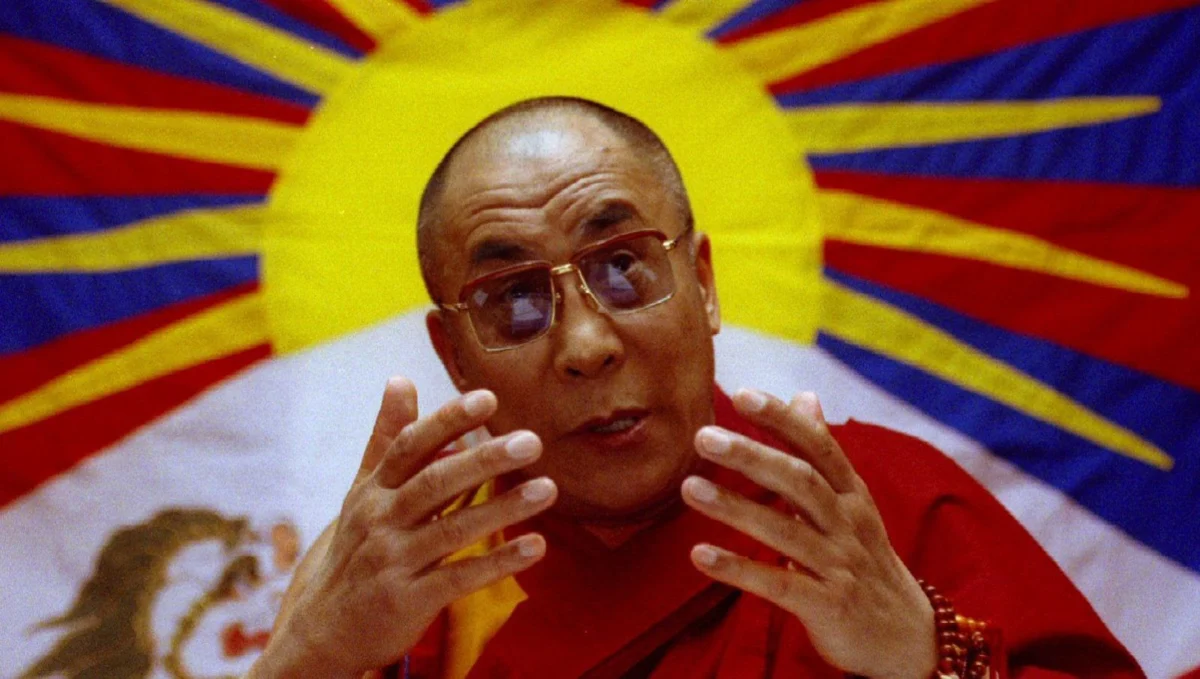
The arrest centers on Zhang’s possession and display of a photograph of the Dalai Lama—an act that Beijing now categorizes as “inciting separatism.” This detention is not merely an isolated legal proceeding; it serves as a chilling bellwether for the enforcement of China’s new Law on Promoting Ethnic Unity and Progress, which came into force on July 1. Human rights observers argue that this legislation provides the legal framework for the systematic erasure of Tibetan identity, marking a significant escalation in the state’s long-term campaign to subordinate religious and cultural expression to the dictates of the Chinese Communist Party (CCP).
Chronology of a Crisis: From Monastery to Custody
The sequence of events leading to Zhang Yi’s detention highlights the precarious reality of daily life in Tibet.
- July 1, 2026: The Law on Promoting Ethnic Unity and Progress formally takes effect, establishing a sweeping mandate to enforce cultural and political homogeneity across China’s ethnic regions.
- July 1, 2026 (Morning): While visiting a monastery in Tibet, Zhang Yi encounters a local worshipper. In an attempt to communicate his need for a prayer mat, Zhang shows the worshipper a photograph of the Dalai Lama on his mobile device.
- July 1, 2026 (Afternoon): Zhang is detained by local police on the spot. His initial detention highlights the extreme sensitivity of the state toward any iconography associated with the exiled spiritual leader.
- July 28, 2026: Formal charges are brought against Zhang Yi for “inciting separatism,” a move that activists believe is designed to test the reach of the new law.
- August 2026: Amnesty International publicly condemns the detention, characterizing the arrest as a flagrant violation of fundamental human rights, specifically the freedoms of expression and religion.
The Legal Architecture of Forced Assimilation
The Law on Promoting Ethnic Unity and Progress represents a paradigm shift in how Beijing manages its "autonomous" regions. While the government claims the law’s purpose is to cultivate a “strong sense of community” among the Chinese populace, critics view it as a weaponized legal tool designed to accelerate the forced assimilation of minority groups.
Article 2: The Primacy of the Party
Article 2 of the legislation explicitly states that the goal of “ethnic unity” must be achieved by “upholding” the leadership of the Chinese Communist Party. This clause effectively makes political loyalty a prerequisite for ethnic belonging. Legal scholars argue that by conflating the identity of the state with the identity of the CCP, the law renders any form of cultural autonomy inherently subversive.
Article 63: The Long Arm of the State
Perhaps most alarming to the international community is Article 63, which asserts extraterritorial jurisdiction. The law stipulates that individuals outside of mainland China who engage in acts deemed to promote “ethnic division” remain subject to the law’s reach. This has created an atmosphere of intense fear within the global Tibetan diaspora, as activists living in democratic nations now fear that their advocacy could lead to retaliation against family members remaining in China or result in arrest should they ever travel near Chinese borders.
Supporting Data: A Pattern of Oppression
The detention of Zhang Yi is not an outlier; it is a single data point in a broader trend of repression documented by organizations such as Tibet Watch and Human Rights Watch.
The Disappearance of Identity
According to reports from Tibet Watch, there have been at least five documented detentions related to the expression of cultural or religious identity in the weeks following the law’s enactment. Among these cases are the enforced disappearances of two Tibetan monks whose whereabouts remain unknown to their families and legal representatives.
Historical Context and Occupation
The legal status of Tibet remains a point of intense contention. While Beijing asserts that Tibet has been an inseparable part of China since the 1951 ratification of the Seventeen Point Agreement, many international legal scholars argue that the agreement was signed under duress and that Tibet remains an occupied territory. This historical disagreement is central to the current conflict; the CCP views Tibetan nationalism as a threat to national security, while Tibetans view the CCP’s policies as a campaign of cultural genocide.
Official Responses and International Critique
The international response to the new law has been one of alarm. Prior to the law’s enactment, Amnesty International and other human rights bodies issued detailed warnings, cautioning that the legislation was deliberately “broad and undefined.”
Vague Language as a Tool for Arbitrary Detention
The primary critique from rights groups is the lack of legal clarity. By failing to define what constitutes an act that “undermines ethnic unity,” the state has granted its security apparatus near-total discretion. This effectively allows local officials to label any behavior—from speaking the Tibetan language to displaying traditional religious symbols—as a criminal offense.
The Silence of Beijing
To date, Chinese authorities have not responded to specific inquiries regarding Zhang Yi’s case. Official state media continues to frame the Law on Promoting Ethnic Unity and Progress as a necessary measure for social stability and the prevention of radicalism. For the CCP, the "stability" of the frontier regions is the highest priority, and any act that deviates from the state-sanctioned narrative of "ethnic harmony" is categorized as an attempt to destabilize the nation.
Implications: The Struggle for the Future of Tibetan Buddhism
The repression of Zhang Yi is inextricably linked to the broader, decades-long effort by Beijing to control the future of Tibetan Buddhism. The most prominent example of this is the case of the 11th Panchen Lama, Gedhun Choekyi Nyima.
The Panchen Lama Crisis
In 1995, at the age of six, the 11th Panchen Lama was abducted by Chinese authorities just days after his recognition by the Dalai Lama. He has not been seen in public for over three decades. Beijing subsequently installed its own state-vetted candidate, effectively seizing control over the lineage of one of the most important figures in Tibetan Buddhism.
The Strategic Goal: The Next Dalai Lama
The strategic objective behind the detention of activists like Zhang and the disappearance of religious leaders is the eventual "Sinicization" of the next Dalai Lama’s succession. By ensuring that only state-vetted figures hold positions of authority, the CCP hopes to neutralize the influence of the Dalai Lama and ensure that future religious leadership is subservient to the Party’s political agenda.
The Erosion of Cultural Memory
Beyond the religious hierarchy, the state’s policies extend into the classroom. The forced placement of Tibetan children into colonial-style residential schools, combined with the removal of Tibetan history from textbooks, is part of a deliberate effort to sever the connection between younger generations and their cultural heritage.
Conclusion: A Turning Point
The arrest of Zhang Yi for a simple act of communication in a monastery confirms the worst fears of rights advocates: the Law on Promoting Ethnic Unity and Progress is not a tool for community building, but a framework for the total subordination of Tibetan identity.
As the international community watches, the question remains whether the global pressure on Beijing will be sufficient to protect the rights of activists and the cultural survival of the Tibetan people. The case of Zhang Yi serves as a grim reminder that in the eyes of the current administration in Beijing, the display of a photograph is no longer just a religious gesture—it is an act of defiance that the state is prepared to punish with the full weight of the law.
Without significant intervention, the "pattern of oppression" cited by Tibet Watch is likely to intensify, leaving the Tibetan community to navigate an increasingly narrow space between state-mandated assimilation and the preservation of their distinct history, faith, and identity.
