

In the rapidly evolving landscape of the global automotive industry, China often occupies a paradoxical position. While it has become the world’s undisputed epicenter for electric vehicle (EV) production and battery technology, its internal automotive culture remains strictly controlled and, in many respects, profoundly young. For decades, the Chinese government viewed classic cars—and the hobbyist culture of vehicle modification—with deep skepticism, viewing them as safety hazards or relics of a pre-modern era.
However, a daring collective based in Beijing, known as FullGood Motors, is effectively rewriting the rules. By blending cutting-edge Chinese EV architecture with the aesthetic soul of American automotive history, FullGood is attempting to normalize the "classic car" experience in a country where the genuine article is effectively banned from the roads.
The Regulatory Iron Curtain: Why "New" Is the Only Way
To understand the significance of FullGood’s endeavor, one must first grasp the restrictive reality of Chinese automotive law. Unlike the United States or Europe, where a thriving ecosystem of vintage car restoration and modification exists, China has historically made the ownership of older vehicles nearly impossible.
Strict import regulations mean that bringing a classic 1960s Mustang or a vintage Porsche into the country is a bureaucratic nightmare. Even for domestic owners, the laws governing vehicle modification are draconian. An enthusiast looking to customize a modern vehicle or restore a legacy car faces a regulatory environment that favors standardized, factory-fresh transportation. Consequently, the dream of "hot-rodding"—a staple of 20th-century automotive culture—has been largely unattainable for the Chinese enthusiast.
FullGood Motors, an organization born from a tight-knit Beijing motorcycle club with three decades of history, decided that if the law would not allow them to import the past, they would simply build the past using the tools of the present.
Chronology of a Renegade Automaker
The journey of FullGood Motors is a testament to perseverance and industrial maneuvering.
- 1990s – Early 2020s: The foundation of the organization begins as a Beijing-based motorcycle club. Over 30 years, this group cultivates a deep appreciation for Americana and vintage design, fostering a community that feels increasingly alienated by the bland, tech-heavy aesthetics of the modern EV market.
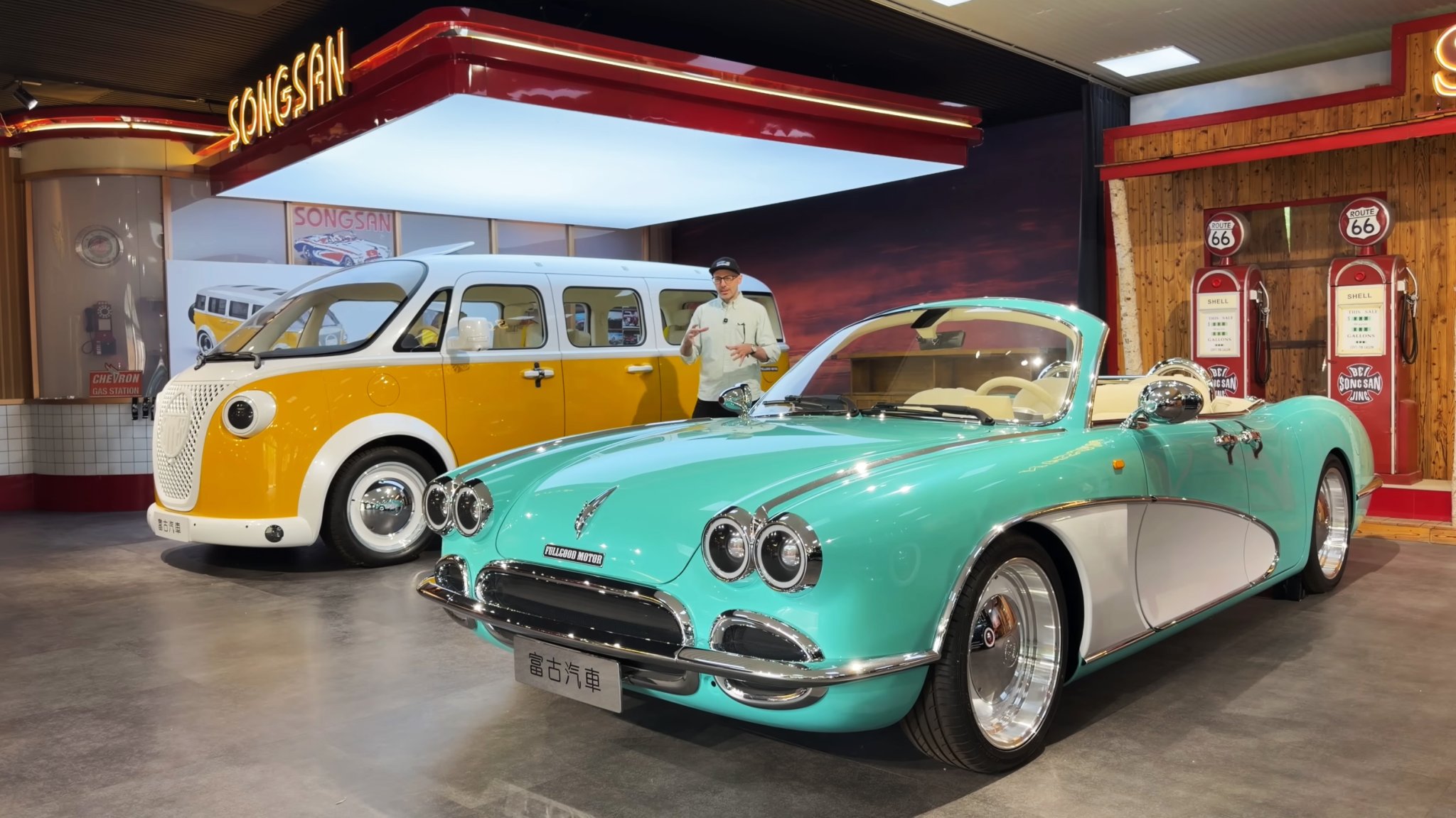
- 2020: FullGood approaches BYD, China’s automotive titan, with an ambitious proposition: to hide the chassis and electric powertrain of a mass-market sedan inside a custom body inspired by the first-generation Chevrolet Corvette.
- 2021 – 2022: The "Dolphin SS" is born. It is a striking, if surreal, homage to the 1950s American sports car. While the interior remains undeniably modern—a necessity for a road-legal, mass-produced vehicle—the exterior captures the spirit of a design icon.
- 2023 – 2024: Realizing that custom one-offs are not a sustainable business model, the group formalizes its operations. They begin high-level negotiations with the Nanjing municipal government and Jinlong, a specialized bus manufacturer, to transition from a "garage project" to a boutique production facility.
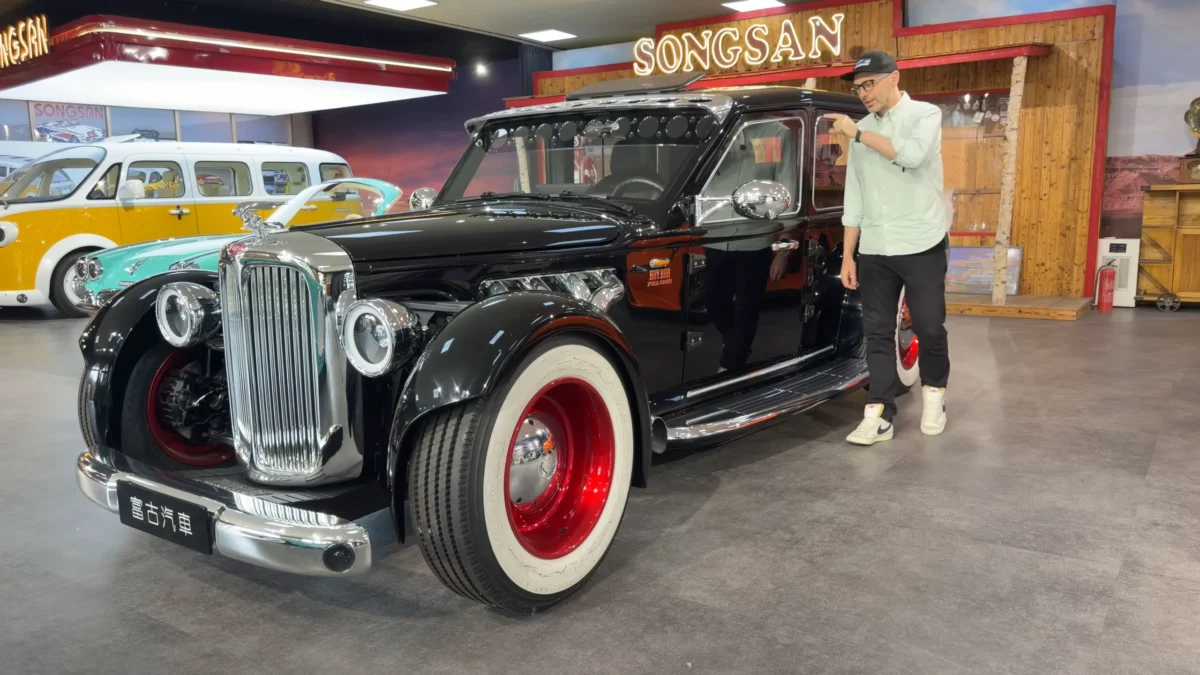
- 2025 – Present: The company pivots toward larger projects, including the "Summer" van, a tribute to the classic Volkswagen Type 2, and the development of a "Hot Rod" model that channels 1930s gangster-era aesthetics.
The Engineering Challenge: Marrying Old Souls to New Silicon
FullGood’s technical strategy is as ingenious as it is pragmatic. By leveraging the existing, certified platforms of major automakers like BYD, they circumvent the massive R&D and safety testing costs required to bring a "new" car to market.
The "Dolphin SS" serves as the archetype for this strategy. The vehicle utilizes a contemporary EV drivetrain, ensuring it meets all modern Chinese safety and emissions standards. The "body swap" is then performed using lightweight, durable materials that replicate the curves of a vintage Corvette. While a seasoned Vette enthusiast would immediately recognize the proportions as being "off" due to the underlying electric chassis, for the average Chinese motorist, the vehicle represents an unprecedented injection of personality into the sea of grey, anonymous crossovers.
The "Summer" van represents their most ambitious leap forward. Drawing clear inspiration from the iconic VW Bus, the vehicle is designed to outperform its spiritual ancestor in utility. With a cabin featuring modular seats on floor rails and 360-degree swiveling capabilities, the Summer aims to be a lifestyle vehicle rather than just a commute-filler. It is reported that the Summer is currently in the final stages of production readiness, with test drives expected to commence in the coming months.
Supporting Data: The Market Gap
The hunger for these vehicles in China is rooted in a cultural "missing link." As the Chinese middle class matures, there is an increasing demand for vehicles that communicate status and personality rather than just functionality.
- Market Penetration: While exact sales figures for FullGood remain private, the company’s expansion from a hobbyist group to a government-partnered entity suggests significant interest from local officials looking to promote unique, high-end, and "boutique" manufacturing sectors.
- Public Reception: According to industry analysts monitoring the Everything Electric APAC reports, the response to these vehicles has been overwhelmingly positive among the younger demographic, who view these cars as "retro-tech" items—a aesthetic trend currently dominating global fashion and design.
- Production Capability: By partnering with Jinlong (a bus manufacturer), FullGood gains access to industrial-scale fabrication capabilities. This partnership allows them to move beyond the "one-off" phase and into limited-series production, which is essential for brand survival.
Official Responses and Government Relations
The relationship between FullGood and the state is perhaps the most fascinating aspect of their story. In a country where government oversight is absolute, one might expect a crackdown on a company modifying the "official" look of vehicles.
However, the collaboration with the Nanjing government suggests that Beijing may be softening its stance on car culture. By allowing a legitimate, registered company to produce these "homage" vehicles, the government is essentially creating a "legal" pathway for enthusiasts to enjoy classic aesthetics without violating the safety and environmental regulations that keep older, polluting vehicles off the road.

This move could be interpreted as a strategic pilot program. If FullGood can prove that "nostalgia-EVs" can be produced safely and within regulatory bounds, it could open the door for a wider, state-sanctioned movement toward automotive personalization in China.
Implications for the Global Stage
The implications of FullGood’s success extend far beyond the streets of Beijing. If a company can successfully mass-produce retro-styled EVs that meet modern safety standards, it challenges the current global hegemony of "jellybean" car design—the aerodynamic, uniform shape that most modern EVs share to maximize range.
Furthermore, the company has announced plans to attend the LA Auto Show this November. This is a bold move. It signals that FullGood is not merely content with serving the Chinese market; they are looking to export their "Retro-EV" philosophy to the West.
Critics might argue that these cars are "costumes"—modern machines wearing a facade of history. It is true that the interiors of the Dolphin SS and the Summer van lack the tactile, analog charm of the originals. They are not classic cars; they are modern cars that have been dressed up for a part. But in an era where the electric transition is often criticized for stripping the "soul" out of driving, FullGood is providing a vital service: they are making the future look a little more like the past we miss.
Whether these vehicles will ever be accepted by the purist community remains to be seen. However, their existence proves that creativity cannot be entirely stifled by regulation. If you build a path through the red tape, the enthusiasts will follow. As FullGood continues to refine its "Hot Rod" and "Summer" models, the automotive world should keep a close eye on Beijing. The next great design revolution might not come from a legacy manufacturer in Detroit or Stuttgart, but from a group of renegades in China who decided that the road to the future didn’t have to be boring.
