





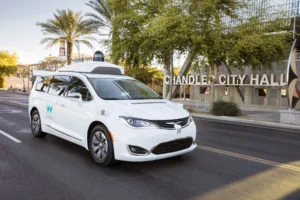
In a landmark analysis that could reshape the public discourse surrounding artificial intelligence in transportation, the Insurance Institute for Highway Safety (IIHS) has released a comprehensive study indicating that Waymo’s driverless vehicles are significantly safer than their human-operated counterparts. The report, which analyzed nearly 50 million miles of driverless operations, provides empirical weight to the argument that autonomous vehicle (AV) technology is reaching a critical threshold of reliability in complex urban environments.
The Core Findings: A Statistical Leap in Road Safety
The IIHS study, which examined crash data from 2021 to 2024 across Arizona, California, and Texas, presents a compelling narrative of improved safety outcomes. When measured per million miles traveled, Waymo’s Level 4 autonomous vehicles recorded crash rates 68% lower than those of human drivers in comparable urban settings.
The disparity becomes even more pronounced when focusing on injury-related incidents. Waymo vehicles recorded 0.28 injury crashes per million miles, a stark contrast to the 1.49 injury crashes per million miles attributed to human drivers in the same regions. These figures suggest that while the technology is still evolving, it has already achieved a level of operational consistency that surpasses the average human operator in the specific, dense urban environments where Waymo currently operates.
A Chronology of Evaluation: From Initial Testing to Broad Deployment
The journey to these findings spans the rapid expansion of Waymo’s footprint, tracking the company’s evolution from controlled testing environments to widespread public service in major metropolitan areas.
- 2021-2022 (The Foundation): As Waymo began increasing the density of its driverless operations in Phoenix and San Francisco, data collection became a priority. Researchers began standardizing the intake of crash reports, noting that the sheer volume of "minor" autonomous vehicle incidents—often simple fender-benders or low-speed contacts—skewed public perception.
- 2023 (The Analytical Shift): During this period, the IIHS moved to refine its methodology. Recognizing that human-driven crash reporting is typically reserved for incidents resulting in significant property damage or injury, the team filtered out minor autonomous vehicle "contacts" that would not have triggered a police report had a human been at the wheel. This ensured a "like-for-like" comparison.
- 2024 (The Current Benchmark): The final study consolidated data from nearly 50 million miles of driverless operation. By comparing this against over 220 billion miles of human-driven data in similar contexts, researchers were able to establish the 68% reduction in crash frequency.
Deconstructing the Data: Why AVs Excel in Specific Scenarios
The IIHS research offers a granular look at the mechanics of these collisions, revealing that autonomous systems excel in specific high-risk maneuvers where human judgment is often compromised by distraction or fatigue.
Rear-End Collision Mitigation
Perhaps the most striking metric involves rear-end collisions. The study found that Waymo vehicles were 91% less likely than human-driven vehicles to strike another vehicle from behind. This is likely attributable to the instantaneous reaction times of LiDAR and radar sensors, which do not suffer from the "delayed perception" typical of human drivers who may be checking mirrors or distracted by mobile devices. Furthermore, Waymo vehicles were 40% less likely to be rear-ended by other motorists, suggesting that the predictable, rule-abiding nature of the software may influence the behavior of surrounding human drivers.
Collision Type Diversity
The safety benefits were not limited to rear-end scenarios. The data confirmed lower crash rates across a broad spectrum of collision types, including:
- T-bone and Angle Collisions: Common at intersections, these are significantly mitigated by the AV’s 360-degree sensor suite.
- Sideswipes: Advanced path planning prevents the erratic lane changes that often lead to sideswipe incidents.
- Single-Vehicle Crashes: By adhering strictly to speed limits and path geometry, the software minimizes the likelihood of losing control.
In cases where a reportable crash did occur, Waymo was identified as the "striking" vehicle in only 14% of cases, suggesting that when these vehicles are involved in accidents, it is frequently due to the actions of other road users rather than a failure of the autonomous system itself.
The Geography of Performance
The performance of the Waymo fleet varied by city, though it remained consistently superior to human benchmarks. In Phoenix, San Francisco, and Los Angeles, the AVs demonstrated a clear safety advantage. Austin was the only market where the performance was described as "comparable" to human drivers, though researchers were quick to point out the smaller sample size of miles traveled in that region, which may have limited the statistical power of the comparison.
Expert Analysis and Official Responses
While the findings are being hailed as a milestone for the industry, the authors of the study—and industry observers—are calling for measured interpretation. The IIHS report includes significant caveats, noting that Waymo’s fleet currently operates in "tightly defined geographic areas."
Notably, the study excluded freeway and interstate travel, which present vastly different dynamics and higher speeds than the urban streetscapes where the current data was gathered. Furthermore, the report notes that nearly half of the reportable crashes occurred while the vehicles were empty, meaning the total "human harm" quotient was even lower than the raw crash data suggests.
"Outperforming humans does not automatically make a system ‘safe’ in the absolute sense," one lead researcher noted. "It makes the system a viable alternative to the status quo, but we must be careful not to extrapolate these findings to all self-driving systems or all driving environments."
Waymo, for its part, has framed the study as a validation of its "safety-first" engineering culture. The company continues to lobby for broader regulatory acceptance, citing these figures as proof that the technology is ready for wider scale deployment.
Implications for the Future of Transportation
The implications of this study are multifaceted, touching on urban planning, insurance, and federal regulation.
Standardizing the Metric
One of the most urgent recommendations from the IIHS is the need for standardized reporting. Currently, the landscape of AV crash data is fragmented. The researchers argue that for the public to trust autonomous systems, there must be a move toward mandatory, uniform mileage reporting and clear definitions for what constitutes a "reportable" incident. Without this, the industry remains vulnerable to public distrust fueled by anecdotal reporting of minor incidents.
The Human-AV Interface
The findings also raise questions about the coexistence of humans and machines. If AVs are 40% less likely to be rear-ended, it implies that human drivers are learning to coexist with the "robotic" driving style of the Waymo fleet. As these vehicles become more common, the predictability of traffic flow may improve, leading to a secondary benefit of reduced congestion and smoother transit.
Regulatory Evolution
The study provides a roadmap for regulators who are currently struggling to keep pace with rapid deployment. By focusing on "police-reportable" crashes, the IIHS has provided a clear yardstick that policymakers can use to hold AV companies accountable. The call for better data collection systems is likely to become a central pillar of future legislation, potentially leading to a national database of AV performance metrics.
Conclusion: A Measured Optimism
The IIHS report serves as a critical checkpoint in the development of autonomous vehicle technology. By demonstrating that Waymo’s fleet can, in fact, navigate complex city environments with a lower risk profile than human drivers, the study provides the first robust, independent evidence that the "human element" of driving is not necessarily the pinnacle of safety.
However, the authors emphasize that this is not the end of the conversation. As the technology moves from urban cores to high-speed freeways and into more diverse climate conditions, the performance metrics will continue to shift. For now, the takeaway is clear: the machines are learning, and they are already proving to be safer, more predictable, and more attentive than the millions of human drivers they share the road with every day. The path to a fully autonomous future remains long, but for the first time, the data suggests that the destination is becoming safer than the starting point.
