




Executive Summary: A Constitutional Clash Over Federal Grounds
In a significant rebuke to the executive branch, a federal appeals court ruled on Friday that President Donald Trump lacks the unilateral legal authority to demolish and reconstruct portions of the White House complex, specifically the controversial proposal for a 90,000-square-foot ballroom. The decision, handed down by the U.S. Court of Appeals for the District of Columbia Circuit, upholds a preliminary injunction that effectively freezes all above-ground construction on the East Wing site.
The ruling is more than a mere zoning dispute; it serves as a high-stakes test of the separation of powers. By a 2-1 margin, the court affirmed that the Constitution’s Property Clause grants Congress, not the President, the ultimate authority over federal land. The opinion penned by Circuit Judges Patricia Millett and Bradley Garcia serves as a sharp reminder that the White House, while the seat of presidential power, is a public asset governed by statutes that predate the modern era.
Chronology: From Demolition to Legal Impasse
The conflict over the White House grounds has moved at a breakneck pace, reflecting the contentious nature of the administration’s renovation plans.
- October 2025: In a move that shocked preservationists and members of Congress, the existing East Wing structure was demolished over the course of just three days. The administration cited security and modernization needs as the primary drivers for the rapid clearing of the site.
- December 2025: The National Trust for Historic Preservation filed a formal lawsuit, arguing that the demolition violated federal environmental and historic preservation statutes and occurred without the required congressional oversight.
- Early 2026: Lower courts issued a preliminary injunction to halt further construction as legal arguments were prepared.
- August 2026: The D.C. Circuit Court of Appeals delivered its ruling, upholding the injunction and clarifying that the Executive branch had overstepped its bounds.
- Current Status: The court has issued a 14-day stay of its own mandate, providing the administration a narrow window to file an emergency appeal with the Supreme Court.
The Legal Argument: Statutes vs. Executive Privilege
The administration’s defense rested on a broad interpretation of executive authority, pointing to two specific legal pillars: the National Park Service’s (NPS) founding statute and the general statutory provisions governing White House upkeep. Government attorneys argued that the President is the steward of the White House and possesses inherent rights to renovate and improve the property to suit the needs of the modern presidency.
However, the appellate court was largely unmoved by these arguments. The majority opinion dismantled the administration’s reliance on the NPS Organic Act of 1916, noting that the act explicitly directs the agency to "conserve historic objects" and leave them "unimpaired"—a directive the court found incompatible with the construction of a massive, 90,000-square-foot ballroom.
Furthermore, the court clarified that the statute governing White House upkeep is intended to facilitate routine appropriations and maintenance, not to act as a blank check for structural transformation. The judges pointedly noted that this provision pertains to the "Executive residence," whereas the proposed ballroom was intended for the East Wing, a distinct section of the grounds.
Perhaps most damaging to the administration’s case was the court’s reliance on the government’s internal documents. Evidence revealed that an NPS environmental assessment had concluded that the project would inflict "permanent adverse impacts" on the historical continuity of the White House grounds. The court noted that the agency had initially attempted to bury this finding under a "finding of no significant impact," a move the judges viewed with significant skepticism.
Dissenting Opinion: The Question of Jurisdiction
The ruling was not unanimous. Circuit Judge Neomi Rao issued a forceful dissent, focusing on the standing of the National Trust for Historic Preservation. Judge Rao argued that the Trust, as a congressionally chartered nonprofit, does not have the authority to sue in this instance because Congress had explicitly excluded such entities from having a say over land within the National Park System.
Her dissent highlights a potential path for the administration: challenging the legitimacy of the plaintiffs themselves. By arguing that the Trust lacks the "equities" to block a presidential decision, the administration hopes to invalidate the lawsuit entirely if the case reaches the Supreme Court.
Official Responses and Political Fallout
The administration’s reaction was swift and incendiary. President Trump took to social media to denounce the ruling as a "National Disgrace," asserting that the presidency is not a tenancy, but a position of supreme authority over the nation’s most iconic property.
"We are not tenants, who pay rent and do all other things that a tenant must do, we are PRESIDENTS," the statement read in part. The President further argued that the history of the White House is one of constant renovation and improvement, claiming that the power to "fix, renovate, secure, protect, and beautify" the grounds is an inherent right of the office, independent of congressional permission.
Conversely, preservationists and legal scholars have hailed the ruling as a victory for the rule of law. The National Trust for Historic Preservation issued a statement emphasizing that no one, not even the President, is above the statutes that protect the nation’s shared cultural heritage.
Implications: The Future of the White House Grounds
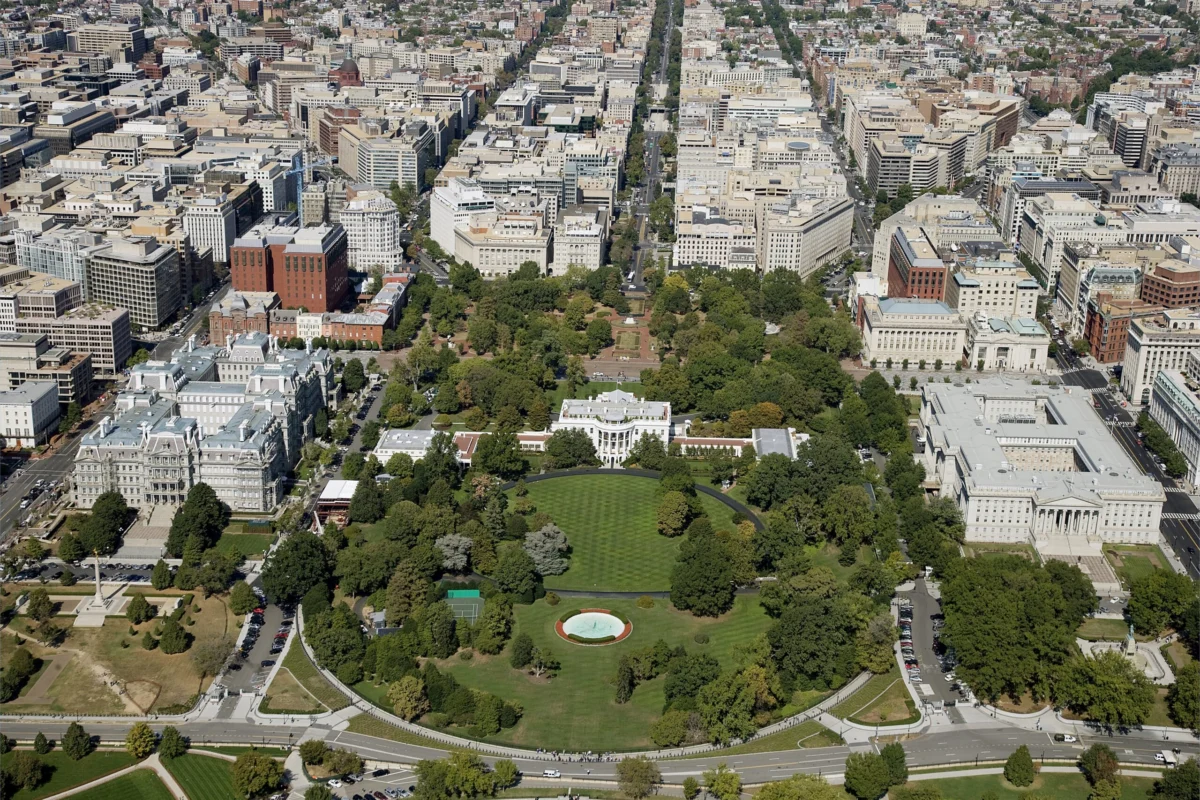
The immediate implication of the ruling is a complete halt to the construction of the ballroom. However, the court provided a carve-out: work related to essential security facilities, safety measures for the President, and structural protection for the site is still permitted. This allows the administration to address the immediate aftermath of the demolition without violating the court’s broader prohibition.
The broader implications, however, are profound. The case is now destined for the Supreme Court, where the Justices will have to determine the boundaries of "executive self-help." If the Supreme Court sides with the administration, it could fundamentally alter the balance of power regarding the control of federal property, potentially allowing future presidents to reshape federal landmarks with minimal oversight.
If the ruling stands, it cements the principle that the White House is a national monument held in trust by the people and managed through the collective will of Congress. It acts as a check against the impulse to treat the nation’s highest office as a personal project, ensuring that any modifications to the seat of American power must pass through the deliberative process of the legislative branch.
As the 14-day stay nears its conclusion, the nation awaits a potential Supreme Court showdown. For now, the site of the former East Wing remains a vacant construction zone—a stark, physical reminder of the current impasse between the executive desire for modernization and the legislative mandate for historical preservation. Whether the ballroom rises or remains a vision of the past, the debate over who controls the "People’s House" will resonate through the halls of government for years to come.
