




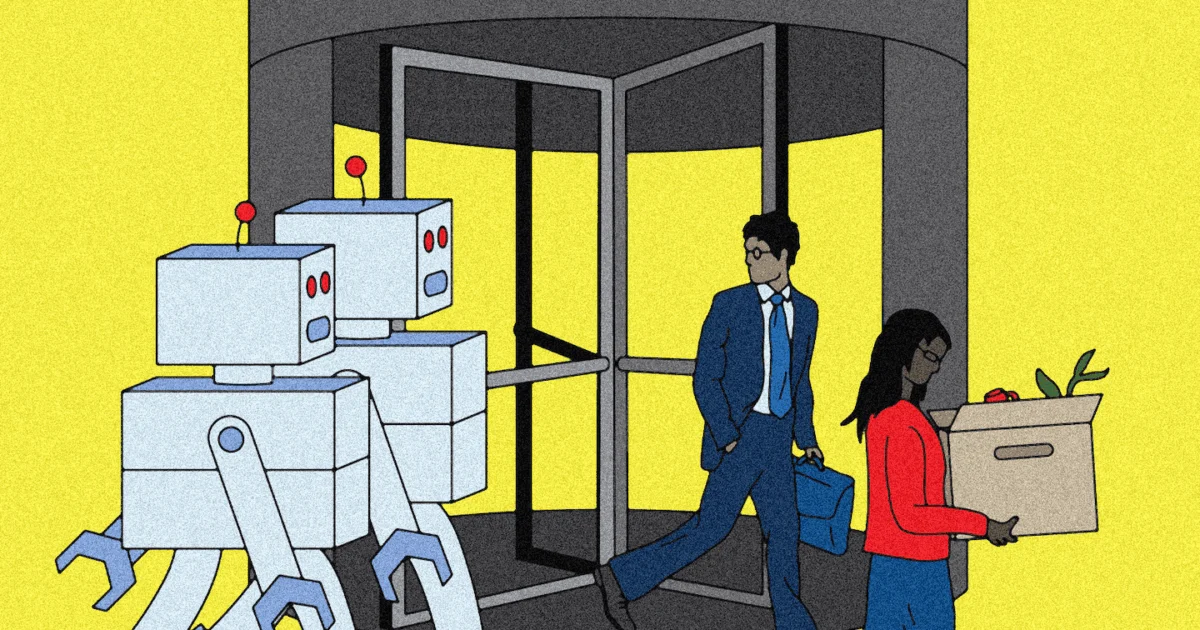
The rapid acceleration of Artificial Intelligence (AI) into the professional workspace has moved from a theoretical concern to a structural reality. As algorithms become increasingly capable of performing complex analytical, creative, and administrative tasks, the American workforce is bracing for a wave of displacement that threatens to hit white-collar sectors with unprecedented force.
At the center of this brewing storm is a fundamental question: Is the current U.S. unemployment insurance (UI) system, designed for the industrial labor models of the 20th century, capable of weathering a modern, AI-driven economic transition? According to Rebecca Dixon, CEO of the National Employment Law Project (NELP), the answer is a resounding no.
The Main Facts: A System Under Strain
The current landscape of unemployment benefits is characterized by a "patchwork of inadequacy." In a recent analysis cited by The Washington Post, the disparity in state-level support is stark. A worker displaced by automation in Mississippi may receive a maximum weekly benefit of just $235, a figure that falls well below the federal poverty line for a family of three. Conversely, Massachusetts offers a more robust ceiling of $1,105 per week.
Dixon argues that this geographical lottery is only the beginning of the problem. "Unemployment benefits are too stingy, particularly if AI-related job losses land hardest on white-collar workers who have higher costs of living and fixed financial obligations," she notes. The current framework assumes a temporary layoff period for manual laborers, but AI-induced displacement is often permanent, requiring significant retraining or career pivots that the current short-term, low-payout structure is ill-equipped to support.
Chronology of the Crisis
To understand the urgency of the current moment, one must look at the evolution of the American labor market over the last decade:
- 2016–2020: The Digitization Shift: Automation began replacing routine manual tasks in manufacturing and logistics, prompting early calls for a "robot tax" or basic income experiments.
- 2022–2023: The Generative AI Explosion: The launch of Large Language Models (LLMs) changed the conversation. Suddenly, roles in law, software engineering, graphic design, and middle management were identified as "vulnerable."
- 2024–2025: Rising Insecurity: As corporations integrated AI agents into workflows, early warning signs of layoffs in white-collar sectors began to emerge, prompting policy think tanks like NELP to advocate for urgent legislative reform.
- 2026: The Advocacy Surge: By mid-2026, the focus shifted toward structural reform. Organizations like NELP have intensified their push to modernize eligibility requirements to include gig workers, part-timers, and recent graduates, who have historically been excluded from traditional UI protections.
Supporting Data: The Widening Coverage Gap
The data suggests that the "traditional" employee—a full-time, W-2 worker with a long tenure—is becoming a statistical minority.
- The Excluded Workforce: Current UI systems often disqualify part-time workers and those with irregular employment histories. In an AI economy, where "gig-ification" is a common byproduct of automated task management, millions of workers fall into the cracks.
- The Graduate Dilemma: As noted by recent studies, new college graduates entering a market where entry-level junior analyst roles are being automated face a "lost career" risk. Without a safety net that recognizes their status as transitionary workers, the long-term impact on lifetime earnings could be catastrophic.
- Regional Disparity: The $235 vs. $1,105 gap highlights a lack of federal standard-setting. When state-level funding is tied to volatile local economies, the system fails to act as the "automatic stabilizer" it was designed to be during national-level economic shocks.
Official Responses and Policy Shifts
The call for reform is gaining momentum among policy experts and advocacy groups. NELP has been at the forefront of this movement, recently bolstering its internal capacity to address these systemic issues.
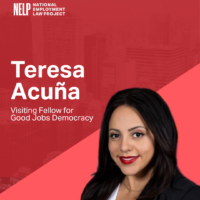
In August 2026, NELP announced the appointment of Teresa Acuña as a Visiting Fellow for "Good Jobs Democracy," signaling a strategic pivot toward ensuring that as the economy changes, the "social contract" between employer and employee is rewritten to favor job security and equitable access to benefits. This follows the July 2026 recruitment of three additional senior policy experts, all tasked with navigating the intersections of technological change and labor rights.
Furthermore, the organization has been vocal about the necessity of inclusive policy-making. Their recent discourse, including efforts to make unemployment insurance accessible for people with disabilities, serves as a blueprint for a more comprehensive system. By advocating for a "universal access" model, these experts argue that UI should move away from being a "charity" for the unemployed and toward being a "right" for all participants in the modern economy.
The Implications: A New Social Contract?
The implications of failing to reform the UI system are profound. If the U.S. does not modernize its safety net, the country risks a dual-track society: one where high-income earners have personal wealth to buffer against AI disruption, and a growing class of displaced, formerly middle-class professionals who have no access to public support.
1. Economic Stability and Consumer Demand
Unemployment insurance is a vital economic stimulus. When people receive benefits, they spend them on essential goods and services, keeping local economies afloat. If the benefits are too low to cover basic needs, or if the system remains too restrictive, the resulting contraction in consumer spending could exacerbate an AI-driven recession.
2. The Skills Gap and Retraining
Dixon’s proposal for expanded benefits isn’t just about cash—it’s about time. If workers are to successfully transition from deprecated roles to AI-augmented roles, they require the time and resources to retrain. A system that forces workers to return to the lowest-paying, most precarious work as quickly as possible—simply to survive—is a system that stifles innovation and limits the potential of the workforce.

3. Political Polarization
Economic insecurity is a primary driver of political instability. The feeling that the system is "rigged" or that the "future has left them behind" is a powerful force. By creating a more resilient, inclusive unemployment framework, policymakers have the opportunity to lower the temperature of the national conversation, offering a tangible sense of security to those most vulnerable to the rapid shift toward automation.
Conclusion: Looking Toward 2027 and Beyond
The challenge of the coming years will not be stopping AI—that train has left the station—but managing the human transition. As NELP’s recent surge in policy expertise suggests, the infrastructure of the American workforce is undergoing a transformation that requires more than just minor administrative tweaks.
To build a future that is truly "good" for all, the U.S. must commit to a system that acknowledges the reality of the 21st-century labor market. This means decoupling benefits from traditional, static employment models, standardizing federal support to ensure no worker is left with a sub-poverty pittance, and recognizing that in an era of rapid technological change, a robust safety net is not just a moral imperative—it is a foundational requirement for a healthy, functioning democracy.
The path forward, as outlined by advocates like Rebecca Dixon, is clear: the safety net must be woven tighter, cast wider, and reinforced to meet the challenges of an era where the only constant is the rapid, algorithm-led evolution of the professional world.
