





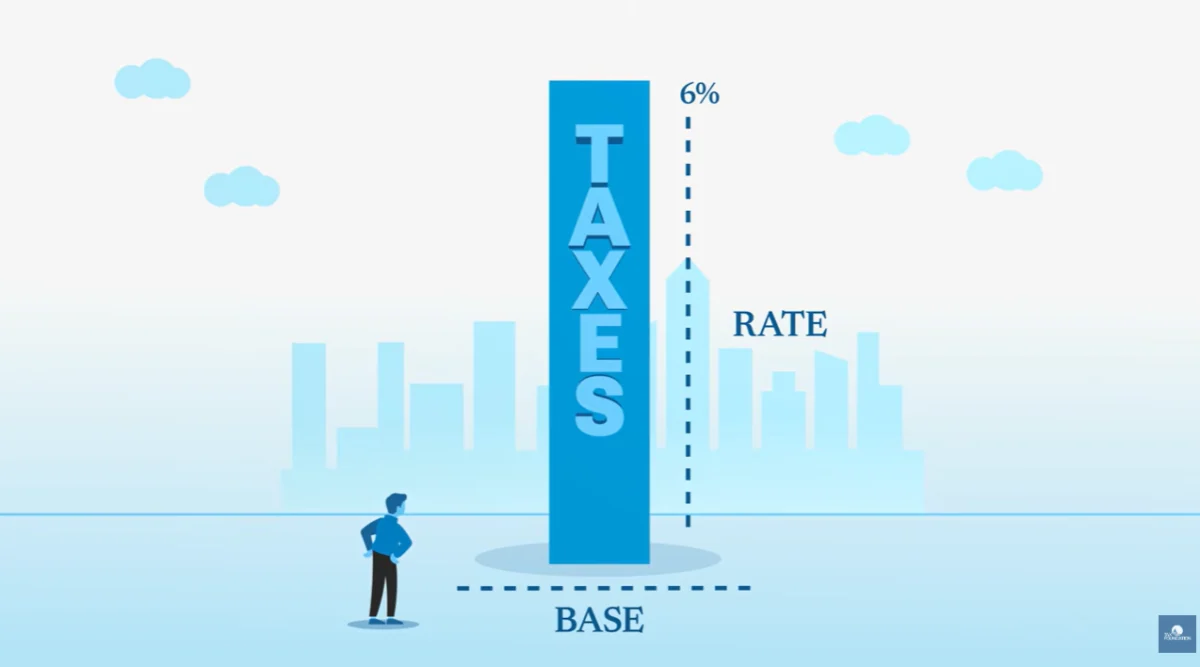
When taxpayers discuss their financial burden, the conversation almost invariably drifts toward the headline tax rate. Whether it is the marginal income tax bracket or the local sales tax percentage at the register, the "rate" is the most visible, tangible number in the fiscal landscape. However, tax policy experts argue that focusing solely on the rate is akin to judging a vehicle’s speed while ignoring the engine under the hood.
The true mechanism of any fiscal system is the "tax base"—the specific pool of income, property, or consumption that a government chooses to tax. As policymakers grapple with stagnant growth and the need for stable revenue, the debate is shifting from simply cutting rates to the more complex task of broadening the tax base.
The Anatomy of a Tax System: Rates vs. Bases
To understand how taxation shapes the modern economy, one must distinguish between the two primary levers of government revenue. The tax rate is the percentage applied to the tax base, while the tax base itself is the object of the tax.
If a government wishes to raise $1 million, it has two mathematical paths. It can tax a very small group of items at a high rate, or it can tax a vast array of items at a very low rate. Economic theory consistently favors the latter. A narrow base, by necessity, requires a high tax rate to reach revenue targets. This creates "tax distortions"—instances where the tax code is so punitive on specific activities that it forces businesses and individuals to alter their behavior purely to minimize tax liability.
When the tax code dictates behavior rather than market demand, efficiency declines. For instance, if a business decides not to expand its workforce simply because the tax implications of that expansion are too costly, the economy loses productivity. This is the hallmark of a poorly designed tax base.
A Chronology of Fiscal Evolution
The evolution of tax policy has been a centuries-long struggle between simplicity and political expediency.
- The Early 20th Century: Tax systems were relatively straightforward, primarily focused on land and simple consumption. As governments expanded their services, they began introducing complex exemptions to shield certain groups or industries from the rising cost of government.
- The Mid-Century Complexity Boom: Following World War II, the rise of the service economy created a disconnect. While tax codes were designed for a manufacturing era—taxing physical goods—the economy shifted toward services and digital goods. This created a mismatch where the "base" became increasingly disconnected from the actual way people spent money.
- The 1980s Tax Reform Era: Recognizing that high rates were stifling growth, nations like the United States began the "broaden-the-base, lower-the-rate" movement. The Tax Reform Act of 1986 serves as the seminal example, where massive loopholes and exemptions were closed in exchange for lower statutory rates.
- The Modern Digital Challenge: Today, the rise of streaming, cloud computing, and the gig economy has left tax bases in many jurisdictions outdated. Governments are currently in a period of intense reform, attempting to "catch up" by capturing digital transactions that were previously exempt, hoping to lower overall rates while maintaining revenue stability.
Supporting Data: The Case for Neutrality
The impact of tax base design is not merely theoretical; it is reflected in empirical economic data. Studies consistently show that jurisdictions with broad-based, low-rate systems experience higher levels of capital investment and more stable revenue streams during economic downturns.
Consider the sales tax model. In many jurisdictions, the base is "narrowed" through a patchwork of exemptions: groceries, streaming services, haircuts, and professional services are often left untaxed. While these exemptions are often framed as "consumer-friendly" or "pro-poor," they lead to higher baseline rates on the remaining taxable goods.
Table 1: The Revenue Impact of Base Broadening
| Strategy | Tax Base | Tax Rate | Economic Distortion | Revenue Stability |
|---|---|---|---|---|
| Narrow Base | Restricted | High | High | Low |
| Broad Base | Comprehensive | Low | Low | High |
Data from various state fiscal departments suggests that when a state broadens its base to include previously exempt services, it can often afford to cut its general sales tax rate by 1–2 percentage points while maintaining revenue neutrality. This shift reduces the "sticker shock" for consumers and reduces the administrative burden on businesses that would otherwise have to track complex exemption lists.
Official Responses and Political Realities
Despite the clear economic benefits of a broad, neutral tax base, implementing such policies is politically fraught.
"The difficulty is not in the math; it is in the political reality of the lobby," notes one senior tax policy analyst. Every exemption in a tax code—whether it is a tax break for a specific industry, a deduction for homeowners, or an exclusion for digital services—has a constituency. When a government proposes broadening the base by eliminating these exemptions, it faces intense pressure from those groups.
Official responses from state legislatures often highlight this friction. While governors and finance committees frequently voice support for "tax simplification" and "neutrality," they often stop short of removing popular exemptions. The political cost of being seen as "taxing groceries" or "taxing the internet" often outweighs the long-term economic gains of a more efficient system.
However, some jurisdictions have begun to frame base-broadening as a "fairness" issue. By arguing that a narrow base allows certain corporations or wealthy individuals to "hide" their activity in untaxed sectors, proponents of base broadening have found success in building public support for reform.
Implications: The Path Toward a Stable Economy
The implications of how a government defines its tax base extend far beyond the treasury.
1. Market Neutrality
A broad base is neutral. It ensures that the tax code does not influence whether a person buys a book or a streaming service, or whether a company invests in software versus hardware. When the tax code is neutral, the market—not the government—decides where capital is most effectively utilized.
2. Economic Resilience
Narrow bases are notoriously volatile. If a state relies heavily on a small set of taxable goods, its revenue will swing wildly based on consumer trends in those specific sectors. A broad base, which touches on almost every aspect of economic activity, provides a stable, predictable flow of revenue that allows for better long-term government budgeting.
3. Reduced Administrative Burden
A complex, narrow tax code requires massive compliance efforts. Businesses must spend millions on accountants and software to determine what is taxable and what is exempt. A broad, simple base reduces the "cost of compliance," effectively acting as a tax cut for businesses that no longer have to navigate a labyrinthine regulatory environment.
Conclusion: Looking Beyond the Rate
As we look toward the future of fiscal policy, the conversation must evolve. We must move past the superficial obsession with tax rates and address the structural integrity of the tax base. A tax system that is designed to capture a wide array of economic activity at a low, consistent rate is the most effective way to ensure long-term prosperity.
While the political temptation to carve out exemptions is high, the economic cost of doing so is equally significant. A robust, broad-based tax system is not just a tool for raising revenue; it is a vital component of a healthy, efficient, and competitive economy. By broadening the base and lowering the rate, governments can minimize distortions, stabilize their budgets, and create a fairer playing field for every participant in the modern market.
