


The landscape of American civil litigation has undergone a seismic shift, and if 2025 serves as any indicator, the era of the “nuclear verdict” is not merely persisting—it is accelerating at a staggering pace. According to a comprehensive new report from the strategic communications and research firm Marathon Strategies, the frequency and scale of massive jury awards against corporate defendants have shattered historical benchmarks, leaving legal departments and risk managers scrambling to adjust to a new, high-stakes reality.
The Main Facts: A $25.6 Billion Watershed Moment
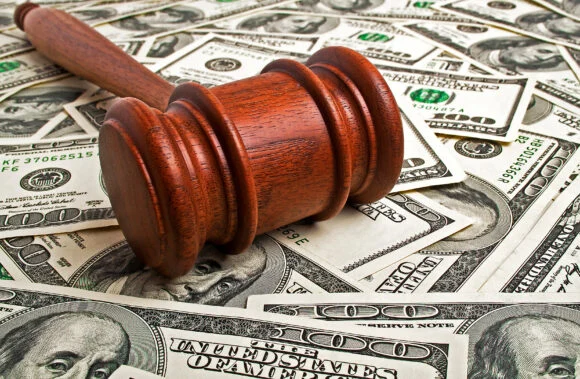
The data provided by Marathon Strategies is unambiguous: 2025 was a record-breaking year for high-stakes litigation. There were nearly 200 verdicts resulting in an award of at least $10 million, a 40.7% increase over 2024. To put this in perspective, this represents the highest frequency of such awards since the firm began tracking this data in 2009.
The cumulative financial toll of these verdicts reached approximately $25.6 billion. Perhaps most alarming to corporate boards is the emergence of what the report defines as “thermonuclear” verdicts—cases where jury awards hit the $100 million threshold. In 2025 alone, 40 cases reached this catastrophic level. Even more sobering, four individual verdicts eclipsed the $1 billion mark, signaling a willingness by juries to utilize damages as a tool for corporate social engineering rather than simple compensatory restitution.
Chronology: The Evolution of the Nuclear Trend
The trajectory of nuclear verdicts over the last three years suggests that the trend is moving beyond specific industries and becoming a systemic feature of the American judicial system.
- 2023: Nuclear verdicts were reported across 48 industries. The legal community began to notice a pattern of rising juror skepticism toward large corporations, yet many analysts still viewed these as isolated incidents confined to high-risk sectors like pharmaceuticals and chemicals.
- 2024: The reach expanded to 55 industries. While some states, such as Florida, implemented aggressive tort reform measures, the overall volume continued to trend upward, suggesting that legislative caps were struggling to keep pace with evolving juror sentiment.
- 2025: The current year saw the reach expand to a staggering 68 industries. The nature of these cases also diversified significantly. The year saw the first-ever federal nuclear verdict against a marijuana company, a landmark antitrust case brought by NBA icon Michael Jordan against NASCAR, and a $40 million RICO award against an internet troll posing as a government spy.
Supporting Data: Why Juries Are Delivering Massive Awards
The Marathon Strategies report delves into the "why" behind the numbers, citing a confluence of sociological and psychological factors that are reshaping the courtroom. The firm identifies four primary drivers: corporate mistrust, pervasive social pessimism, the gradual erosion of tort reform, and, perhaps most notably, public desensitization to large numbers.
The Generational Shift
The composition of juries is changing. As more Millennials and Gen Z members take their seats in jury boxes, the dynamics of deliberation are shifting. Marathon’s research indicates that these cohorts are statistically more pro-plaintiff, place a higher premium on corporate ethics, and harbor a deep-seated suspicion of institutional power. Unlike previous generations, who might have been swayed by traditional defense arguments regarding economic stability, younger jurors are reportedly more inclined to use their verdicts to punish perceived corporate negligence or social malfeasance.
Industry Vulnerability
While traditional high-risk industries remain in the crosshairs, the net is widening. In 2025, sectors including beverage companies, pharmaceuticals, auto manufacturers, hospitality, banking, and energy were frequently targeted. Even the insurance industry, which often sits on the other side of these disputes, was hit with five nuclear verdicts totaling $390 million.
Product liability remains the undisputed king of these awards, accounting for 29 nuclear verdicts totaling $12 billion. However, trade-secret disputes, intellectual property litigation, and workplace negligence cases are rapidly claiming a larger share of the pie.
Official Responses and Legislative Counter-Measures
In response to the surge, eight states—Arkansas, Georgia, Kansas, Louisiana, Missouri, Montana, Oklahoma, and South Carolina—enacted significant tort reform laws in 2025. These legislative efforts were primarily aimed at establishing reasonable caps on non-economic damages and increasing transparency requirements for third-party litigation funders, who are often accused of fueling the rise in litigation.
However, the efficacy of these measures remains a subject of intense debate. Consider the case of Florida: following major tort reform in 2023, the state saw a temporary dip in nuclear verdicts in 2024, falling to 10th in the national rankings. Yet, by 2025, Florida rebounded with a vengeance, recording a staggering $2.5 billion in nuclear verdicts.
Marathon Strategies summarized the limitation of legislative intervention succinctly: "These developments suggest that while a state can change rules in the courtroom, the court of public opinion is another matter entirely."
Implications: The New Frontier of Risk
The implications for the C-suite and legal counsel are profound. We are moving toward a future where the traditional defensive playbook—relying on procedural technicalities and statutory caps—is becoming insufficient.
Emerging Risk Areas
The report identifies several "frontiers" of litigation risk that companies must begin to account for in their enterprise risk management (ERM) strategies:
- PFAS and Environmental Litigation: As regulatory scrutiny intensifies, so does the appetite for massive class-action awards regarding "forever chemicals."
- Artificial Intelligence: As AI becomes integrated into every facet of business, liability for algorithmic bias, data privacy breaches, and failure to warn will become a primary driver of litigation.
- Deepfakes and Misinformation: The case of the internet troll serves as a warning; companies may soon face liability for their digital footprint and their failure to protect against or mitigate the damage caused by synthetic media.
- Climate Attribution: As the legal theory of "climate accountability" matures, corporations in the energy, transportation, and finance sectors will likely face unprecedented claims regarding their role in climate change.
The Necessity of Reputation Management
The most critical takeaway for corporations is that the courtroom is now an extension of the public square. When a jury is desensitized to billions of dollars and is fundamentally predisposed to distrust the defendant, legal strategy cannot be separated from reputation management.
Companies that fail to address their social license to operate—the perceived legitimacy of their actions in the eyes of the public—are finding themselves increasingly vulnerable to punitive damages. In this new era, the jury’s verdict is often a reflection of the company’s brand equity, ethics, and perceived transparency.
Conclusion: Preparing for the "Thermonuclear" Future
The data from 2025 serves as a loud wake-up call. The rise of nuclear and thermonuclear verdicts is not a temporary blip caused by a single legal trend, but rather a reflection of a fundamental shift in American social values and jury behavior.
For corporations, the path forward requires a multi-disciplinary approach. It requires robust ESG (Environmental, Social, and Governance) commitments that can withstand public scrutiny, aggressive investment in litigation communication strategies, and a realistic assessment of the "jury bias" that now exists across nearly every sector of the economy. As Marathon Strategies’ report demonstrates, the courtroom is no longer a neutral space for dispute resolution; it has become a theater where the grievances of society are addressed through the blunt instrument of the nuclear verdict. Companies that ignore this reality do so at their own peril.
