





For most entrepreneurs, the trajectory of a startup is viewed as a rite of passage: a transition from the chaotic, “reckless” garage-style inception to the polished, disciplined halls of a corporate entity. We are conditioned to believe that maturity is synonymous with success. We crave the validation of industry “grown-ups,” meticulously building systems, hiring experienced executives, and enforcing financial discipline to ensure our ventures are taken seriously.
But what happens when the very essence of your brand—the thing that made it a success in the first place—is rooted in play, rebellion, and irreverence?
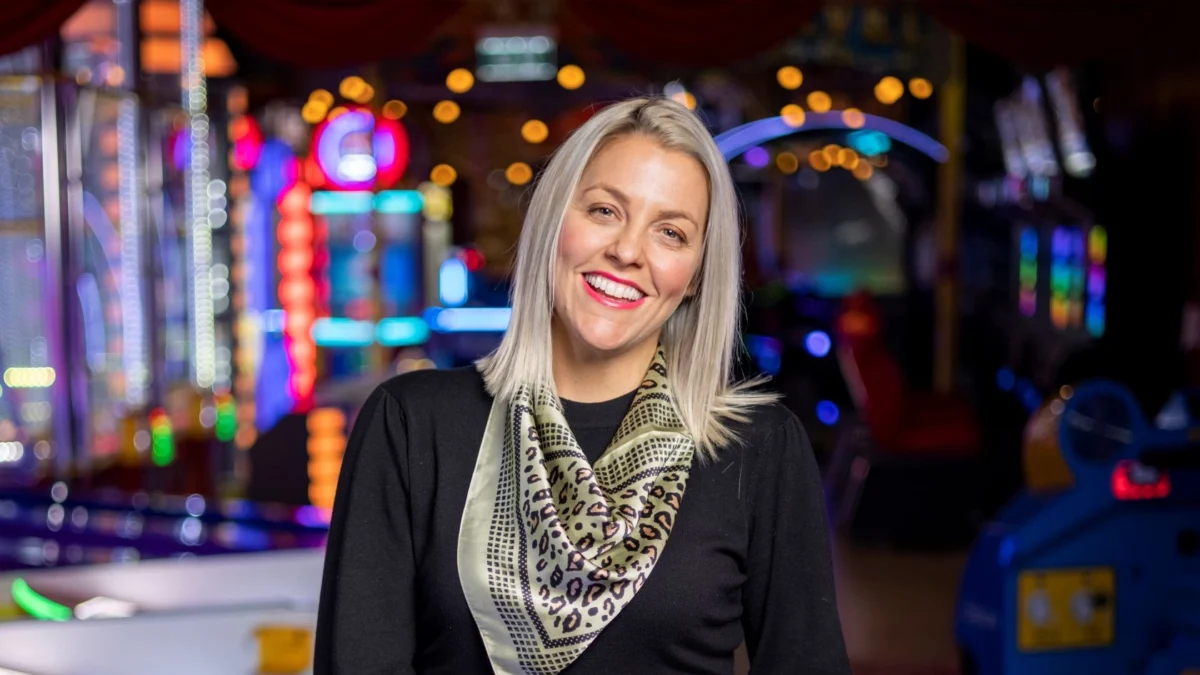
This is the central tension defining Funlab, the powerhouse behind experiential entertainment brands like Holey Moley, Hijinx Hotel, and Archie Brothers Cirque Electriq. In a wide-ranging conversation with Matt Jones, Funlab CEO Blaise Witnish explores the existential challenge of scaling a business built on "fun" without allowing the corporate machinery of growth to suffocate the creativity that powers it.
The Growth Dilemma: Growing Up Without Getting Old
Most founders spend the early years of a business desperately trying to make it "grow up." The startup phase is often defined by a survival-first mentality, but as revenue flows, the focus shifts to institutionalizing the business.
For Blaise Witnish, the challenge is unique. Funlab isn’t selling enterprise software or financial services; it is selling dopamine. Its brands are designed to disrupt the traditional hospitality space by injecting gamification and absurdity into nightlife.
“The trap,” Witnish notes, “is that as you scale, you feel the gravitational pull toward standardizing everything. You want consistent KPIs, you want uniform reporting, and you want predictable outcomes. But when you over-standardize a creative brand, you kill the magic. If you sterilize the experience to make it ‘safer’ for the board, you lose the customer who came to you because you were different.”
Chronology: From Niche Idea to National Phenomenon
To understand how Funlab manages this, one must look at its rapid evolution.
- The Inception: Funlab began with a singular focus on changing how adults socialized. By reimagining mini-golf as a high-concept, cocktail-infused experience, they identified a gap in the "eatertainment" sector.
- The Scaling Phase: Once the proof of concept was established, the company began a multi-year expansion, aggressively rolling out sites across Australia and eventually moving into international markets.
- The Maturity Inflection Point: As the portfolio grew to include dozens of venues, the company faced the classic dilemma: how to maintain the quality of the "first site" experience while managing hundreds of employees and thousands of daily guests.
- The Current Era: Today, Funlab operates as a sophisticated engine for new brand creation. The focus has shifted from mere expansion to "culture-first" scaling—ensuring that every new hire understands that their role is to facilitate play, not just oversee assets.
Supporting Data: The Economics of Play
The "eatertainment" sector has been one of the fastest-growing segments in the hospitality industry post-pandemic. According to industry analysis, the shift in consumer spending from goods to experiences has been dramatic.
- Market Growth: The global experience economy is projected to grow at a CAGR of over 10% through 2030.
- Retention metrics: Funlab’s internal data suggests that their repeat-visit rate is significantly higher than traditional bars or clubs, primarily because the gamification element provides a "hook" that lasts beyond the first drink.
- Scale Efficiency: Despite the creative nature of the business, Funlab has achieved high levels of operational efficiency through a centralized backend that handles logistics, procurement, and HR, leaving the "front of house" to focus entirely on guest engagement.
Official Responses: Insights from CEO Blaise Witnish
During the discussion, Witnish emphasized that the secret to maintaining a startup mindset within a large-scale operation is decentralized creativity.
"We treat our headquarters as an enabler, not a command center," says Witnish. "If we dictate every single detail from the top down, we lose the localized flavor that makes each of our venues feel like a neighborhood hangout. We hire people who are naturally playful, and then we build the guardrails around them so they can be creative within a safe, profitable framework."
Witnish argues that "financial discipline" should not be seen as the enemy of creativity, but as its sponsor. "If we aren’t profitable, we can’t afford to be creative. We can’t afford the custom-built art installations, the complex game mechanics, or the high-quality staff. Discipline is what buys us the freedom to be weird."
The Implications: Lessons for the Scaling Founder
The Funlab approach offers a blueprint for founders in any creative industry who fear that growth will lead to stagnation.
1. Hire for Culture, Train for Process
The temptation is to hire corporate veterans who know how to build departments. However, Witnish suggests that while you need operational expertise, you must prioritize candidates who understand the brand’s "vibe." You can teach a creative person how to read a P&L, but it is nearly impossible to teach a rigid corporate bureaucrat how to be whimsical.
2. Guardrails, Not Handcuffs
Innovation requires room to fail. Funlab’s strategy involves setting clear boundaries—what is non-negotiable (safety, service standards, financial transparency)—and leaving the rest open to interpretation. This allows individual venue managers to adapt their programming to their specific demographics.
3. Protecting the "Why"
As a company grows, the original "Why" often gets buried under layers of middle management. Funlab combats this through constant storytelling. Every internal meeting or training session focuses on the mission: bringing people together through play. When the mission is clear, operational decisions become secondary to the goal of the user experience.
The Road Ahead: The Future of "Serious Fun"
As Funlab continues to expand, the question remains: Can this level of growth be sustained without eventually becoming the very thing they started out to disrupt?
The industry is watching closely. Competitors in the eatertainment space are increasingly copying the Funlab model, leading to market saturation. To stay ahead, Funlab is pivoting toward technological integration—using data to personalize the guest experience in real-time.
"The moment we stop evolving is the moment we start dying," Witnish asserts. "We are constantly iterating on our venues. If a game isn’t working, we pull it. If a concept is tired, we refresh it. We don’t get married to our ideas; we get married to the outcome, which is creating a moment of genuine joy for our customers."
For entrepreneurs looking at the horizon, the lesson from Witnish is clear: Maturity is not about putting on a suit and tie; it is about building a business that is sophisticated enough to survive the storms of the market, yet agile enough to keep its sense of humor.
The paradox of the modern startup is that to remain truly relevant, you must ensure that as you grow, you never actually "grow up." You must keep the curiosity, the drive to experiment, and the willingness to take risks that defined your very first day in business. For Blaise Witnish and the team at Funlab, that isn’t just a corporate strategy—it’s the only way to play the game.
