





In the high-stakes world of startup development, the difference between a venture that scales and one that stalls often comes down to a single variable: access to capital. While the digital age has theoretically flattened the world, the ecosystem for startup funding remains stubbornly fragmented. For founders, finding the right incubator, accelerator, or grant often requires navigating a labyrinth of regional databases, outdated websites, and opaque local networks.
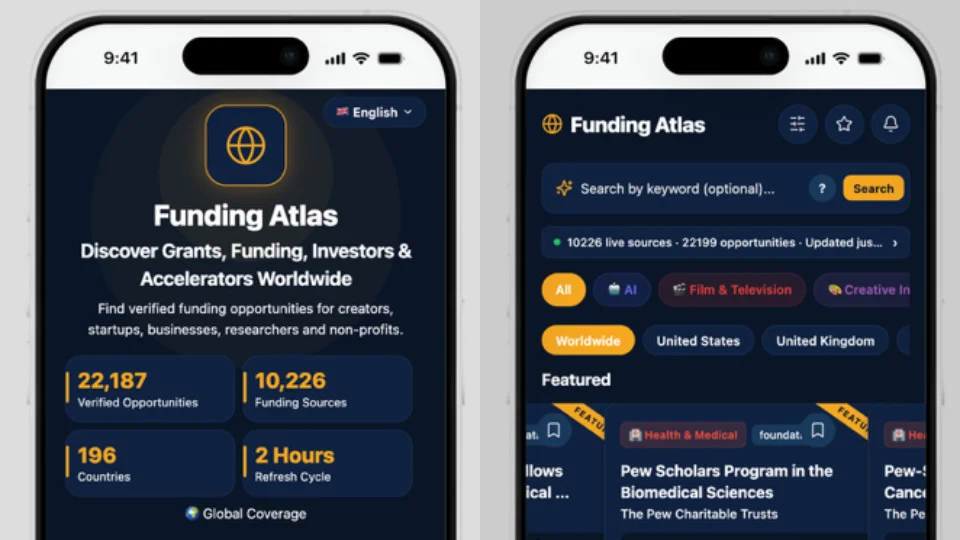
Enter Funding Atlas, a new mobile application developed by Melbourne-based filmmaker and serial entrepreneur David Raynor. Designed to act as a centralized clearinghouse for global funding opportunities, the app aims to eliminate the geographical friction that prevents brilliant ideas from meeting the capital they need to thrive.
Main Facts: The Vision Behind the Atlas
At its core, Funding Atlas is a discovery engine. It aggregates opportunities for accelerators, grants, incubators, and venture-backed programs from across the globe, allowing founders to filter searches by country, industry, and funding stage.
The application is the brainchild of David Raynor, a 75-year-old entrepreneur who brings a unique perspective to the world of software development. Raynor is not a career coder; he is a filmmaker by trade and the founder of the AI-powered video platform Morphosys. His transition into app development was driven by a practical, personal frustration: he couldn’t find the resources he needed to scale his own business without hitting a "local wall."
The platform is available on both iOS and Android, offering a streamlined interface that prioritizes functionality over fluff. By leveraging AI-driven aggregation tools, Raynor has built a tool that promises to keep pace with the hyper-speed evolution of the startup ecosystem, ensuring that the data presented to users is as current as the markets themselves.
Chronology: From Personal Frustration to Global Tool
The genesis of Funding Atlas is a testament to the "scratch your own itch" philosophy of entrepreneurship.
Phase 1: The Bottleneck
While working on Morphosys, Raynor found himself trapped in a loop of search engine results. Every time he searched for growth opportunities, the algorithms served him the same handful of Melbourne-based incubators. "I wondered, why isn’t this all together in one place?" Raynor noted in an interview with Startup Daily. He realized that while the global startup community is vast, the tools to navigate it were remarkably parochial.
Phase 2: The "Vibe Coding" Development Cycle
Raynor’s approach to building the app was unconventional. Embracing the current trend of "vibe coding"—using generative AI to translate high-level conceptual ideas into functional code—Raynor bypassed traditional, multi-year software development lifecycles. He enlisted the assistance of Newly AI and a network of freelance developers to bridge the gap between his vision and technical execution.
Phase 3: Launch and Iteration
The development cycle was rapid, moving from concept to a functional, native cross-platform application in a matter of months. Since its launch, the app has focused on onboarding initial users, refining the search algorithms, and building a repository of international funding entities that span from Silicon Valley and London to emerging hubs in Southeast Asia and Africa.
Supporting Data: The Funding Gap
To understand the necessity of Funding Atlas, one must look at the current state of startup discovery. According to various industry reports, the primary hurdle for early-stage founders is not necessarily a lack of capital, but a lack of visibility.
- Regional Concentration: Over 60% of global venture capital is concentrated in just a few key hubs (San Francisco, New York, London, and Beijing). This creates a "capital desert" for founders operating in secondary or tertiary markets.
- Search Fragmentation: There are currently over 10,000 active incubators and accelerators worldwide, according to various industry trackers. However, these entities rarely share a standardized reporting format, making it impossible for a founder to compare them side-by-side using traditional search engines.
- The AI Advantage: AI-driven data aggregation, which powers the backend of Funding Atlas, is capable of processing thousands of website updates daily. Traditional manual curation—the standard for most VC directories—often results in data that is six to twelve months out of date.
The reliance on these manual, outdated directories has historically cost founders thousands of hours in administrative labor. By automating the discovery process, Funding Atlas theoretically returns hundreds of hours of productivity to the startup ecosystem annually.
Official Responses and Industry Reception
The reception to Funding Atlas has been marked by a blend of admiration for Raynor’s initiative and a healthy debate regarding the future of AI-assisted development.
The Founder’s Perspective
David Raynor remains steadfast in his mission. In his correspondence with Startup Daily, he emphasized that the platform is intended to be a global equalizer. "I wanted to create a place where businesses around the world can search for opportunities in their own country and internationally," he said. His goal is to remove the "who you know" factor from the funding process, replacing it with a transparent, searchable data layer.
The Tech Community’s View
The "vibe coding" aspect of the app has caught the attention of the developer community. While some purists argue that AI-assisted code can lead to bloated or inefficient architecture, the consensus among startup founders is more pragmatic: if it works, it’s valuable. The aesthetic of the app—frequently described by observers as bearing the distinct "vibe coded" visual markers of modern cross-platform frameworks—has been praised for its accessibility and clean user experience.
Critics have noted that the success of Funding Atlas will ultimately depend on the quality of its curation. Even with AI, the "garbage in, garbage out" rule applies. Raynor’s reliance on Newly AI and freelance developers suggests a model that is scalable, but the platform must prove it can distinguish between high-quality, legitimate funding opportunities and predatory "pay-to-play" schemes that often plague the incubator space.
Implications: The Democratization of Opportunity
The launch of Funding Atlas arrives at a pivotal moment in the history of global innovation. We are currently witnessing a shift toward decentralized entrepreneurship, where high-growth companies are increasingly being founded in locations far removed from traditional tech epicenters.
A Leveling Playing Field
If Funding Atlas achieves its goals, the implication for the global economy is profound. By providing a founder in Nairobi, Lima, or Hanoi the same level of access to international accelerators as a founder in Palo Alto, the app could contribute to a more diverse and globally representative pipeline of innovation.
The Future of Development
Furthermore, the project serves as a compelling case study for the future of software development. Raynor, at 75, proves that the barrier to entry for building complex digital tools has been lowered to the point of near-invisibility. The ability to "vibe code" an application means that the next generation of founders will not be limited by their ability to hire expensive engineering teams, but by the quality of the problems they choose to solve.
Challenges Ahead
Despite the promise, the platform faces significant challenges. The funding landscape is volatile; programs close, pivot, or change their focus almost overnight. Maintaining an accurate, global database will require constant vigilance and perhaps a move toward crowdsourced data verification. Additionally, as the app scales, it will need to implement robust security measures to protect the proprietary data of the founders who use it to plan their funding strategies.
Final Thoughts
Funding Atlas is more than just a directory; it is a manifestation of a changing ethos in the tech industry. It reflects a growing impatience with the inefficiencies of the old guard and a belief that, with the right tools, any entrepreneur—regardless of age, location, or background—can find the resources they need to change the world.
David Raynor’s journey from filmmaker to AI-driven app developer is an inspiration to those who believe that the best time to build a solution is when you first realize that one doesn’t exist. As the startup ecosystem continues to evolve, tools like Funding Atlas will likely become the standard infrastructure for the next wave of global innovation, ensuring that capital is no longer a hidden resource, but an accessible utility for the dreamers and builders of the world.
