





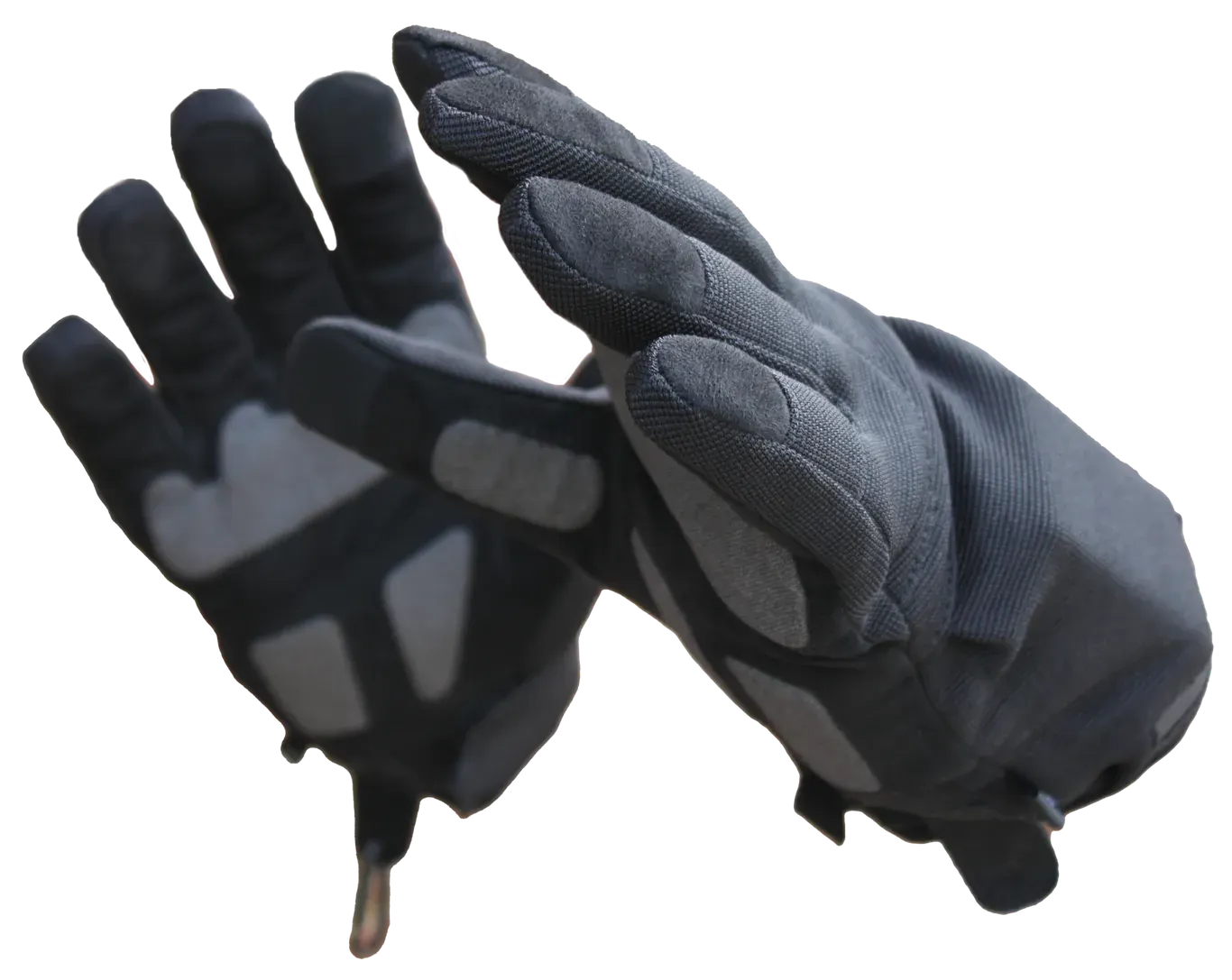
The U.S. Department of Homeland Security (DHS) recently sparked a quiet but intense debate within the law enforcement community following its decision to equip Immigration and Customs Enforcement (ICE) agents with "Generated Low Output Voltage Emitters"—more commonly known as GLOVEs. These wearable devices, designed to deliver an electric shock upon physical contact, have thrust a niche, relatively obscure technology into the national spotlight.
While the federal rollout has drawn attention, experts in police policy and criminology warn that the adoption of GLOVE technology is unlikely to signal a paradigm shift for municipal law enforcement. In a landscape increasingly concerned with de-escalation, accountability, and the judicious use of force, these gloves present a series of tactical, ethical, and operational hurdles that most city police departments are hesitant to clear.
The Genesis of GLOVE Technology
The concept of the GLOVE is rooted in the broader category of Conductive Electrical Weapons (CEWs) or Electronic Control Devices (ECDs). Unlike the ubiquitous Taser, which functions as a projectile weapon, the GLOVE is a contact-based tool. It is designed to be worn by officers who, through a physical grab or strike, can deliver a localized electric current to a subject.
The technology has remained largely relegated to specific high-security environments—most notably sheriff-run jails and correctional facilities. In these controlled settings, where space is confined and the population is already detained, the limitations of a contact-based weapon are often viewed as manageable. However, the transition from the static environment of a jail cell to the chaotic, unpredictable theater of street policing is a transition that many experts believe the technology cannot survive.
Chronology of Adoption and Public Scrutiny
The trajectory of GLOVE technology has been slow and uneven. For years, these devices existed on the periphery of the "less-lethal" market, marketed primarily to detention centers where officers are tasked with managing non-compliant inmates in close quarters.
The recent DHS announcement marked a rare high-profile endorsement of the technology. For the general public, the news was unexpected, raising immediate questions about the necessity of such tools and the training protocols required to prevent abuse. Historically, law enforcement agencies have been cautious about adopting new technologies that could increase the "force footprint" of an officer, especially in an era where body-worn camera footage often leads to immediate public and legal repercussions.
Tactical Limitations: The "Melee-Range" Problem
Seth Stoughton, a professor at the University of South Carolina School of Law and a former Tallahassee police officer, suggests that the primary reason municipal agencies have avoided GLOVEs is a fundamental mismatch between the tool’s design and the realities of street policing.

The Distance Requirement
In modern police training, officers are taught to maintain a "reactionary gap." This distance provides the officer with the time needed to assess a threat and the space to de-escalate. The Taser, as a projectile device, supports this doctrine by allowing an officer to incapacitate a threat from several feet away.
The GLOVE, by contrast, requires total physical proximity. "If I can’t touch them with my hand, I can’t use this glove effectively," Stoughton notes. This creates an immediate safety paradox: to use the device, an officer must intentionally place themselves in the "danger zone," negating the tactical advantage of distance that is foundational to modern use-of-force training.
The Risks of Constant Contact
In a physical struggle, the situation is fluid. A subject may transition from non-compliant to compliant in a split second. With a GLOVE, the risk of "over-shocking" is significant. If an officer continues to hold a subject while the device is active, they continue to deliver pain. To stop the current, the officer must either disengage—which risks losing control of a resistive subject—or navigate the cumbersome process of deactivating the device while simultaneously maintaining physical contact.
Furthermore, the mechanical burden of the device is non-trivial. Taking off a specialized glove during a struggle, or attempting to turn off a switch while wrestling, can consume precious seconds. In a high-stress environment, those three seconds represent a dangerous window of vulnerability where an officer’s hands are occupied by equipment rather than defense.
Cross-Contamination and Team Safety
One of the most overlooked risks of GLOVE technology in a street setting is the high probability of inadvertent contact between officers. Municipal policing is a collaborative effort; officers frequently work in pairs or teams, often grabbing, passing, or restraining subjects together.
"I put my hand on another officer’s back, or I pass the suspect’s hand over to this officer to handcuff him, and in doing so, I’m going to be making contact with my fellow officer’s hand," Stoughton explains. The potential for a "friendly fire" incident—where a fellow officer is accidentally shocked during a chaotic arrest—poses both a liability risk and a genuine danger to team cohesion. In a high-stakes arrest, the last thing a department wants is an incapacitated officer due to an equipment error.
The "Contagion Effect" in Procurement
Despite these glaring drawbacks, the adoption by federal agencies like ICE can create a psychological phenomenon known as the "contagion effect." When one agency adopts a new piece of hardware, it often trickles down into the discourse of local police boards and city councils.

"When one agency gets a new toy, at least some other agencies might also think, ‘Oh, maybe we should look into that too,’" says Stoughton. This is not necessarily driven by operational need, but by the pressure to appear technologically advanced or "prepared." However, experts caution against "shiny object syndrome" in policing. Just because a technology is available does not mean it serves the interest of public safety or fiscal responsibility.
A Framework for Technological Evaluation
To avoid wasteful spending and unnecessary escalation, Stoughton proposes a rigorous four-stage framework for police executives to evaluate any new tool, including GLOVEs:
- Goal Identification: What specific problem are we trying to solve? If the goal is to reduce injuries to officers or suspects, does this tool actually achieve that, or does it merely add a new layer of complexity?
- Capability vs. Limitation Analysis: Beyond the manufacturer’s marketing, what are the inherent limitations of the tech? Who is it designed for, and does it translate to the field?
- Human-Factors Integration: How do human beings—under extreme stress and fatigue—interact with this tool? Does it demand too much cognitive load?
- Comparative Cost-Benefit Analysis: Is this the most efficient way to achieve the goal? Are there cheaper, safer, or more effective non-technological solutions, such as improved de-escalation training or better staffing levels?
Implications for the Future of Policing
The debate over GLOVEs is ultimately a microcosm of the larger struggle to define the future of American policing. As departments face pressure to reduce fatal encounters, the industry is flooded with "solutions" promising to offer less-lethal control.
However, the consensus among policy experts is clear: technology is rarely a substitute for high-quality training and sound judgment. If the benefit of a tool is marginal and the risk of misuse or operational error is high, the investment is likely unjustifiable.
While ICE’s adoption of these gloves will certainly continue to be monitored by civil rights advocates and policy analysts, it is unlikely to trigger a widespread move toward electric-shock gloves in municipal police departments. Most departments, facing budget constraints and the scrutiny of an informed public, will continue to prioritize tools that favor distance, clarity, and control—principles that the GLOVE, in its current iteration, struggles to embody.
Ultimately, the most effective "weapon" in a police officer’s arsenal remains their ability to communicate, assess, and maintain a safe distance. As long as GLOVE technology mandates the abandonment of those principles, it will likely remain a niche tool, ill-suited for the complex, high-stakes environment of the modern city street.
