




By Staff Reporter
Published August 25, 2026
In a candid assessment of its corporate environmental footprint, retail giant Walmart has acknowledged that it fell short of several ambitious sustainability targets set for 2025 regarding its private-label packaging. The admission, detailed in the company’s Fiscal Year 2026 Environmental, Social, and Governance (ESG) Report, highlights the immense friction between global sustainability aspirations and the pragmatic, often rigid requirements of the modern retail supply chain.
For years, major retailers have faced mounting pressure from investors, regulators, and consumers to decouple their business growth from plastic consumption. Walmart, as the world’s largest retailer, has frequently been the bellwether for industry-wide shifts. However, the data released in its FY2026 report paints a picture of a company navigating a complex web of logistical, economic, and safety-related trade-offs, forcing a recalibration of its long-term packaging strategy.
The Core Data: A Look at the 2025 Gap
The FY2026 ESG Report, which covers the period from February 1, 2025, to January 31, 2026, reveals that Walmart’s performance against its key packaging metrics remained largely stagnant or, in some areas, regressed compared to its FY2024 baseline.
Outcomes of Walmart’s 2025 Targets for Global Private Brand Packaging
| Goal | FY2024 | FY2025 | FY2026 |
|---|---|---|---|
| 100% Recyclable, Reusable or Compostable | 68.2% | 66.1% | 64.3% |
| Reduce virgin plastic 15% (vs. FY2021) | +8.17% | +4.11% | +4.12% |
| 17% of plastic packaging made from PCR | 7.4% | 7.6% | 10.7% |
| 20% PCR – North America Specifically | 7.3% | 8.2% | 12% |
The data indicates that while the company has made measurable gains in the integration of Post-Consumer Recycled (PCR) content—jumping from 7.6% to 10.7% globally in a single year—the broader goal of reducing absolute virgin plastic usage has proven elusive. The "plus" figures in the virgin plastic reduction category indicate that the company actually increased its virgin plastic usage relative to the FY2021 baseline, rather than achieving the intended 15% reduction.
Chronology of a Shifting Strategy
Walmart’s journey toward sustainable packaging has been marked by high-profile commitments followed by strategic pivots.
- Pre-2025: Walmart aligns with global industry trends, setting aggressive targets to phase out problematic plastics and increase the circularity of its Great Value and other private-label lines.
- 2024: The company makes waves in the supply chain industry by exiting the U.S. Plastics Pact, a move that signaled a departure from collaborative, multi-stakeholder industry commitments toward a more internal, proprietary approach to sustainability.
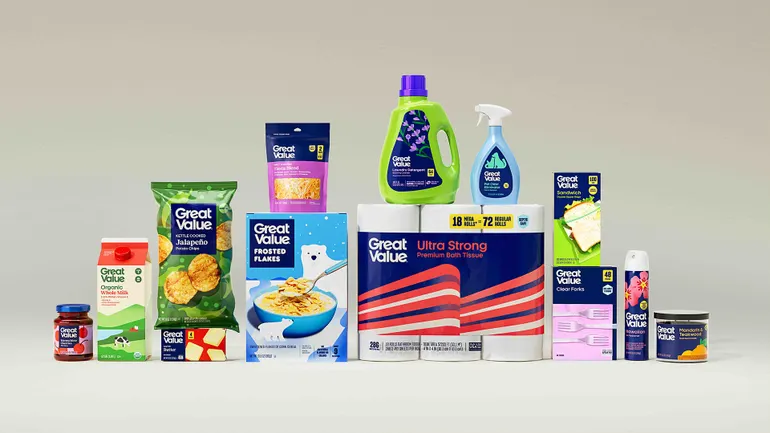
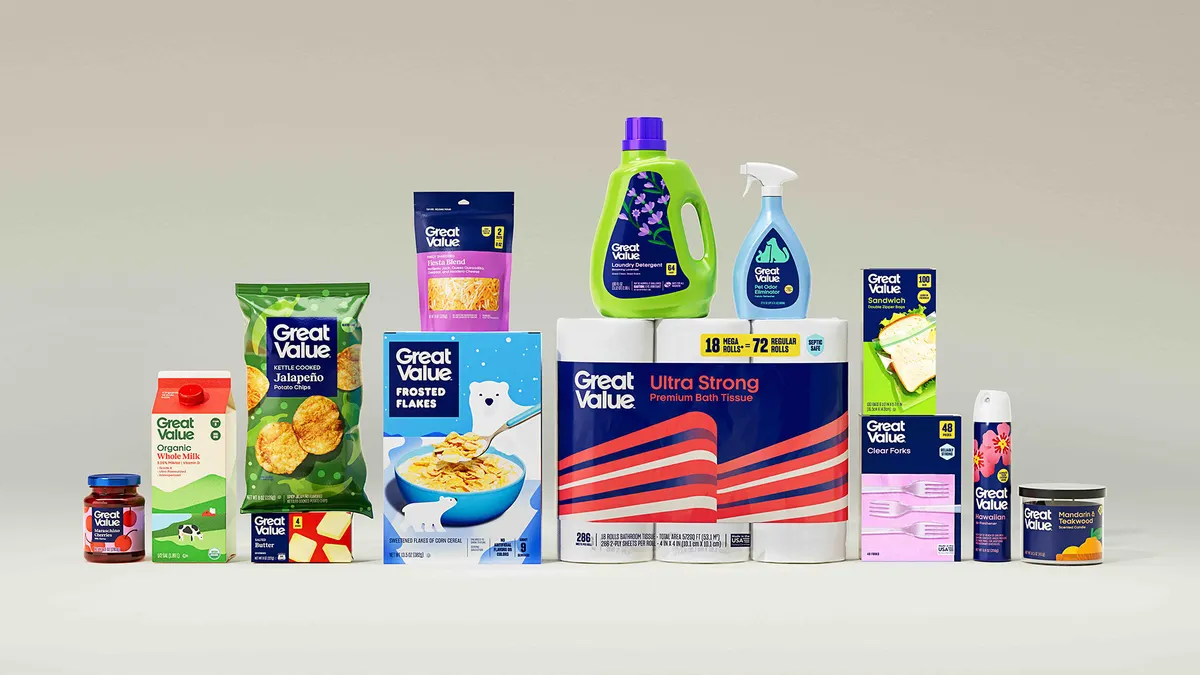
- Early 2026: The retailer officially rolls out a redesigned look for its Great Value private brand, focusing on modernizing the aesthetic while simultaneously attempting to integrate "design for recycling" principles.
- Mid-2026: The FY2026 ESG Report is published, officially conceding that the 2025 milestones were not met, while shifting the narrative toward "packaging intensity" and operational efficiency.
The "Trade-Off" Reality: Why Targets Were Missed
The retail sector often faces criticism for the slow pace of change, but Walmart’s report provides a rare, transparent look at the engineering and logistical hurdles involved. The company explicitly noted that "trade-offs among product protection, food safety, cost, regulatory requirements, [and] recycled material availability" acted as significant friction points.
Food Safety and Product Protection
The primary mandate of retail packaging is to ensure the integrity of the product. For food items, this requires barrier properties that prevent contamination and extend shelf life to reduce food waste—a metric that is often just as critical to sustainability as plastic reduction. Replacing a multi-layer, high-performance plastic with a more "recyclable" mono-material often results in compromised shelf life, leading to increased food spoilage, which carries its own environmental cost.

The PCR Availability Crisis
While Walmart successfully increased its use of Post-Consumer Recycled (PCR) materials to 10.7% globally, it remains far from the 17% target. The issue is not merely one of corporate will, but of market supply. High-quality, food-grade PCR is currently a scarce commodity. As every major consumer goods company scrambles to secure these materials to meet their own ESG goals, the supply chain for recycled resins has faced volatility, price spikes, and quality control issues.
Regulatory and Technical Hurdles
Walmart noted that it is frequently forced to use packaging formats that are "not yet recyclable at scale." Infrastructure for recycling varies wildly by geography, particularly in the United States. Designing packaging that is theoretically recyclable in a lab environment is ineffective if the local municipal recycling facilities (MRFs) lack the technology to process those specific materials.
Strategic Responses and Innovations
Despite the missed targets, the retailer is not abandoning its sustainability agenda. Instead, it is moving toward a more targeted approach. One of the most significant initiatives highlighted in the FY2026 report is the move toward "label-free" packaging.
For its Great Value 40-pack bottled water, the company has implemented a pilot program removing traditional plastic labels. By laser-etching or using direct printing, the company eliminates a layer of waste that frequently clogs sorting machines at recycling centers. Currently active in three distribution centers, the program is expected to scale, serving as a template for how Walmart intends to tackle packaging waste moving forward: through design innovation rather than broad, top-down mandates.

Implications for the Retail Industry
The implications of Walmart’s report are profound for the broader retail and packaging industries.
1. The Death of One-Size-Fits-All Pledges
The failure to meet these specific targets suggests that the era of setting broad, multi-year, industry-wide pledges without granular control over the supply chain may be waning. Companies are increasingly finding that "commitment" is no substitute for "infrastructure."
2. Focus on "Packaging Intensity"
Walmart’s pivot toward measuring "virgin plastic packaging intensity" (weight per net sales dollar) represents a shift in how success is defined. By focusing on intensity, the company is attempting to prove that it is becoming more efficient, even if its absolute consumption continues to grow due to the scale of its retail operations.
3. Independence Over Collaboration
By exiting the U.S. Plastics Pact and distancing itself from the Ellen MacArthur Foundation’s 2030 agenda, Walmart is signaling that it prefers to set its own pace. This allows the company to adjust to market realities—such as the lack of PCR availability—without the reputational blowback of failing to meet external, third-party benchmarks.
4. The Consumer Impact
For the average shopper, these changes are largely invisible. However, as packaging becomes more "circular," consumers may notice changes in the feel or look of their products. The industry challenge remains: creating packaging that is environmentally superior without causing the consumer to perceive a drop in product quality.
Conclusion: The Path Forward
Walmart’s FY2026 report serves as a sobering reminder that the transition to a circular economy is not a linear path. It is a messy, expensive, and technically difficult process that requires the alignment of waste management infrastructure, material science, and global commodity markets.
The retailer maintains that it will "continue measuring, reporting, and advancing our packaging strategies." Whether this translates into a future where plastic reduction finally outpaces sales growth remains to be seen. For now, the retail giant has chosen transparency over optimism, acknowledging the immense "trade-offs" inherent in its mission to package millions of products for a global audience while attempting to minimize its ecological footprint. As the industry watches, Walmart’s strategy of targeted design innovation may well become the new blueprint for retail sustainability in the latter half of the decade.
