




In a landscape defined by rapid technological shifts and the democratization of artificial intelligence, Australia is emerging as a critical hub for global innovation. Since OpenAI officially established its Australian presence in December 2025, the local startup ecosystem has been bolstered by a significant infusion of capital—not in the form of traditional venture equity, but as $5.5 million in API credits. This strategic move, designed to lower the barrier to entry for local developers, has begun to bear fruit, with a diverse cohort of entrepreneurs—ranging from seasoned tech veterans to high school students—leveraging the power of large language models (LLMs) to redefine industries.
A Strategic Beachhead: OpenAI’s Australian Expansion
OpenAI’s decision to plant a flag in Australia was far from accidental. Recognizing the nation’s high density of technical talent and a robust appetite for early-stage digital transformation, the global AI giant identified Australia as one of its top ten global markets for platform development.
The launch of the Sydney office in late 2025 served as the starting gun for an aggressive integration strategy. By providing $5.5 million in API credits, OpenAI is effectively subsidizing the experimental phase of hundreds of startups. For a small-to-medium enterprise (SME) or a bootstrap startup, the compute costs associated with training and refining AI-driven applications can be prohibitive. By removing this financial friction, OpenAI is ensuring that the best ideas—not just the best-funded ones—have the runway to reach a minimum viable product (MVP) and beyond.
The Face of the Future: The High School Entrepreneurs
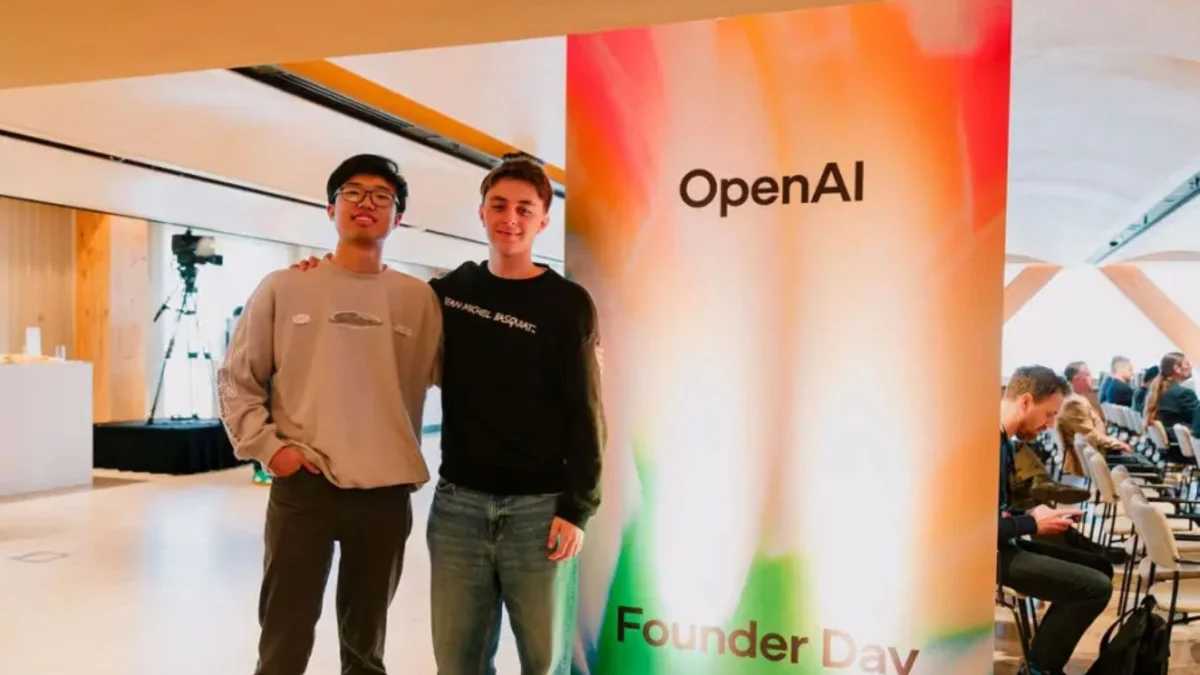
Perhaps the most compelling narrative to emerge from the recent Sydney Founder Day—an event that drew 150 of the country’s most promising builders—is the success of the youngest participants: Year 12 students Peter Starodubtsev and Steve Zhu. Their presence at the event, and their receipt of substantial API credits, underscores a broader trend: the "democratization of creation."
Peter Starodubtsev, the founder of the gaming and advertising startup Petrex, represents the new breed of founder. Operating at the intersection of gaming, marketing, and generative AI, Petrex has already secured six-figure pre-seed funding. Starodubtsev’s platform utilizes OpenAI’s Codex and advanced LLMs to build immersive, branded experiences within gaming environments. By integrating AI-driven narrative and asset generation, Petrex is transforming how major brands interact with the gaming demographic.
"Raising funding was a huge learning experience, but what I enjoy most is building the product, testing new ideas, and growing our team," says Starodubtsev. His early success is not merely a hobbyist’s curiosity; it is a commercial operation that has already garnered partnerships with global heavyweights, including Samsung and NBC Universal Studios. His journey serves as a powerful testament to how modern tooling allows young developers to punch well above their weight, utilizing cloud-based AI infrastructure to compete with established agencies.
Chronology of an AI Surge: December 2025 to Present
To understand the current momentum, one must look at the timeline of OpenAI’s Australian footprint:
- December 2025: OpenAI officially opens its Sydney headquarters. The launch is accompanied by the announcement of a dedicated support program for Australian startups, featuring the initial rollout of $5.5 million in API credits.
- Q1 2026: A surge in local adoption is observed as SMEs across fintech, healthtech, and edtech begin integrating OpenAI’s GPT models into their backend infrastructure.
- Mid-2026: The inaugural Sydney Founder Day is hosted, acting as a "Proof of Concept" for the local ecosystem. The event showcases a 150-strong cohort of developers and founders, highlighting the collaborative nature of the Australian AI community.
- August 2026: The milestone of $5.5 million in fully allocated or committed credits is reached, signaling that the initial funding phase has successfully catalyzed a wide range of industry-specific applications.
Supporting Data: Why API Credits Matter
The significance of $5.5 million in credits cannot be overstated. In the world of AI, "compute is the new oil." Startups building on OpenAI’s API typically face recurring costs that scale linearly with user adoption. For a pre-seed startup, these costs can represent the difference between hiring a lead engineer or closing shop.
According to industry analysts, the distribution of these credits has followed a multi-sector pattern:
- Retail & E-commerce (25%): Automated customer support and hyper-personalized product recommendation engines.
- Gaming & Media (20%): Dynamic content generation and interactive narrative design, exemplified by companies like Petrex.
- Finance & Legal (15%): Automated compliance reporting and contract synthesis.
- Education & Research (15%): AI-augmented learning tools and research assistants.
- General SaaS (25%): Specialized workflow automation tools.
By subsidizing these specific sectors, OpenAI is not just handing out cash; they are building a diverse ecosystem that is deeply integrated into the Australian economy.
Official Responses and Industry Sentiment
While OpenAI has remained relatively quiet on the specific metrics of its local growth, representatives at the Sydney Founder Day emphasized the importance of local autonomy. "The goal is to provide the infrastructure," one OpenAI representative noted during the event. "The ingenuity—the way these companies are applying our models to the unique challenges of the Australian market—that is entirely theirs."
The feedback from the startup community has been overwhelmingly positive. Founders note that the credits allow them to engage in "aggressive experimentation." In the past, testing a new AI model feature might have required a capital-intensive decision. Now, founders can deploy, test, fail, and pivot within a single business week without jeopardizing their runway.
The Broader Implications for the Australian Economy
The implications of this investment are far-reaching, extending well beyond the immediate success of individual startups like Petrex.
1. Retention of Technical Talent
Historically, Australian tech talent has been prone to "brain drain," with high-potential developers moving to Silicon Valley or London to find the infrastructure and funding they need to scale. By bringing high-level AI infrastructure to Sydney, OpenAI is providing a compelling reason for the next generation of founders—like Zhu and Starodubtsev—to build their companies at home.
2. Industry-Specific Innovation
Australia has unique market conditions, including a highly concentrated retail sector, a booming mining industry, and a complex regulatory environment. Local startups are using OpenAI’s API to solve problems that global models might overlook, such as local compliance automation and regional market personalization.
3. The Education Shift
The success of high school founders signals a fundamental shift in the education system. As AI becomes a standard tool in the developer’s toolkit, the focus of technical education is moving away from syntax and toward "problem architecture." These students are learning how to prompt, fine-tune, and integrate systems, skills that will be in high demand for decades to come.
4. A New Standard for Big Tech
OpenAI’s model of "credits-as-capital" sets a new benchmark for how global tech giants should interact with emerging markets. Rather than focusing solely on sales, the focus on building a local builder base creates long-term brand loyalty and ensures that the infrastructure being used is deeply embedded in the local market.
Conclusion: The Path Forward
As the $5.5 million in initial credits is fully realized, the question for the Australian startup ecosystem shifts from "how do we get started?" to "how do we scale?" The momentum generated in the first eight months of OpenAI’s Australian presence suggests that the nation is well-positioned to transition from an early adopter to a global player in the AI application layer.
For founders like Peter Starodubtsev and Steve Zhu, the journey has only just begun. Their ability to secure partnerships with companies like Samsung and NBC Universal while still in school is a harbinger of a future where age, location, and initial capital are no longer the primary determinants of business success. Instead, the ability to effectively harness and iterate upon AI will dictate who leads the next wave of industry disruption.
As the Australian tech sector continues to evolve, the partnership between the global AI giant and local innovators remains a cornerstone of the nation’s digital future. If the first 150 builders at Sydney Founder Day are any indication, the next great global tech company may well be built not in a boardroom in Palo Alto, but in a classroom or a small studio in Sydney, powered by the very credits that are currently fueling the nation’s AI revolution.
