




By International News Desk
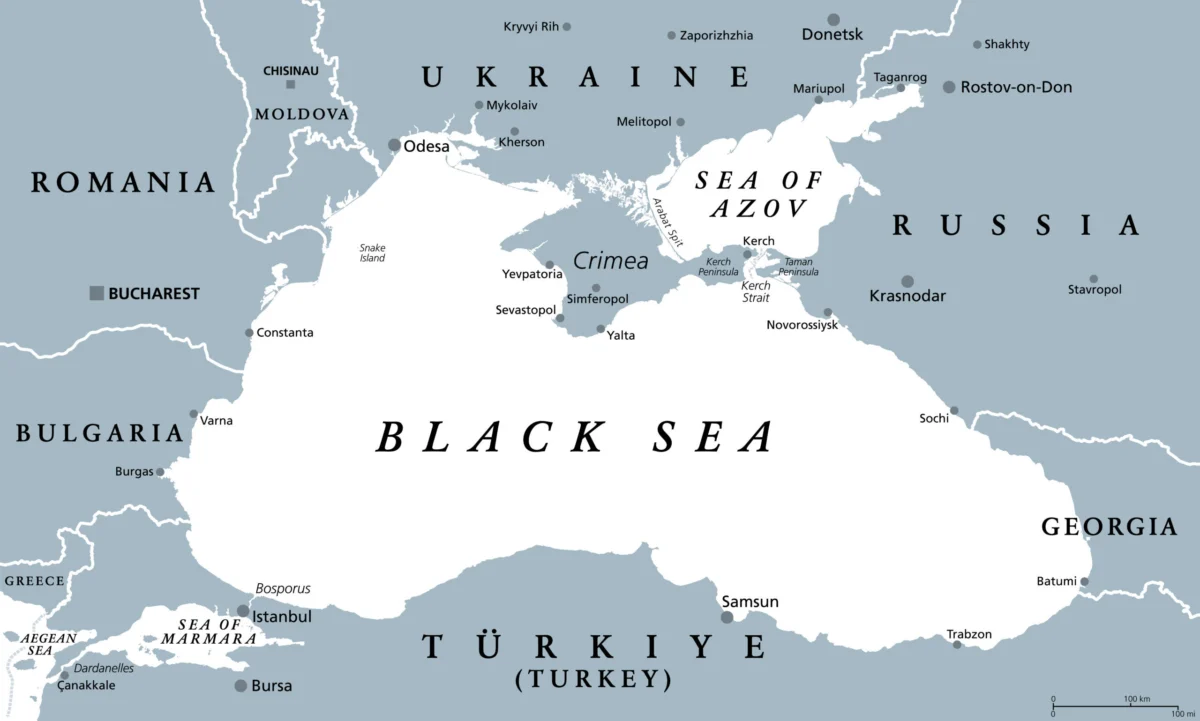
In a harrowing development that underscores the deepening instability of maritime commerce in Eastern Europe, a merchant vessel has sunk in the Black Sea following a suspected strike on Thursday evening. The incident, which occurred within Romania’s Exclusive Economic Zone (EEZ), has triggered a major search-and-rescue operation and raised urgent questions regarding the safety of civilian navigation in one of the world’s most contested waterways.
While official investigations are in their infancy, the event serves as a stark reminder of the escalating risks facing international shipping in the shadow of the ongoing conflict between Russia and Ukraine. As authorities work to piece together the sequence of events, the global maritime community remains on high alert.
Main Facts: A Vessel Lost to the Deep
On Thursday evening, a commercial merchant ship operating in the Black Sea met a catastrophic end. According to reports from Romanian authorities, the vessel caught fire and subsequently sank after being struck by an unidentified force. The incident took place outside of Romania’s territorial waters but well within the country’s Exclusive Economic Zone, a region that has become a flashpoint for military activity over the past several years.
The human cost of the disaster, fortunately, was mitigated by a rapid response from the Romanian Border Police. All 12 crew members aboard the vessel were successfully recovered. The Romanian Border Police confirmed that 10 individuals were rescued directly by their personnel—with one sailor requiring medical attention for injuries sustained during the ordeal—while the remaining two were retrieved by the crew of a nearby merchant vessel.
"The ship was hit… it seems to have sunk," stated Romanian President Nicușor Dan during a press conference held in Chișinău, Moldova. President Dan’s remarks were measured, reflecting the gravity of the situation and the necessity of avoiding premature conclusions while the investigation proceeds.
Chronology of the Incident
The timeline of the disaster remains the subject of intense scrutiny by maritime experts and intelligence agencies.
Thursday Evening:
The vessel was navigating through the Black Sea when it was struck. The impact triggered an immediate and severe fire on board, compromising the structural integrity of the ship. Distress signals were likely issued, alerting nearby vessels and the Romanian Border Police.
Thursday Night:
As the ship began to list and take on water, the crew attempted to abandon the vessel. The Romanian Border Police launched an emergency maritime rescue operation, navigating through the challenging conditions of the Black Sea to locate the survivors.
Friday Morning:
The Romanian Border Police officially confirmed the fire and the subsequent sinking of the vessel. Authorities focused on the medical stabilization of the injured crew member and the logistical challenge of documenting the wreckage site, which now sits on the seabed of the Black Sea.
Friday Afternoon:
President Dan addressed the media in Moldova, confirming that while the ship was indeed hit, the identity of the perpetrator remains unknown. He cautioned against speculation, emphasizing that a thorough investigation is underway to determine the cause and the origin of the strike.
Supporting Data: The Rising Toll on Black Sea Logistics
The sinking of this merchant ship is not an isolated event; rather, it is a manifestation of a long-term trend of escalating maritime insecurity in the Black Sea region. Since the onset of Russia’s full-scale invasion of Ukraine in 2022, the sea has transformed from a vital artery of global grain and energy trade into a volatile theater of operations.
The Escalation Trend
Data from international maritime monitoring groups indicate a sharp rise in "gray-zone" attacks against civilian infrastructure. While the early months of the conflict saw direct military-to-military engagements, the period between 2024 and 2026 has witnessed a disturbing pattern of kinetic actions directed at merchant shipping and port facilities.
- 2022-2023: Focus remained primarily on naval blockades and mine warfare.
- 2024: Increased use of unmanned surface vehicles (USVs) and long-range drone strikes on port infrastructure in Odesa and Constanța.
- 2026: A notable spike in incidents occurring in the EEZs of NATO-aligned nations, signaling a shift in the reach and intensity of the conflict.
The Black Sea is a critical corridor for the "Grain Corridor" initiative and other essential commodities. The persistent threat of fire, sinking, and collateral damage has led to soaring maritime insurance premiums, forcing shipping companies to implement "war risk" surcharges that ultimately inflate global food and fuel prices.
Official Responses: A Call for Deliberation
The reaction from the Romanian government has been one of extreme caution. President Dan, while acknowledging the severity of the strike, has consistently urged the public and the media to allow the formal investigation to dictate the narrative.
"There will be an investigation, it will be established, but it is not good for us to start speculating," President Dan noted in his address. His administration is currently working in coordination with regional partners to determine if the strike was the result of a deliberate military attack, a stray munition, or a mechanical failure triggered by external factors.
The Romanian Border Police have been lauded for their swift rescue operation. Their ability to recover all 12 crew members in a high-pressure environment has been described as a "miracle" by local maritime officials. However, the focus now shifts from rescue to recovery and forensic analysis. The wreckage, located outside territorial waters, presents a complex legal and technical challenge for salvage teams, who must operate in a zone where the presence of naval mines and active military surveillance is a constant concern.
Implications: The Geopolitical and Economic Fallout
The sinking of this vessel has profound implications for the security architecture of Eastern Europe and the future of maritime trade.
The NATO Perspective
As Romania is a NATO member, any attack occurring within its Exclusive Economic Zone—even if outside territorial waters—is viewed with significant gravity. While Article 5 of the North Atlantic Treaty is not automatically triggered by such events, the incident will undoubtedly lead to heightened intelligence-sharing and an increased presence of NATO maritime patrol aircraft and naval assets in the region. The Alliance must now grapple with how to deter further strikes against civilian vessels without triggering a direct escalation with Russian naval forces.
Maritime Insurance and Trade
The insurance industry is expected to react with increased scrutiny. If shipping companies deem the Black Sea too dangerous to navigate, the economic consequences for the global grain market could be catastrophic. Ukraine, often referred to as the "breadbasket of the world," relies heavily on the Black Sea for exports. Any disruption to the flow of ships acts as an indirect economic sanction that affects nations as far away as Africa and the Middle East, which rely on affordable Ukrainian exports.
Environmental Concerns
Beyond the humanitarian and economic aspects, there is a looming environmental threat. The sinking of a commercial vessel often involves the release of fuel oil, lubricants, and potentially hazardous cargo. Environmental agencies in Romania and neighboring countries are likely preparing for the possibility of an oil spill, which could threaten the fragile Black Sea ecosystem and the tourism-dependent coastal towns of the region.
The Future of "Gray Zone" Warfare
This incident confirms that the distinction between "civilian" and "combatant" in the Black Sea is becoming increasingly blurred. The use of unidentified strikes makes it difficult for international bodies to assign accountability, creating a "plausible deniability" trap that complicates diplomatic efforts. For the international community, the challenge is to establish a robust monitoring framework that can identify the source of such strikes in real-time, thereby deterring actors who benefit from the anonymity of the deep sea.
Conclusion: A Region at the Breaking Point
The loss of the merchant ship on Thursday is a somber chapter in the ongoing history of the Black Sea conflict. While the successful rescue of the crew provides a measure of relief, the destruction of the vessel serves as a chilling reminder that the conflict has long since spilled over the borders of the combatant nations.
As the Romanian authorities begin their investigation, the international community will be watching closely. Whether this incident was a targeted strike or a tragic byproduct of the wider war, it underscores an uncomfortable truth: the Black Sea has become one of the most perilous regions for global commerce. Until a comprehensive security framework can be established to guarantee the safety of civilian transit, the risks to life, property, and the global economy will only continue to mount.
For now, the wreckage of the ship rests on the seabed—a silent, metallic testament to a war that refuses to stay within the confines of the battlefield. The coming days will likely reveal more about the nature of the strike, but for the 12 sailors who narrowly escaped with their lives, the event is already a defining, life-altering reality.
