





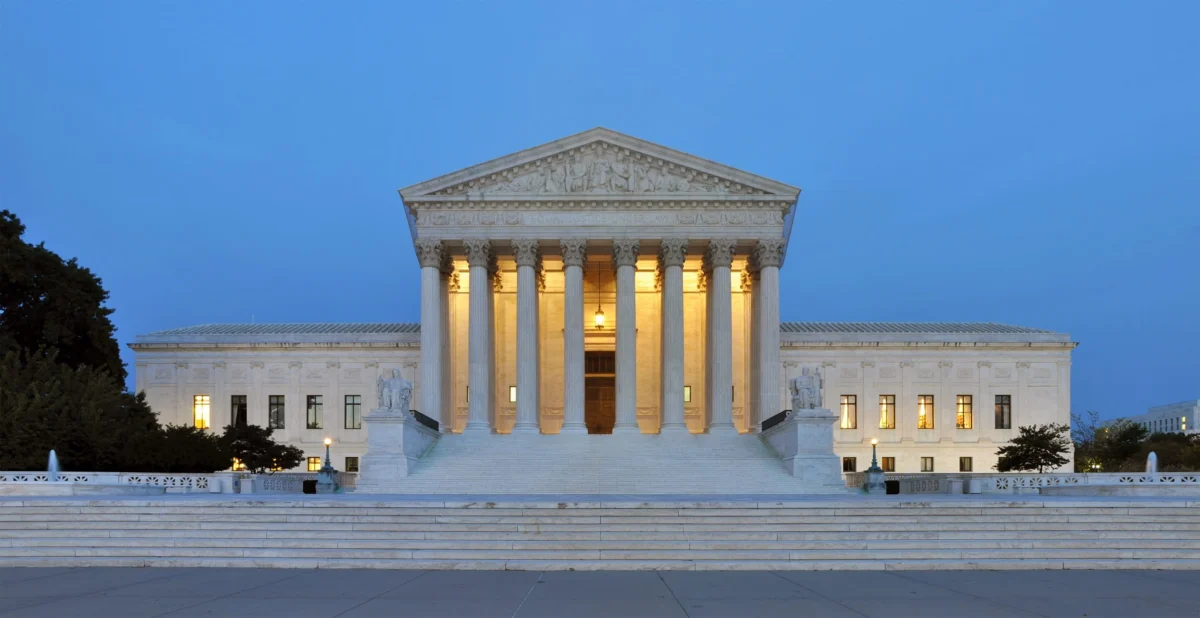
On August 24, 2026, the Supreme Court of the United States issued a pivotal, albeit narrow, ruling regarding the reach of presidential power over American election administration. In an unsigned per curiam opinion, the Court granted the Trump administration’s emergency request to stay a preliminary injunction that had previously blocked portions of an executive directive aimed at federalizing key aspects of mail-in voting and voter registration.
While the ruling provided an immediate tactical victory for the administration, it studiously avoided the "main event": the constitutional question of whether the executive branch possesses the statutory or constitutional authority to override the traditional state-led oversight of federal elections. By focusing on the procedural thresholds of standing and ripeness, the Court has effectively kicked the substantive conflict down the road, leaving the nation’s election administrators in a state of suspended animation as the 2026 midterm elections approach.
A Chronology of the Dispute
The legal friction began in March 2025, when President Trump issued a comprehensive executive directive that sought to recalibrate the federal government’s role in managing U.S. elections. The order was ambitious, targeting three specific areas: the implementation of proof-of-citizenship requirements for voter registration, the standardization of voting-system security protocols, and the regulation of mail-in ballot processing.
The directive mandated that the Department of Homeland Security (DHS) compile state citizenship-verification lists, ordered the Department of Justice (DOJ) to prioritize the investigation of ineligible voters—specifically noncitizens—receiving ballots, and instructed the United States Postal Service (USPS) to initiate rulemaking regarding envelope barcoding and the handling of mail-in ballots.
In response, a coalition of state attorneys general filed suit in the U.S. District Court for the District of Massachusetts. They argued that the President’s directive violated the Elections Clause of Article I, Section 4 of the Constitution, which grants state legislatures primary authority over the "Times, Places and Manner" of federal elections. U.S. District Judge Indira Talwani found merit in these arguments, issuing a preliminary injunction that barred the federal government from enforcing the directive. The U.S. Court of Appeals for the First Circuit subsequently denied the government’s request to stay that injunction, prompting the administration to appeal directly to the Supreme Court.
Following the Supreme Court’s August 24 stay, the legal landscape shifted again. On August 26, the Postal Service issued a final rule regarding mail ballot handling. However, on August 27, a federal district court in a separate case—League of Women Voters of Massachusetts v. Trump—temporarily blocked the agency from implementing specific provisions of that rule, ensuring that the legal battle over the administration’s election policies remains active in the lower courts.
The Doctrine of Thresholds: Standing and Ripeness
The Supreme Court’s majority opinion rested on a fundamental principle of Article III jurisdiction: federal courts do not exist to resolve abstract policy disputes; they exist to resolve "cases and controversies."
The Court focused on the doctrines of standing and ripeness. To establish standing, a plaintiff must demonstrate an "injury-in-fact" that is concrete, particularized, and imminent. Ripeness, conversely, dictates that courts should not intervene in disputes that depend on speculative or uncertain future events.
The Court held that the states had failed to meet these requirements. The justices argued that the executive order was not "self-executing." They characterized the citizenship-verification and DOJ enforcement provisions as internal executive instructions rather than mandates binding on state officials. Furthermore, they viewed the directives to the Postal Service as the mere initiation of a rulemaking process—a process subject to change before any final rule is enacted.
"Federal courts review final rules, not proposed rules—and certainly not antecedent internal directives to propose a rule," the Court wrote. By declaring that the states had sued too early, the Court avoided ruling on the legality of the underlying policy, explicitly stating: "The Court’s disposition of this application does not mean that any measure taken by the Government to implement the Order will necessarily be lawful."
Official Responses and Judicial Dissents
The ruling was not unanimous in spirit, if not in outcome. Three justices expressed deep concerns, albeit through different analytical frameworks.
Justice Sonia Sotomayor, joined by Justice Elena Kagan, penned a dissent that emphasized the narrow scope of the majority’s decision. She rejected the claim that the states’ injuries were premature, arguing that the administration’s own representations in court demonstrated that the directive imposed immediate, tangible administrative burdens on states. Sotomayor warned that the decision should not be read as a signal that the President has the authority to interfere in state election administration.
Justice Ketanji Brown Jackson offered a more systemic critique, invoking the Purcell principle. The Purcell doctrine—derived from Purcell v. Gonzalez—is a long-standing judicial guideline suggesting that federal courts should avoid altering election rules in close proximity to an election to prevent voter confusion and administrative chaos.
Jackson noted the irony of the Court’s current position: "Today’s revelation is that such claims can also come too early." She argued that by creating a "Goldilocks" zone—where challenges are too early before a rule is final and too late once an election is imminent—the Court has effectively stripped state administrators of any viable path to challenge federal overreach. "This decision," Jackson wrote, "needlessly injects chaos and uncertainty into the upcoming midterm elections."
Implications for the 2026 Midterms
The implications of the August 24 ruling are both immediate and long-term. In the immediate term, the stay allows federal agencies to proceed with preliminary work, such as the assembly of citizenship-verification lists and the drafting of new election-related regulations.
However, the ruling does not grant the administration a "blank check." The active litigation in League of Women Voters of Massachusetts v. Trump serves as a significant roadblock to the implementation of the USPS rules. As long as these district court injunctions remain in effect, the administration’s ability to overhaul election processes is substantially curtailed.
The Constitutional Horizon
The broader constitutional question remains unresolved. The dispute is currently in a state of "wait and see." Once federal agencies finalize their regulations and attempt to impose them upon states, the legal battle will shift from the procedural hurdles of standing to the substantive requirements of the Administrative Procedure Act and the constitutional limits of executive power.
Administrative Uncertainty
For state and local election officials, the ruling provides little clarity. They are currently caught between a federal administration seeking to assert new oversight and a judicial system that has declined to define the boundaries of that oversight. As the 2026 midterms approach, this environment of uncertainty could complicate poll worker training, voter registration efforts, and the logistics of mail-in ballot processing.
Ultimately, the Supreme Court has demonstrated a preference for procedural restraint. By refusing to engage with the merits of the Trump administration’s directive, the Court has preserved its own institutional distance from the political fray. However, as Justice Jackson’s dissent suggests, that distance may come at the cost of the very stability the Court is tasked with protecting. The "time will tell" conclusion offered by the majority is a stark reminder that in the realm of constitutional law, the resolution of this conflict is not a matter of if, but when.
