




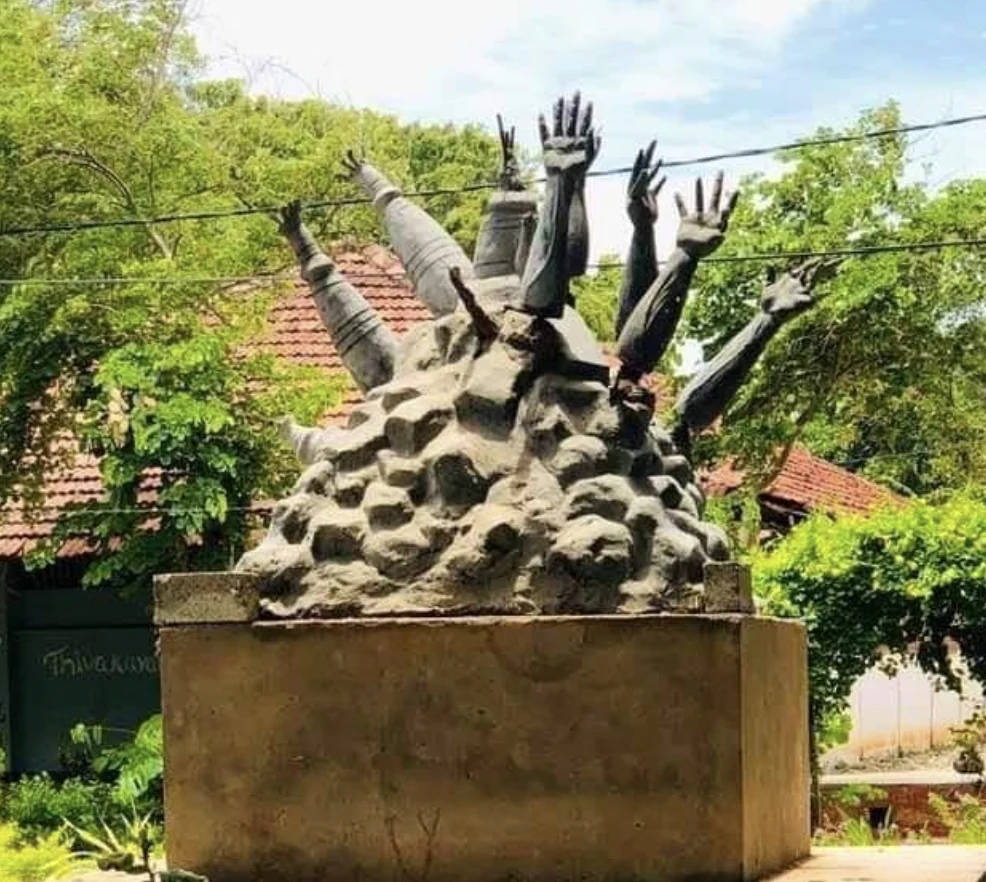
Twenty-six years after the conclusion of one of the 21st century’s most brutal civil wars, the promise of closure remains elusive for thousands of Sri Lankan families. Despite a campaign built on the pledge of national healing and accountability, the administration of President Anura Kumara Dissanayake is facing mounting pressure from international human rights organizations and local victims’ advocacy groups. Critics argue that the government’s failure to deliver on promised judicial reforms and its tepid approach to historical investigations have effectively codified a culture of impunity that continues to haunt the nation.
The Current Crisis: Excavations and Executive Inaction
The focal point of the current tension lies in the Chemmani region of the Jaffna peninsula. Excavations at suspected mass grave sites have become a symbol of the government’s perceived lack of political will. While these sites represent potential forensic evidence of the enforced disappearances and extrajudicial killings that characterized the final phases of the war, progress has been agonizingly slow.
Human Rights Watch (HRW) reported this week that what should be a straightforward process of truth-seeking has been bogged down by bureaucratic inertia, citing "funding and weather" as recurring excuses. For the families of the disappeared, these technical delays are viewed as deliberate obstructionism. The emotional toll of these delays cannot be overstated; for many, the physical recovery of remains is the only path toward the closure required to begin the grieving process.
The frustration is compounded by the administration’s failure to establish a Directorate of Public Prosecution (DPP). President Dissanayake had previously championed the creation of an independent DPP as a cornerstone of his reform platform, specifically designed to bypass the traditional, often compromised, channels of the Attorney General’s office. To date, the office remains unestablished, leaving justice for war crimes subject to the same systemic delays that have plagued Sri Lanka for decades.
A Chronology of Conflict and Failed Commissions
The trauma currently being debated is rooted in a conflict that spanned decades. While the civil war between the Sri Lankan government and the Liberation Tigers of Tamil Eelam (LTTE) had deep historical roots, the period between 1987 and 1989—and the subsequent decades leading to 2009—saw unprecedented violence.
- 1987–1989: A period of intense state-led violence against insurgents and civilians alike, during which tens of thousands were abducted, tortured, or summarily executed.
- 2009: The official end of the civil war following the military defeat of the LTTE. The end of the war was marked by significant civilian casualties and accusations of war crimes by both government forces and the LTTE.
- 2011: The release of the UN Secretary-General’s Panel of Experts report, which provided credible evidence of extensive war crimes and crimes against humanity committed by both sides.
- 2015–2019: A brief window of hope under a new administration, during which the government pledged to establish domestic accountability mechanisms, though these ultimately stalled.
- 2026 (Present): A renewed crisis of confidence as international bodies, including the OHCHR, warn that Sri Lanka’s lack of commitment to international accountability projects is eroding the possibility of a credible domestic legal process.
Throughout these years, the state has initiated at least 10 different commissions of inquiry. Without exception, these commissions have failed to yield a single successful high-level prosecution for the grave abuses recorded during the conflict. This track record has left a legacy of profound distrust between the citizenry and the state.
Supporting Data: The Scale of Atrocity
The human cost of the Sri Lankan conflict is staggering, with estimates suggesting over 100,000 lives lost. The patterns of abuse, as documented by HRW and the United Nations, reflect a systemic failure to protect human life.
Government forces have been consistently implicated in:
- Enforced Disappearances: The systematic "disappearing" of individuals who were taken into custody and never seen again.
- Torture and Sexual Violence: Widespread reports of systemic torture and rape used as a tool of war and intimidation.
- Extrajudicial Killings: The summary execution of combatants and civilians outside the reach of any legal process.
Conversely, the LTTE’s record includes:
- Suicide Bombings: The deliberate targeting of civilian centers, public transport, and political targets.
- Child Soldiers: The forced recruitment of minors to serve as frontline combatants.
- Summary Executions: The elimination of political rivals and perceived "traitors" within the Tamil population.
Despite this clear documentation, the government continues to reject the Sri Lanka Accountability Project. This project, overseen by the Office of the UN High Commissioner for Human Rights (OHCHR), is designed to collect, consolidate, and preserve evidence to prepare for potential future prosecutions. By refusing to engage with this process, the Sri Lankan state is effectively shielding perpetrators from international scrutiny.
Official Responses and the Governance Gap
The Dissanayake administration maintains that it is committed to national reconciliation. However, the disconnect between rhetoric and action is becoming increasingly apparent. Official government statements frequently emphasize the need for "domestic solutions to domestic problems," a stance that international observers argue is a tactical move to avoid international jurisdiction.
In August 2026, the silence from the executive branch regarding the 20-year anniversary of the execution of 17 humanitarian aid workers served as a flashpoint for international concern. UN experts issued a blistering call for accountability, noting that the failure to prosecute the killers of these aid workers is emblematic of the broader climate of impunity.
Furthermore, the government’s response to recent reports of prison violence—where 28 inmates died under suspicious circumstances—mirrors the patterns seen in civil war-era abuses. Local advocacy groups, such as the Committee to Protect the Rights of Prisoners (CPRP), have noted that the lack of accountability in the prison system suggests that the state’s refusal to address past crimes has created a "permissive environment" for current abuses.
The Implications for Sri Lanka’s Future
The implications of continued inaction are severe. For the victims’ families, the lack of justice is a constant, festering wound that prevents the nation from moving toward a stable, inclusive peace. As long as the state refuses to acknowledge the reality of the past, the divide between the Sinhala-majority government and the Tamil minority remains deep, potentially fueling future cycles of radicalization and unrest.
Internationally, Sri Lanka’s standing as a nation that respects human rights is in decline. By ignoring the recommendations of the UN and the findings of its own previous commissions, the government risks further isolation from international financial and legal institutions.
Ultimately, the demand for justice is not merely about retribution for past crimes; it is about the structural reform of a state apparatus that has, for nearly three decades, proven capable of concealing the truth. Unless the Dissanayake administration moves beyond the rhetoric of "peace" and begins the hard, uncomfortable work of prosecution and transparency, the ghost of the civil war will continue to define the nation’s trajectory. The failure to act today does not just bury the truth in places like Chemmani; it buries the possibility of a just and reconciled Sri Lanka for generations to come.
