



In the rapidly shifting landscape of digital marketing, a new anxiety has gripped SEO professionals and brand managers alike. You have meticulously optimized your website, secured a top-three ranking on Google’s first page, and maintained a robust backlink profile. Yet, when you ask ChatGPT, Claude, or Perplexity a question about your industry, your brand is nowhere to be found.
This phenomenon—the disconnect between traditional Search Engine Results Page (SERP) rankings and AI search visibility—has become the defining challenge of the modern web. As generative AI transforms how users discover information, businesses must pivot from traditional SEO to a new paradigm: Answer Engine Optimization (AEO).
The Divergence: Why Traditional Rankings Fail in the AI Era
To understand why your high-ranking page isn’t appearing in AI answers, one must first recognize that traditional search engines and AI models operate on entirely different architectural principles.
The Mechanism of Traditional SEO
Traditional SEO focuses on indexability and relevance. Search engines like Google evaluate your site based on "owned" properties: keyword density, technical site structure, Core Web Vitals, schema markup, and backlink authority. The goal is to earn a link that drives a visitor to your domain.
The Mechanism of AI Search
AI models like ChatGPT, Gemini, and Perplexity do not function as a directory of links. Instead, they act as synthesizers. When a user inputs a query, the Large Language Model (LLM) crawls its training data and real-time search index, then assembles a unique, bespoke answer.

The AI treats specific websites as "authoritative sources" for specific topics. If your site has not established itself as an authoritative source in the model’s internal knowledge graph for a particular query, you will not be cited—even if you hold the number one spot on a traditional search engine. This is why many brands are witnessing "zero-click" traffic drops: the user is getting the answer directly from the AI, bypassing the click-through entirely.
Defining Answer Engine Optimization (AEO)
AEO is not a replacement for traditional SEO; it is an expansion of it. You still need a healthy, well-structured website because LLMs must crawl your content to recognize your authority. However, AEO adds a layer of intelligence focused on brand perception within the "AI brain."
The goal of AEO is to ensure your brand is not just mentioned (named in the text) but recommended (suggested as a solution to the user’s problem). A mention is passive, but a recommendation is what drives pipeline and conversion.
Chronology: The Evolution of Search Visibility
The rise of AI search has occurred in three distinct waves:
- The Information Retrieval Era (Pre-2022): Search was purely a link-finding mission. Success was defined by blue-link dominance.
- The Generative Disruption (2023-2024): AI models began integrating real-time search. Brands realized that traditional SERP rankings were no longer a proxy for visibility in AI chat interfaces.
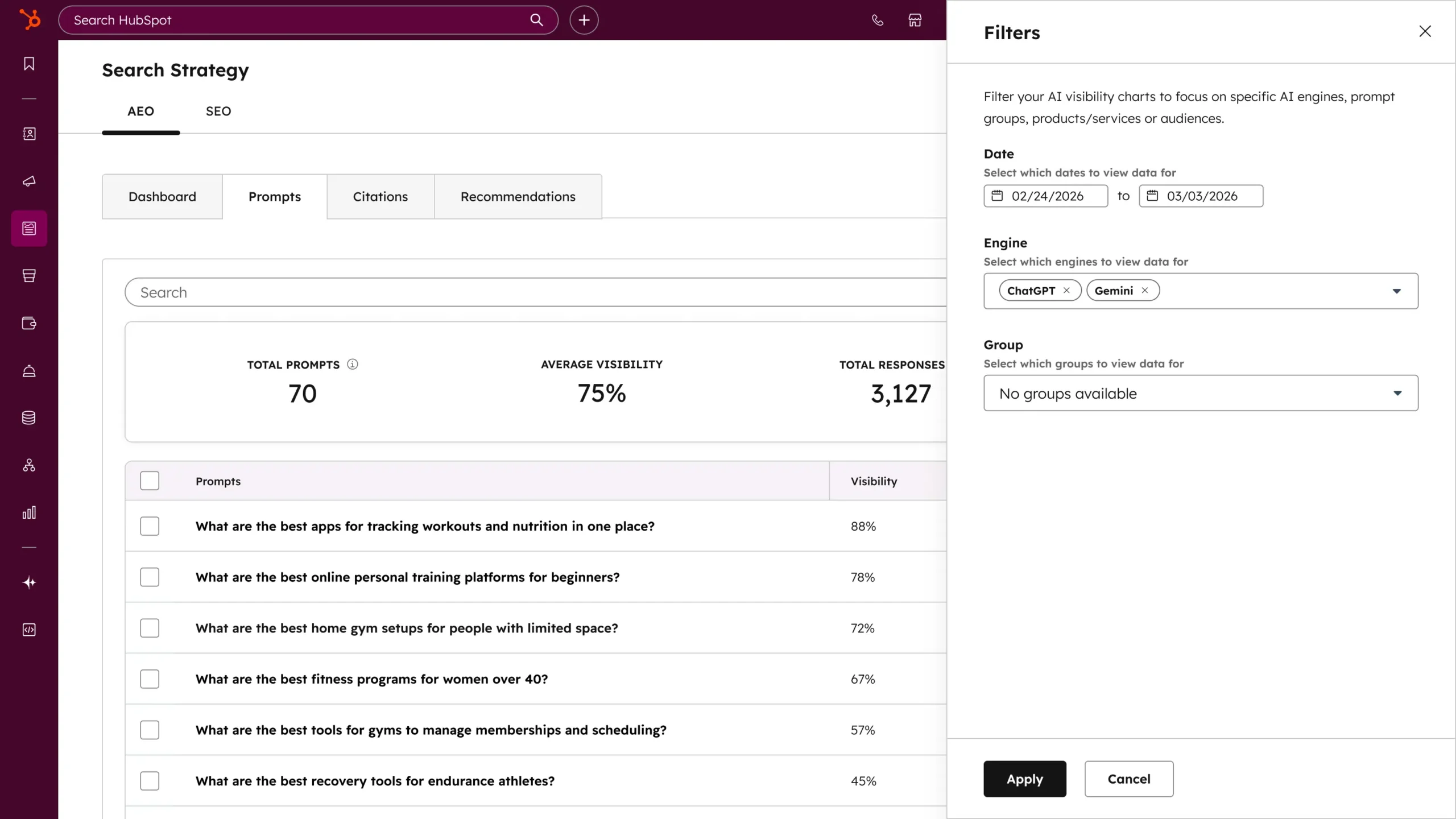
- The AEO Era (2025-Present): Brands are now proactively managing their "AI footprint." Companies like HubSpot have pioneered the development of tools to track, audit, and optimize how they appear across multiple AI engines simultaneously.
Supporting Data: The Impact of an AEO Strategy
The transition to AEO is not merely theoretical; it yields measurable business results. HubSpot’s own internal marketing team provides the most compelling case study for this transition. By applying a rigorous AEO playbook, they achieved:

- A 642% increase in citations by restructuring software comparison content.
- A 60% increase in citation share through the optimization of FAQ and glossary pages.
- Explosive community growth: Reddit citations rose from 178 to approximately 146,000 in just seven months.
- The Bottom Line: These efforts culminated in a 433% increase in total citations and an 1,850% increase in qualified leads originating from AI. Perhaps most importantly, AI-sourced leads were found to convert at three times the rate of leads from traditional channels.
The Audit: How to Measure Your AI Visibility
If you are struggling to track your brand’s presence, you are likely relying on manual "spot checks," which are statistically insignificant. To gain a true understanding of your visibility, you must implement a structured AI Visibility Audit.
Phase 1: Prompt Mapping
Do not track keywords; track prompts. Export your high-intent commercial queries from Search Console and turn them into natural language prompts. For example, change "best CRM software" to "What is the best CRM for a mid-sized marketing agency?"
Phase 2: Citation Analysis
Run your prompts through ChatGPT, Gemini, and Perplexity. For every response, document six critical fields:
- The AI engine used.
- Whether your brand was mentioned.
- Whether your brand was recommended.
- The position (rank) of your brand within the answer.
- The competitor set mentioned alongside you.
- The sources the AI cited to build that answer.
Phase 3: The Gap Analysis
By calculating your "Brand Visibility Score" across these engines, you can identify which prompts you are losing. The goal is to determine which third-party sites—such as G2, Capterra, or niche industry forums—are being cited in your place.
Implications: Fixing the Source Material
If the AI isn’t recommending you, it is usually because the AI trusts someone else more. Your "source mix"—the collection of websites the AI uses to inform its answers—is the lever you must pull.

- Review Directories: Since AI engines often pull from comparison pages, ensure your presence on review sites is updated with accurate features, pricing, and high-quality ratings.
- Online Communities: Increase your brand’s footprint in relevant, high-authority threads. The more your brand is discussed as a solution in community forums, the more the LLM weights your site as a credible recommendation.
- Third-Party Roundups: Partner with industry publications that frequently appear in AI answers. If the AI trusts them, it will trust the brands they recommend.
- Owned Assets: Finally, ensure your own website contains clear, schema-rich content that explicitly positions your brand as a leader for the specific commercial queries you are tracking.
Frequently Asked Questions
What should I look for in an AI visibility tool?
Look for a platform that tracks multiple engines (ChatGPT, Gemini, and Perplexity), provides "share of voice" metrics against competitors, and, crucially, offers actionable recommendations on which sources to optimize.
What is the difference between a mention and a citation?
A mention is a simple text reference to your brand. A citation is a link or a source note provided by the AI, which acts as a "vote of confidence" for the model. Citations are the lifeblood of AEO.
Does AEO require a new website?
No. AEO works with your existing infrastructure. It is about auditing your external ecosystem and ensuring that the content "feeding" the AI is accurate, authoritative, and aligned with your commercial intent.
Is there a free way to start?
While manual auditing is possible using spreadsheets, it is labor-intensive. Many companies, including HubSpot, offer AI search graders that can provide a baseline assessment of your visibility without requiring a full software commitment.
Conclusion: The Future of Discovery
The era of the "ten blue links" is fading. In its place, the "answer-first" web is emerging. For brands, the implications are clear: you can either wait to be discovered by a machine, or you can take control of your digital presence by optimizing for the way AI thinks.

By focusing on your source mix, tracking your prompt-level visibility, and consistently feeding the AI with high-authority, accurate information, you can ensure that when a potential customer asks a question, your brand is not just part of the conversation—it is the recommended answer.
This article was sponsored by HubSpot. The opinions expressed in this article are the sponsor’s own.
