



In the fast-evolving landscape of Search Generative Experience (SGE) and AI-driven content discovery, even minor interface tweaks can send ripples of concern through the publisher community. This week, Google provided clarification regarding a recent anomaly observed within the Google Discover feed. Users and researchers noted that AI-generated summary cards in Discover had suddenly disabled the ability for readers to click through to cited sources—a feature typically essential for traffic referral.
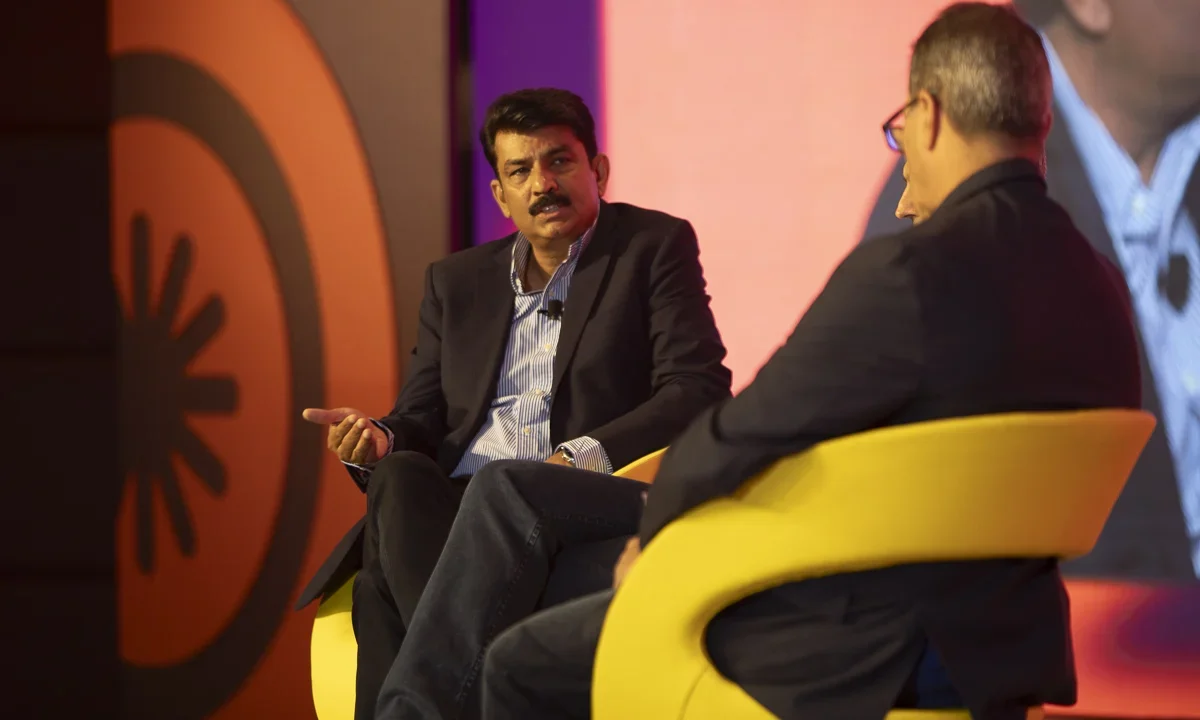
Rajan Patel, Vice President of Engineering for Search at Google, confirmed on X (formerly Twitter) that the inability to interact with source links was not a deliberate shift in strategy, but rather "a bug in a Discover experiment" that has since been decommissioned. While the functionality has been restored, the incident highlights the sensitivity of the ecosystem surrounding AI-generated summaries and the ongoing experimentation Google is conducting to balance user engagement with publisher visibility.
The Chronology of the Incident
The issue was first brought to light on October 23 by Damien Andell, a researcher who closely monitors Google Discover’s interface iterations. Andell observed that when interacting with AI-generated summaries on his feed, the "Sources" section—which usually allows users to click through to a feed of related articles or the originating site—had become non-responsive.
Timeline of Discovery and Resolution:
- October 23: Damien Andell identifies that source taps on AI summary cards are disabled. He traces the issue to a specific internal flag titled
disable_aio_sources_button_tap. He documents the findings with screenshots, showing that while the "Sources" icons were visible, they provided no functional link to the source content. - October 23: Industry expert Lily Ray amplifies the report on X, questioning the implications of a "walled garden" approach where users are given summaries but denied the ability to visit the source.
- October 27: Following widespread discussion, Rajan Patel responds directly to the community, confirming the behavior was an unintended consequence of an experimental feature and announcing that the experiment had been disabled to restore expected functionality.
- October 28: Andell reports that the initial experiment was replaced by a new iteration labeled “aio tap falls through to hero,” suggesting that Google is continuing to iterate on how these summary cards function, even if the "broken" behavior has been rectified.
Technical Context: What Was Actually Happening?
At the heart of the confusion was the technical implementation of Google’s AI summaries. For publishers, these summaries are a double-edged sword. While they provide visibility in the Discover feed, they often summarize content in a way that may discourage a click-through. By disabling the ability to tap on sources, Google effectively stripped away the final funnel step that drives traffic to the publisher’s website.
Andell’s investigation revealed that the issue was tied to a feature flag. In software development, feature flags (or toggles) allow engineers to enable or disable features in a live environment without deploying new code. The existence of the disable_aio_sources_button_tap flag indicates that Google was testing the user experience of a "self-contained" summary card—one that keeps the user within the Discover interface rather than encouraging them to leave for an external site.
While Google maintains this was a "bug," the existence of a specific flag to disable clicks suggests that the concept of disabling clicks was being tested, even if the implementation resulted in a poor user experience that the company decided to revert.
Official Responses and Corporate Strategy
The response from Rajan Patel was brief but decisive. By characterizing the issue as a "bug in a Discover experiment," Google attempted to quell fears that it was intentionally moving toward a model that keeps traffic entirely within its own AI ecosystem.
However, this incident has reignited the broader conversation regarding the "zero-click" future of search. Publishers rely on Google Discover as a significant traffic driver; any disruption to that pipeline, however brief, is treated as a high-priority threat. Google’s rapid response indicates an awareness that the publisher community is on high alert regarding any changes that might negatively impact their referral metrics.
The Implications for SEO and Publishers
The primary concern for publishers is the integrity of their traffic. If Google’s AI experiments eventually shift toward summaries that remove the necessity—or the opportunity—for a click-through, the fundamental value proposition of content creation for the web is altered.
1. The Metric Disconnect
Currently, Search Console provides a "Discover Generative AI" report, which offers data on impressions—how many times a user sees a link to your page within an AI summary. However, these metrics are distinct from standard organic traffic. If users are not clicking, those impressions hold little value for ad-supported websites. As Google experiments with these UI elements, the gap between "visibility" and "traffic" may continue to widen.
2. The Need for Continuous Monitoring
The work done by researchers like Damien Andell serves as a critical early-warning system for the industry. Because Google frequently runs A/B tests on a small percentage of users, many publishers may be unaware that their traffic is being throttled by an experiment until they see a dip in their own analytics. This underscores the importance of monitoring not just search rankings, but also the actual user interface behavior on platforms like Discover.
3. The Future of "AI-Only" Content
The transition to a new experiment, "aio tap falls through to hero," suggests that Google is still looking for the "goldilocks" design for these summaries. They want to provide utility to the user while maintaining a path to the publisher. For content creators, this emphasizes the need to produce content that is indispensable; if the AI summary provides all the value, the user has no incentive to click. Publishers must now focus on providing depth, tone, and brand authority that an AI summary cannot fully replicate.
Looking Ahead: How to Stay Informed
While the "disabled click" issue has been resolved, the experimental nature of Google Discover means that further interface changes are inevitable. Publishers should take the following steps:
- Review Search Console: Regularly check the "Discover" performance reports to see if there are anomalies in click-through rates (CTR) that coincide with specific days.
- Monitor Community Discussions: Following industry experts on platforms like X or LinkedIn is often the fastest way to learn if a traffic drop is site-specific or a result of a broader Google experiment.
- Adapt Your Content Strategy: If Google continues to prioritize AI summaries, ensure your metadata and structured data are optimized. While you cannot control the UI, you can control how your content is parsed and presented as a "source."
In conclusion, while the recent bug was a minor technical oversight, it serves as a powerful reminder of how much control Google exerts over the publisher ecosystem. As the company continues to refine its AI-powered features, the line between "helpful summary" and "content replacement" remains a point of intense friction. For now, the "Sources" links remain clickable, but the incident has served as a warning to the industry to stay vigilant in the age of AI-augmented search.
