



Executive Summary
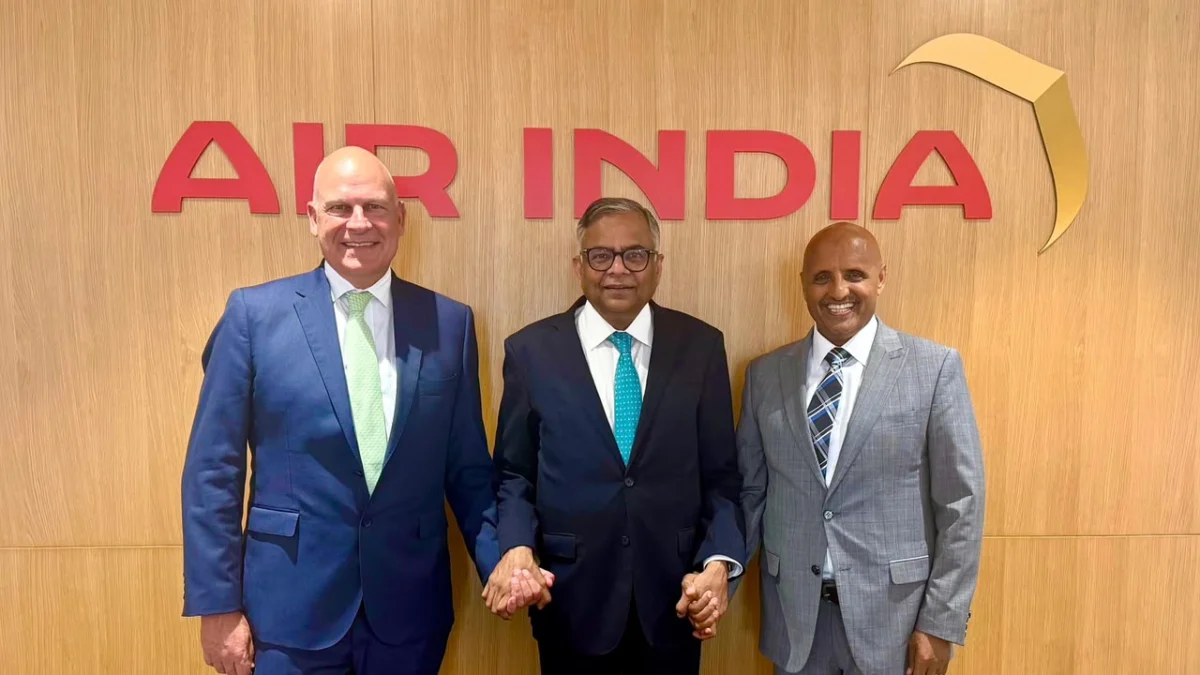
Air India stands at a definitive crossroads. As the Tata Group-led transformation enters its next, more aggressive phase, the airline has officially transitioned leadership from outgoing CEO Campbell Wilson to his successor, Tewolde Gebremariam. In a high-stakes town hall meeting held this week, Air India Chairman N. Chandrasekaran outlined a rigorous mandate for the new administration, emphasizing that the "honeymoon period" of initial restructuring has concluded. The airline, now armed with a modernizing fleet and a consolidated organizational structure, must pivot toward operational excellence, fiscal discipline, and the restoration of passenger trust.
Chronology of Transformation: From Privatization to Present
To understand the weight of the task facing Tewolde Gebremariam, one must examine the timeline of Air India’s recent history.
- January 2022: The Tata Group officially reclaimed Air India from the Indian government, ending decades of state ownership. Campbell Wilson, formerly of Scoot, was brought in to lead the Herculean task of turning around a legacy carrier burdened by debt, aging infrastructure, and low morale.
- 2022–2023: The "Vihaan.AI" strategy was launched—a comprehensive five-year transformation roadmap aimed at significantly increasing network connectivity and service standards.
- February 2023: Air India announced a historic order for 470 aircraft from Airbus and Boeing, signaling the carrier’s intent to dominate the global aviation market.
- 2023–2024: A period of intense consolidation followed, marked by the complex merger of Vistara into the Air India brand and the integration of Air India Express with AIX Connect.
- October 2024: The leadership transition is formalized. Wilson steps down, having overseen the structural foundation, and Gebremariam steps in to lead the operational execution phase.
The Strategic Mandate: Four Pillars of Success
During the town hall meeting, Chairman N. Chandrasekaran articulated the four non-negotiable pillars that will define the airline’s performance in the coming years. These pillars serve as the scorecard for Gebremariam’s tenure.
1. Uncompromising Safety
Safety is the bedrock of the aviation industry, but for a carrier undergoing massive rapid expansion, it is a logistical challenge. Chandrasekaran emphasized that with the influx of new aircraft and the training of thousands of new staff, the margin for error has shrunk to zero.
2. Restoring Customer Trust
Historically, Air India suffered from inconsistent service standards and aging cabins. While the introduction of new wide-body aircraft and cabin retrofits has begun to change this narrative, the Chairman noted that trust is earned in the details. From punctuality to seamless digital experiences, the new leadership is tasked with making Air India a "preferred choice" rather than a "default option."
3. Operational Reliability
The integration of multiple airlines (Vistara and Air India Express) has inevitably led to growing pains. Flight cancellations, schedule irregularities, and technical delays have occasionally hampered the airline’s reputation. Reliability is now the primary metric for the next phase of growth.
4. Fiscal Discipline
The initial years of the Tata takeover required massive capital expenditure. However, the airline is now entering a phase where the board expects a clearer path to profitability. Tighter control of costs—ranging from fuel efficiency protocols to administrative overhead—will be central to Gebremariam’s strategy.
Supporting Data: The Scale of the Challenge
Air India is no longer the lean, struggling carrier it was in 2022. It is now a behemoth, and the data reflects the complexity of the organization Gebremariam inherits:
- Fleet Expansion: With the massive 470-aircraft order, Air India is receiving new planes at an unprecedented pace. Managing the induction, maintenance, and crew training for these aircraft requires high-level precision.
- The Vistara Integration: The merger with Vistara has been a landmark moment in Indian aviation history. It combines Air India’s global network with Vistara’s premium service reputation, but it also merges two distinct corporate cultures and IT systems.
- Workforce Growth: Air India has embarked on one of the largest hiring sprees in the history of Indian aviation, recruiting thousands of pilots, cabin crew, and ground staff to match the pace of fleet delivery.
- Market Share: While Air India is reclaiming its lost share of international traffic, it faces fierce competition from Middle Eastern carriers and low-cost domestic competitors. Maintaining this momentum while managing legacy debt is a delicate balancing act.
Official Responses and Leadership Perspectives
The Outgoing Vision: Campbell Wilson’s Legacy
Campbell Wilson’s departure is viewed by industry analysts as the end of the "rebuilding" phase. During his tenure, Wilson focused on structural integrity, fleet procurement, and branding. In his farewell remarks, he acknowledged the difficulty of the transition, noting that while the foundations have been laid, the airline’s future relies on the ability of the staff to embrace a culture of continuous improvement.
The Incoming Challenge: Tewolde Gebremariam’s Mandate
Tewolde Gebremariam enters the role with a reputation for being an operations-focused leader. His mandate is not to reinvent the wheel, but to ensure that the wheel turns faster, more efficiently, and more profitably. During the town hall, Gebremariam expressed his commitment to the Tata Group’s vision, acknowledging that the airline has moved past the "start-up" phase of the takeover and is now in the "scale and optimize" phase.
Chairman’s Directive
N. Chandrasekaran’s tone was arguably the most significant aspect of the meeting. By labeling the recent period as "one of the most difficult stretches in history," he signaled that the Tata Group is acutely aware of the internal pressures and market challenges the company faces. He made it clear that while the group is willing to invest, the airline must demonstrate that it is capable of operating at world-class standards.
Implications for the Aviation Market
The transition at Air India has implications that extend far beyond the carrier itself.
The Impact on the Indian Aviation Ecosystem
Air India’s success is intrinsically linked to India’s growth as a global aviation hub. With the new leadership, there is an expectation that the airline will accelerate its efforts to challenge the dominance of global giants like Emirates, Qatar Airways, and Singapore Airlines. By positioning itself as a premium, reliable, and cost-effective carrier, Air India could fundamentally change the way Indians travel internationally.
Corporate Culture and Integration
One of the most significant risks for Gebremariam will be managing the "cultural integration" of the various entities now under the Air India umbrella. Merging the legacy culture of state-run Air India with the premium, service-oriented culture of Vistara is a daunting task. Failure to align these cultures could lead to staff turnover and service degradation, which would directly contradict the Chairman’s focus on customer trust.
Financial Sustainability
The aviation industry is notoriously capital-intensive and susceptible to global economic shocks. As the airline continues its massive capital expenditure program, Gebremariam must navigate fluctuating oil prices and potential global recessions. The focus on "tighter control of costs" suggests that the Tata Group is preparing for a period of economic headwinds, ensuring that the airline remains resilient even if the market softens.
Conclusion: A High-Stakes Future
The transition from Campbell Wilson to Tewolde Gebremariam represents a shift from the architecture of Air India to the execution of its future. The airline is arguably in the best shape it has been in for decades, possessing the resources, the fleet, and the backing of a conglomerate that is committed to its success. However, as the Chairman reminded the workforce, these advantages are meaningless without operational excellence.
For Gebremariam, the goal is clear: transition from a legacy carrier in recovery to a modern, world-class airline that can hold its own against any competitor in the sky. The expectations are high, the metrics are defined, and the world is watching. As Air India takes flight under new leadership, the coming quarters will determine whether the airline can finally reclaim its rightful place as a global aviation powerhouse or if the weight of its own transformation becomes an anchor.
