





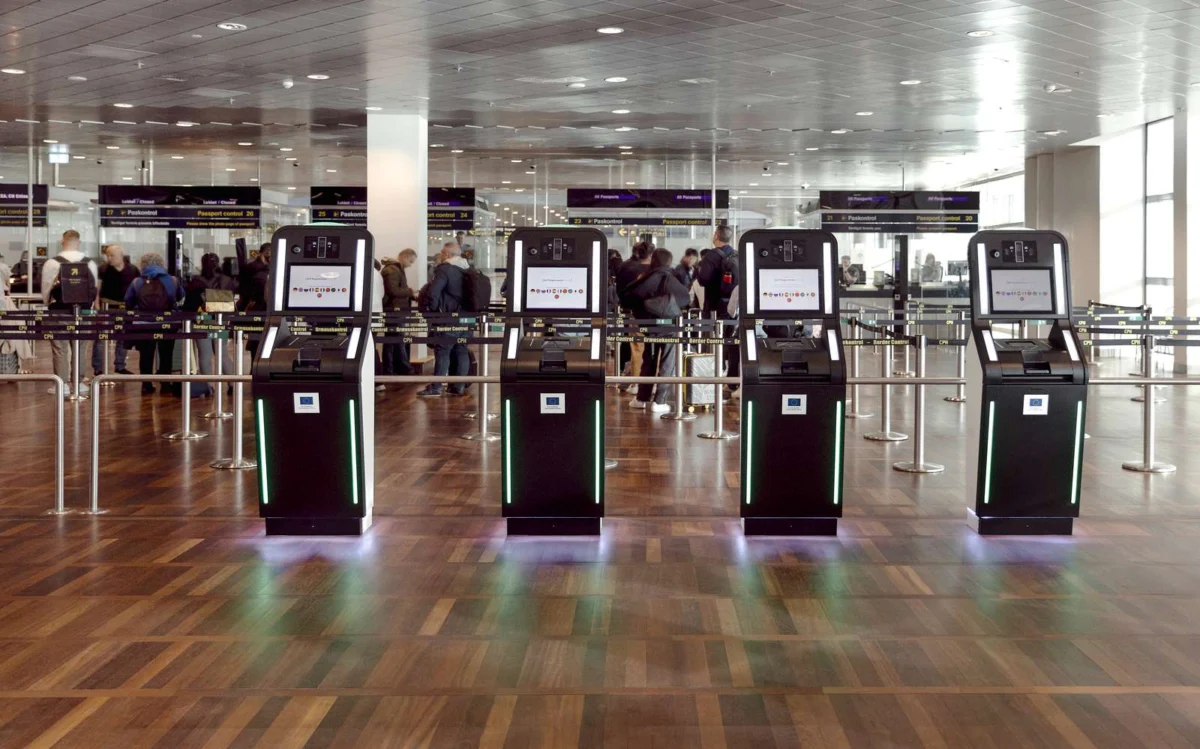
The European Union’s ambitious digital border overhaul, the Entry-Exit System (EES), has entered a precarious new phase. As of this past Sunday, a critical regulatory provision—which allowed member states to temporarily bypass biometric registration requirements during periods of extreme congestion—has officially lapsed. This development removes the only formal "safety valve" available to border authorities since the bloc mandated biometric data collection in April, setting the stage for what industry leaders warn could be an unprecedented season of travel disruption.
The lapse of this policy comes at a time when the infrastructure underpinning the EES remains under intense scrutiny. With the temporary suspension mechanism gone, border agents are now legally required to process every non-EU traveler through the biometric kiosks regardless of queue lengths, staffing shortages, or system technical failures.
A "Shambles": The Ryanair Critique
Ryanair, Europe’s largest low-cost carrier, has emerged as the most vocal critic of the transition. On Monday, the airline’s Chief Operating Officer, Neal McMahon, did not mince words, labeling the EU’s management of the EES rollout a "shambles from start to finish."
"The European Commission has consistently ignored warnings from airlines, airport operators, and border management experts," McMahon stated during a press briefing. "By allowing the temporary suspension policy to lapse, they are essentially forcing passengers to pay the price for a system that is not yet ready for the rigors of peak-season travel."
Ryanair’s position is clear: the current digital infrastructure—comprising biometric kiosks, backend database integration, and border personnel training—is insufficient. The airline is now officially calling on the European Commission to reinstate the ability for member states to pause or scale back checks until at least April 2027. This extension, Ryanair argues, would provide the necessary "breathing room" to address hardware malfunctions, hire and train additional border staff, and ensure that the system operates with the reliability required of a modern international border.
Chronology: The Road to the EES Crisis
To understand the current tension, one must look at the timeline of the EES implementation, a project that has been plagued by delays and technical hurdles for years.
- 2017: The European Parliament and Council adopt the EES Regulation, aiming to modernize border management by replacing manual passport stamping with an automated system.
- 2020–2023: Multiple target dates for the system’s launch are missed due to technical complexities, the COVID-19 pandemic, and the need to integrate disparate database systems across 27 sovereign nations.
- April 2024: Mandatory biometric registration goes into effect. Simultaneously, the EU introduces a "temporary flexibility" policy, allowing border guards to suspend biometric checks in instances where wait times at airports and land borders threaten to spiral out of control.
- Late 2024: Industry groups and aviation stakeholders repeatedly lobby the Commission to maintain the flexibility clause, citing "unacceptable" performance of the kiosks during pilot testing periods.
- November 2024 (Current Date): The temporary suspension clause expires. Border authorities are now fully obligated to enforce biometric checks, with no formal fallback option for high-traffic scenarios.
Supporting Data: Why the Industry is Alarmed
The skepticism surrounding the EES is not based on mere frustration; it is grounded in significant logistical data. According to reports from major European transit hubs, the processing time for a non-EU passenger at a biometric kiosk averages between 60 and 90 seconds. While this may sound efficient in isolation, the cumulative effect on a wide-body aircraft carrying 300 passengers is staggering.
- The Throughput Gap: At peak hours, a single airport terminal might see thousands of non-EU arrivals within a three-hour window. If every passenger requires a mandatory biometric scan (fingerprinting and facial recognition), the required throughput far exceeds the current capacity of existing kiosk banks.
- Staffing Shortages: Border agencies across the Schengen Area report a shortfall in personnel capable of managing the "exception handling" process—the procedure that occurs when the automated system fails to match a biometric print, which happens with higher frequency than the Commission initially estimated.
- System Reliability: Technical audits conducted by industry bodies suggest that the EES backend frequently experiences latency issues during peak data-syncing periods, potentially leading to cascading delays across the entire EU network.
Official Responses and the Stance of Brussels
The European Commission has maintained a posture of cautious optimism, insisting that the EES is a vital security upgrade that will ultimately streamline border crossings. A spokesperson for the Commission stated earlier this week that the "digitalization of external borders is essential to ensure the security of the Schengen Area," noting that the systems have undergone extensive stress testing.
Regarding the criticism from Ryanair and other carriers, the Commission argues that the "flexibility period" was always intended to be a transitional measure. Brussels maintains that member states have had sufficient time to prepare their physical infrastructure and staffing models. By allowing the policy to expire, the Commission is signaling a move toward full, standardized compliance, which they argue is necessary to prevent the fragmentation of border enforcement across different member states.
However, behind closed doors, some officials acknowledge the strain. There are reports that individual member states are seeking informal ways to manage "operational pressure" without violating the letter of the law. This creates a risk of a "patchwork" border experience, where a passenger arriving in Paris may face vastly different processing standards than one arriving in Madrid or Rome.
Implications for Travelers and the Economy
The end of the suspension policy has immediate, tangible implications for the European travel sector and the millions of travelers who cross its borders annually.
1. Increased Travel Costs
Airlines are already warning that the cost of potential delays—including missed connections, the need to hold aircraft at gates, and the provision of passenger care during long wait times—could eventually be passed on to the consumer. Ryanair has hinted that without a resolution, the efficiency of their low-cost model, which relies on rapid turnarounds, will be fundamentally compromised.
2. The "Bottleneck" Effect
Airports, particularly those in tourist-heavy nations like Spain, Greece, and Italy, are bracing for the possibility of "border bottlenecks." When processing times exceed the capacity of the arrivals hall, passengers are often held on aircraft or diverted to remote stands. This not only frustrates travelers but also impacts the overall operational efficiency of the airport, potentially leading to flight cancellations or significant delays in subsequent departures.
3. Diplomatic Friction
There is a growing concern that the EES rollout could create friction between the EU and its non-EU neighbors, including the United Kingdom. With the UK being a massive source of tourism for the bloc, any perception of "hostile" or excessively slow border processes could dampen travel demand. British travelers, already accustomed to post-Brexit travel adjustments, may be the most affected by the new, rigid biometric requirements.
Looking Ahead: Is an Extension Possible?
While the Commission currently shows little appetite for a formal reversal of the policy, political pressure is mounting. The aviation lobby is planning to present a unified front at the next meeting of the European Parliament’s Transport Committee. They are expected to argue that the current system is not "security-ready" and that a rigid enforcement policy will lead to a PR disaster for the EU as it heads into the busy holiday travel season.
The argument is that security should not come at the cost of basic functionality. Industry experts suggest that the EU may eventually be forced to adopt a "graceful degradation" policy—whereby the system automatically shifts to a manual verification mode if wait times exceed a specific threshold (e.g., 60 minutes). This would, in effect, be a permanent version of the "release valve" that just expired, providing the security of biometrics when possible, and the efficiency of human oversight when necessary.
As it stands, the European border is a site of significant tension. With the lapse of the suspension policy, the EU has staked its reputation on the success of its digital infrastructure. Whether the EES will prove to be the robust security shield the Commission promises or a logistical nightmare for the traveling public remains one of the most significant challenges facing the European transit sector as we approach 2025. For now, the message to travelers is clear: arrive earlier, expect longer queues, and prepare for a border experience that has become significantly more complex in the digital age.
