




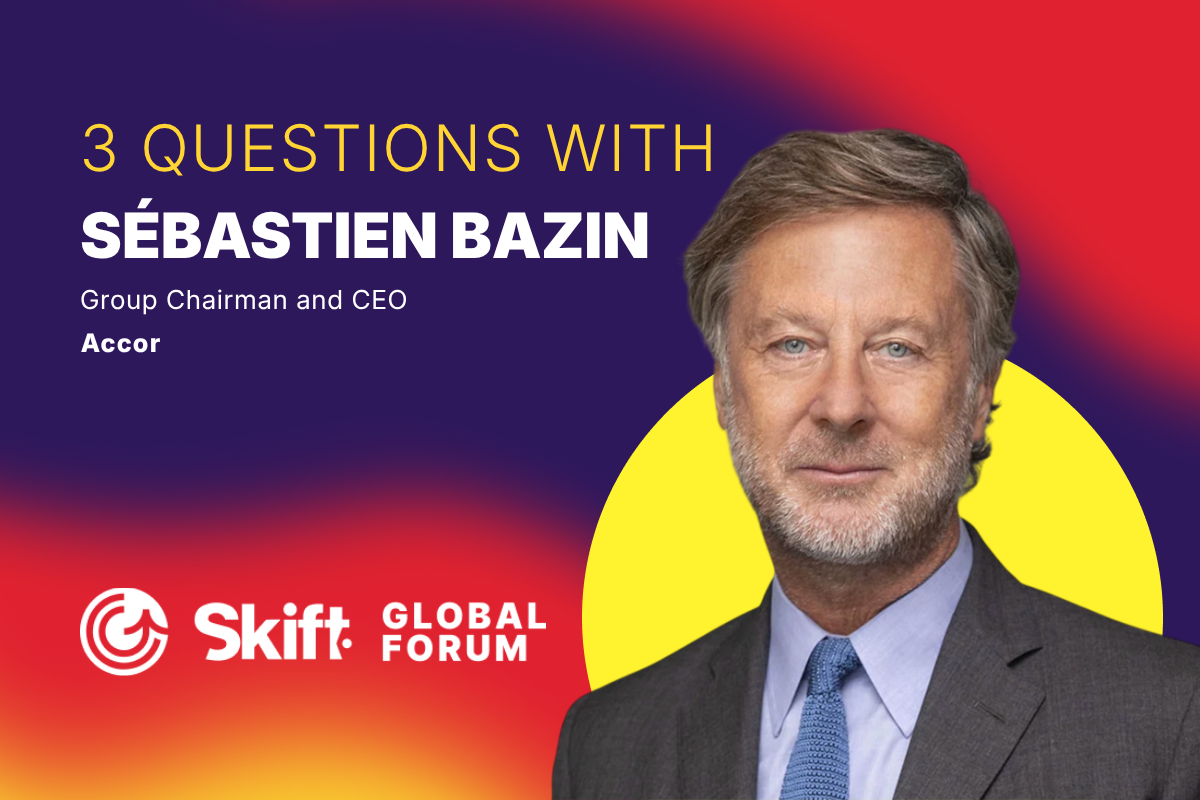
In the high-stakes world of global hospitality, where giants compete for dominance across 5,800 properties and 45 distinct brands, the margin for error is razor-thin. For Sébastien Bazin, the CEO of Accor since 2013, the challenge of leading one of the world’s most expansive hotel conglomerates is not merely a matter of balance sheets and occupancy rates—it is a philosophical exercise in the synthesis of cold data and human warmth. As he prepares to take the stage at the upcoming Skift Global Forum in New York, Bazin’s leadership style offers a masterclass in navigating the intersection of artificial intelligence, shifting consumer behavior, and the timeless necessity of human connection.
The Chronology of Transformation: A Decade of Scaling Excellence
Sébastien Bazin’s tenure at the helm of Accor has been defined by a period of aggressive, yet calculated, expansion. When he took over the group in 2013, the landscape of travel was fundamentally different; the rise of the "sharing economy" was still in its infancy, and the digital transformation of the guest experience was largely focused on basic online booking portals.
Over the past eleven years, Bazin has steered Accor through a structural metamorphosis. He shifted the group’s focus from an asset-heavy model to an asset-light, brand-led organization. This shift allowed Accor to rapidly scale its portfolio, acquiring lifestyle brands and integrating them into a cohesive ecosystem that ranges from economy to ultra-luxury segments.
The strategy was never just about quantity. By 2020, Bazin had overseen the integration of major lifestyle hospitality players, effectively turning Accor into a multifaceted lifestyle group rather than a traditional hotel chain. This transition required a new approach to decision-making—one that could withstand the volatility of global markets while maintaining the distinct identity of brands like Raffles, Fairmont, Sofitel, and Ibis.
The Rule He Decides By: A Tripartite Framework
For leaders managing tens of thousands of employees and millions of guest interactions annually, "data-driven" has become the industry mantra. However, Bazin presents a contrarian view: data is a tool, not a compass.
"I start with my gut, then my heart, then my brain," Bazin explains. This hierarchical framework is his primary filter for making high-level strategic decisions.
- The Gut (Instinct): For Bazin, instinct is the synthesis of years of experience and pattern recognition. It is the initial spark that identifies an opportunity or senses a shift in market sentiment.
- The Heart (People): This layer addresses the human impact of any decision. Whether it involves restructuring a division or launching a new service, Bazin prioritizes the effect on the people who represent the brand—the employees—and the guests they serve.
- The Brain (Data and Timing): Only after the gut and heart are aligned does the brain take over. Data serves to "sharpen" the decision, providing the quantitative weight to justify a move and the strategic insight to time it correctly.
In a rapidly accelerating market, Bazin warns against the trap of "analysis paralysis." He argues that waiting for the perfect dataset often results in missing the window of opportunity. In his view, data should nourish instinct, not replace it.
Supporting Data: The Scale of Accor’s Global Footprint
To understand why Bazin’s leadership philosophy is so critical, one must look at the sheer scale of the operation he manages. Accor’s presence spans over 110 countries, comprising more than 5,800 hotels and resorts. With over 45 brands under the umbrella, the company caters to a vast spectrum of demographics—from budget-conscious travelers to the ultra-wealthy.
- Portfolio Diversity: The brand portfolio is categorized into Luxury, Premium, Midscale, and Economy, as well as a robust "Lifestyle" division. This segmentation requires a decentralized management approach where the "human touch" remains consistent despite the varying price points.
- The Digital Shift: Accor has invested heavily in the ALL (Accor Live Limitless) loyalty program, which acts as the digital backbone of the group. As of the latest reporting cycles, the program has millions of members, serving as the primary repository for the data Bazin uses to inform his decisions.
- Market Volatility: Since 2013, the group has weathered the disruption of Airbnb, the global pandemic, and the current inflationary environment. Each of these events forced a re-evaluation of the business model, proving that Bazin’s "gut-first" approach is resilient in the face of unpredictable black-swan events.
Official Responses: The Future of the Customer Journey
The customer journey is no longer a linear path from search to checkout. It is a fragmented, multi-channel experience influenced by social media, peer reviews, and AI-driven recommendations. When asked how this fragmentation is changing his strategy, Bazin is clear: AI is the catalyst for the next era of personalization.
"AI is going to transform nearly every part of the customer journey," Bazin notes. "Travelers will expect experiences that feel increasingly individual and intuitive."
However, Bazin’s enthusiasm for technology comes with a caveat. He believes that as algorithms become better at predicting what a traveler wants, the actual delivery of that experience must become more human, not less. He views technology as a means to clear away the administrative friction of travel, allowing staff to focus on the moments that matter. In his view, a check-in process handled by a kiosk is not a loss of hospitality; it is an opportunity for a front-desk staff member to have a meaningful conversation with a guest about their local recommendations.
Implications: The Human Element as the Ultimate Differentiator
Perhaps the most significant aspect of Bazin’s leadership is his defense of hospitality as a "social elevator." In an industry increasingly obsessed with tech-stack efficiency and automated distribution, Bazin reminds us that hotels are, fundamentally, places where cultures meet and communities are built.
The implication for the industry is profound: as AI commoditizes the logistical aspects of travel, the brands that win will be those that protect the "human role." If a hotel becomes too automated, it risks losing its soul. Bazin argues that the industry does not pay enough attention to the people behind the service. He advocates for hospitality as a career that provides immense opportunity for growth, regardless of a person’s background.
As the industry looks toward the next decade, Bazin’s perspective suggests a divergence: there will be a race for digital efficiency, but there will also be a premium on "humanity." The challenge for Accor, and for the industry at large, is to ensure that the march toward automation does not eclipse the very service that justifies the hotel experience in the first place.
The Road to Skift Global Forum
As the industry prepares for the Skift Global Forum in New York, the conversation will inevitably pivot toward the balance between the digital and the physical. Bazin’s presence alongside other titans of the industry—including Expedia Group’s Ariane Gorin, Wyndham’s Geoff Ballotti, and Qatar Airways Group’s Hamad Al-Khater—will provide a unique opportunity to contrast different strategic visions.
While some competitors may lean entirely into the efficiency of the digital, Bazin’s insistence on the "gut, heart, and brain" model serves as a reminder that the travel industry is, at its core, a business of emotions. Whether it is a luxury stay in a heritage hotel or a quick stopover in an economy room, the traveler is looking for a connection to the world around them.
For Sébastien Bazin, the goal is simple: ensure that while the technology evolves, the hospitality remains human. His upcoming forum session will likely delve deeper into how he plans to maintain this balance as Accor continues its global trajectory, proving that in a world of big data, the biggest decisions are still made by people, for people.
