





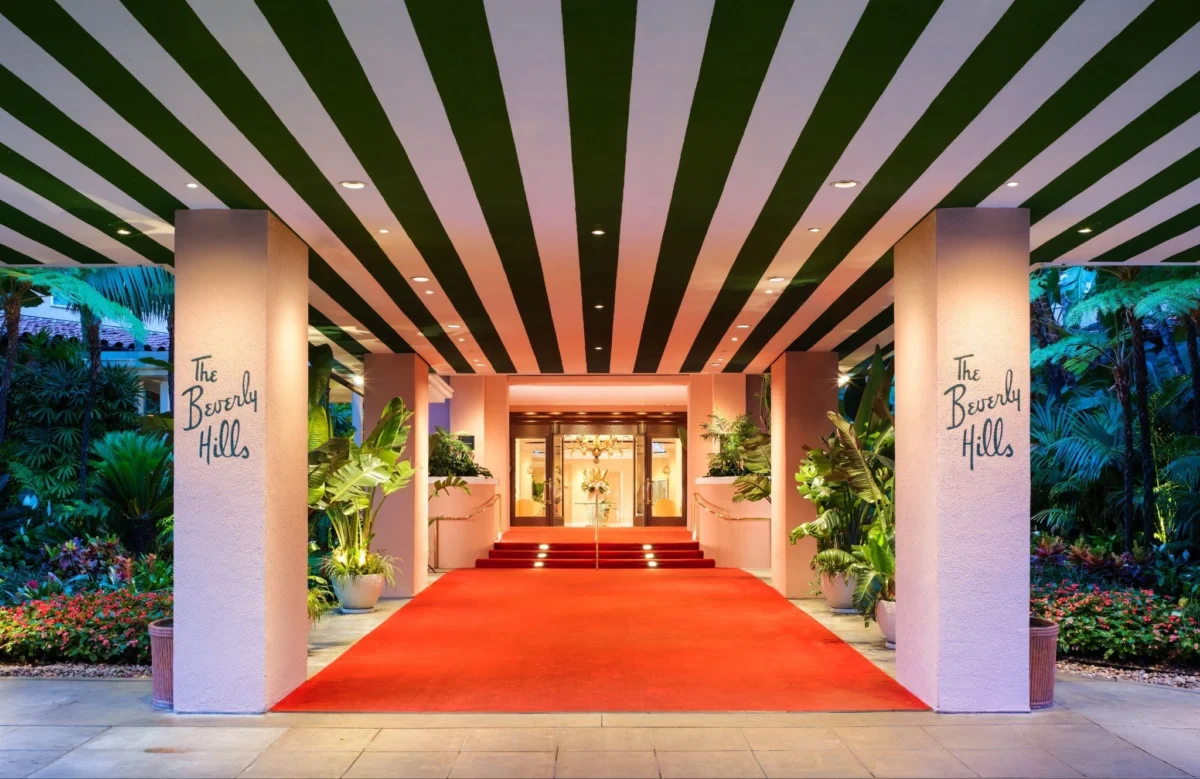
In the fast-evolving landscape of global hospitality, few names command the reverence of the Dorchester Collection. With a portfolio that includes The Dorchester in London, the Hôtel Plaza Athénée in Paris, and The Beverly Hills Hotel in Los Angeles, the group occupies a rarefied tier of luxury. Yet, as the industry pivots toward hyper-personalization, data-driven guest experiences, and digital-first service models, these "palace hotels" face an existential dilemma: how to embrace the efficiency of the 21st century while preserving the nostalgic, human-centric rituals that have made them global icons.
Main Facts: The Balancing Act of Institutional Luxury
The core challenge facing the Dorchester Collection is one of preservation versus evolution. At the heart of the luxury hospitality sector lies the "ritual"—a concept similar to the enduring appeal of the 1805-established barbershop, Truefitt & Hill in St. James’s, London. Just as patrons visit such institutions not for innovation, but for the comfort of an unchanging, high-quality experience, guests of the Dorchester Collection return for a sense of "fixed-point" stability in an increasingly volatile world.
The group’s properties are defined by their gravitas. However, modern luxury travelers, while demanding the aesthetic of the "old world," simultaneously expect the seamlessness of the "new world." The Dorchester Collection must now refine its operational basics—streamlining bookings, digitizing non-intrusive communication, and optimizing sustainability—without stripping away the idiosyncratic flair of their staff. The risk, as experts note, is the "standardization trap," where efforts to improve consistency inadvertently bleach the unique personality out of properties like the iconic "Pink Palace" in Beverly Hills or the grand halls of Mayfair.
Chronology: A Legacy of Grandeur
To understand the current mandate of the Dorchester Collection, one must look at the timeline of its foundational properties:
- 1912: The Beverly Hills Hotel opens its doors, establishing itself as the epicenter of Hollywood glamour.
- 1931: The Dorchester in London officially opens, becoming an immediate landmark of Art Deco architecture and British high society.
- 1947: The Hôtel Plaza Athénée, already a fixture in Paris since 1913, solidifies its reputation as the fashion capital’s preferred retreat during the post-war resurgence of haute couture.
- 2006: The Dorchester Collection is formally established as a management company, bringing these distinct, historically significant properties under a unified operational umbrella.
- 2010s: The group embarks on a series of multi-million dollar renovations across its global portfolio, attempting to update interiors without compromising heritage status.
- 2020–Present: The post-pandemic era forces a rethink of the "dial service" culture, balancing the necessity of contactless technology with the high-touch, human-centric service model that is the group’s hallmark.
Supporting Data: The Economics of High-End Hospitality
Luxury hospitality is a high-barrier-to-entry market where capital expenditure is only half the battle. According to industry analysis, the operating margins for "palace-tier" hotels are thinner than mid-market luxury counterparts due to extremely high staff-to-guest ratios.
- Service Density: At flagship properties like The Dorchester, the ratio of staff to guests often exceeds 3:1, a luxury that necessitates a massive payroll overhead.
- Renovation Cycles: The cost of refreshing these properties is astronomical. Renovations at the Hôtel Plaza Athénée have historically required meticulous attention to historical preservation laws in Paris, often doubling the lead time and cost compared to a new-build hotel.
- Guest Loyalty: Data suggests that the Dorchester Collection enjoys one of the highest "repeat guest" rates in the luxury sector, with many families visiting specific properties for decades. This creates a "legacy demand" that buffers the group against the cyclical downturns that hit business-class hotels.
Official Responses and Strategic Direction
Leadership within the Dorchester Collection has consistently signaled a strategy of "curated modernity." In recent internal briefings, executives have emphasized that the digital transformation of their properties is designed to be "invisible."
"We are not in the business of replacing the doorman with an app," a spokesperson for the group stated in a recent interview. "We are in the business of ensuring the doorman knows the guest’s preferences before they reach the lobby, using technology to empower our staff, not to remove them from the equation."
The group’s strategy revolves around three pillars:
- Invisible Tech: Implementing backend CRM systems that track guest preferences—from preferred pillow firmness to specific dietary requirements—without the guest ever seeing a tablet or a screen during their stay.
- Heritage Preservation: Maintaining the "analog" experience. If a guest prefers a leather-bound logbook for their schedule or handwritten notes, the hotel provides it.
- Local Contextualization: Ensuring each hotel reflects its city. The Beverly Hills Hotel should feel like an extension of California history, while The Dorchester remains a bastion of British refinement. They are managed as a collection, not a chain.
Implications: The Future of the "Palace Hotel"
The broader implication for the industry is the potential death of "cookie-cutter" luxury. As consumers become more sophisticated, the market is beginning to punish brands that feel too clinical. The Dorchester Collection’s attempt to bridge the gap between historical weight and modern agility provides a roadmap for other historic groups—such as the Savoy or the Ritz-Carlton—that are grappling with the same demographic shifts.
The Human Element as the Final Frontier
The ultimate challenge is the "dial service" culture—a term referring to the instantaneous, personalized response that has defined the group’s history. In an era where AI-driven concierge services are becoming common, the Dorchester Collection’s refusal to fully automate guest relations is a bold, contrarian play. The implication here is that in the future, the highest form of luxury will be defined by the absence of algorithms and the presence of human intuition.
Financial Sustainability vs. Brand Integrity
There is an inevitable tension between the shareholders’ desire for higher efficiency and the brand’s requirement for high-touch service. If the group leans too heavily into "efficiency," they risk losing the very reason guests pay a premium. If they resist too much, they risk operational insolvency in an era of rising labor costs and energy prices. The current trajectory suggests the group is banking on the idea that the "premium" charged at their properties is sufficient to absorb the costs of maintaining a human-heavy service model.
Conclusion: A Fixed Point in a Changing City
Just as the visitor to Truefitt & Hill finds comfort in the paper-bound appointments and the portraits of royal customers, the modern luxury traveler seeks the Dorchester Collection for its refusal to change for the sake of change. The group is currently threading a needle: they must be modern enough to be convenient, but traditional enough to be an institution.
If they succeed, they will remain the standard-bearers for what a hotel can be—not merely a place to sleep, but a repository of culture, history, and human connection. If they fail, they risk becoming a museum piece: beautiful to look at, but functionally obsolete. For now, the Dorchester Collection remains, much like the cities they inhabit, a living, breathing, and occasionally stubborn testament to the enduring power of the classic hotel experience. As long as they prioritize the "ritual" over the "reinvention," they are likely to keep their place at the pinnacle of global hospitality.
