





By Dan Zukowski
Published September 11, 2026
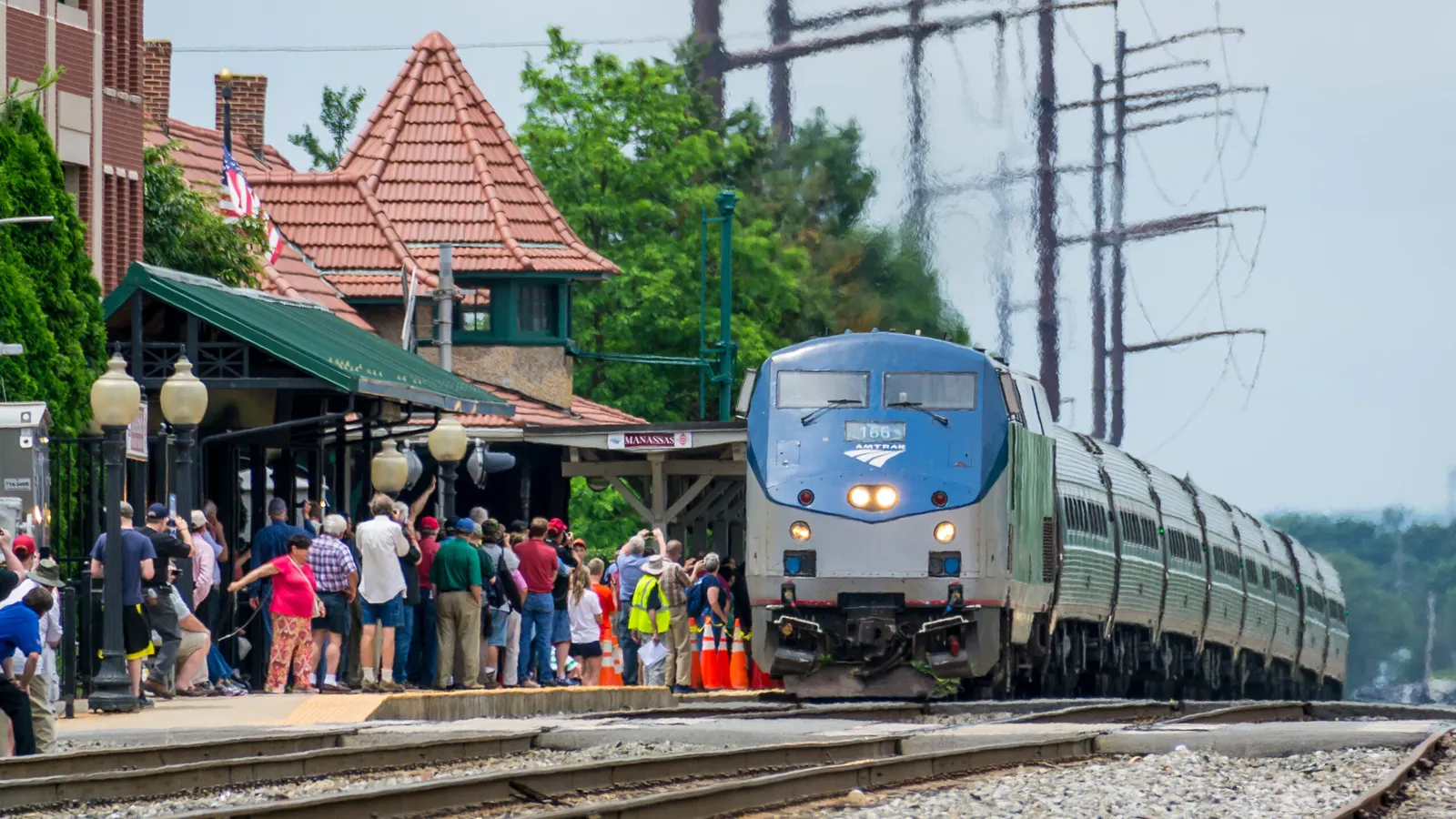
As Amtrak navigates a period of significant passenger growth, the nation’s primary passenger rail operator has initiated a new, high-stakes phase of institutional evolution. With a newly formed board committee tasked with expanding service frequencies and optimizing corridors, the railroad is attempting to capitalize on a post-pandemic surge in travel. However, these ambitious expansion plans are colliding with a volatile political landscape in Washington, D.C., where stalled surface transportation legislation and impending funding cliffs threaten to derail the railroad’s long-term vision.
Main Facts: The Mandate for Expansion
The Amtrak Board of Directors has officially established a dedicated System Expansion Committee, a strategic body aimed at addressing the mounting pressure to increase both passenger capacity and train frequency. This move comes on the heels of impressive performance data for the first nine months of the 2026 fiscal year, during which Amtrak reported carrying 1.7 million more passengers than during the same period in 2025.
Robert Gleason, a Trump appointee who joined the board in September 2025, has been tapped to chair this committee. In a statement underscoring the board’s intent, Gleason noted, “Expanding passenger rail service is essential to meeting growing demand, strengthening mobility, and connecting more communities to economic opportunity.”
The committee is composed of a politically diverse group of directors, including three members nominated by former President Joe Biden, alongside a representative from the U.S. Department of Transportation. Their mandate is broad and multifaceted, encompassing:
- Capacity Enhancement: Growing service frequencies across existing and new corridors.
- State-Supported Growth: Increasing partnerships with state governments to bolster regional services.
- Infrastructure Stewardship: Ensuring the longevity of rail assets and rolling stock.
- Strategic Funding: Developing sustainable financial models to insulate the railroad from cyclical federal budget battles.
Chronology of Recent Developments
The path to this moment has been characterized by both internal leadership transitions and mounting external scrutiny:
- July 27, 2026: Reps. Rick Larsen (D-Wash.) and Dina Titus (D-Nev.) issued a pointed letter to then-Amtrak President Roger Harris. The inquiry questioned the origins of the railroad’s internal restructuring proposal, specifically asking whether the initiative was driven by Amtrak leadership or the Federal Railroad Administration (FRA).
- July 31, 2026: Roger Harris officially stepped down from his role as Amtrak President, a departure described as part of a planned leadership transition.
- September 11, 2026: The Board of Directors formally announces the formation of the System Expansion Committee to oversee the next phase of the railroad’s development.
- September 30, 2026: The critical date marking the expiration of current funding authorizations.
- October 30, 2026: The deadline for public comment regarding Amtrak’s controversial restructuring proposal.
- December 11, 2026: The date by which Congress must finalize surface transportation reauthorization to avoid a total cessation of vital funding programs.
Supporting Data: The Ridership Surge
The demand for rail travel in 2026 has provided the board with the political capital necessary to advocate for expansion. The 1.7 million increase in passenger volume serves as a powerful metric for stakeholders. Analysts suggest this growth is driven by a combination of fluctuating fuel prices, the convenience of modern rail connectivity, and a renewed emphasis on regional mobility in high-traffic corridors such as the Northeast Regional lines.
Despite this success, the financial reality remains stark. According to the American Public Transportation Association (APTA), Amtrak faces a potential 83% reduction in federal appropriations once the current funding cycle ends on September 30. This drastic shortfall is tied to the broader failure of Congress to pass a long-term surface transportation bill, leaving the railroad reliant on stopgap measures that offer little in the way of long-term planning security.
Official Responses and Internal Tensions
The proposed restructuring of Amtrak has become a flashpoint for debate regarding the railroad’s governance. Jim Mathews, President and CEO of the Rail Passengers Association, has been one of the most vocal critics of the current trajectory. In a recent Substack commentary, Mathews warned that the restructuring effort is likely to face severe pushback from Capitol Hill.
“Congress is unlikely to sit quietly in the cheap seats while somebody fundamentally reorganizes the company,” Mathews wrote. His concerns center on the legal and statutory authority of the Amtrak board to execute such a significant corporate overhaul without explicit congressional oversight. Key questions remain regarding the governance structure of potential new corporate entities, the fiscal impact of restructuring, and the potential displacement of jobs and existing route services.

Legislators, particularly those on the House Committee on Transportation and Infrastructure, share these concerns. The letter from Representatives Larsen and Titus highlights a fundamental disconnect between the executive board and the legislative branch. By questioning how a restructuring plan would align with existing congressional funding mechanisms, lawmakers are signaling that they will not relinquish their role in defining the scope and purpose of the nation’s rail service.
Implications for the Future
The implications of this standoff are profound. Amtrak stands at a crossroads where operational success meets political gridlock.
Governance and Statutory Authority
The core of the dispute involves the limits of corporate autonomy. While the board seeks to be more agile and responsive to market demand, Congress maintains the purse strings and the power to legislate structural requirements. If the board pushes forward with a major reorganization without a clear mandate from the legislative branch, it risks a protracted legal and political battle that could freeze decision-making for years.
The Legislative Cliff
With midterm elections approaching, the environment in Washington is becoming increasingly polarized. The uncertainty surrounding the December 11 deadline for surface transportation reauthorization is a major risk factor. As Mathews aptly noted, “The Congress that deals with Amtrak next year may look rather different from the Congress sitting in Washington today.” This uncertainty forces the board to plan for multiple financial scenarios, ranging from a continuation of status-quo funding to a scenario of severe austerity.
Public Trust and Engagement
By opening the restructuring proposal for public comment until October 30, Amtrak is attempting to build transparency. However, the success of this outreach will depend on how the railroad incorporates feedback from regional stakeholders, labor unions, and passenger advocacy groups. If the plan is perceived as a top-down mandate that prioritizes efficiency at the cost of service breadth, the backlash from local communities could further complicate the board’s efforts.

The Economic Connectivity Argument
Ultimately, the board’s focus on “connecting more communities to economic opportunity” remains a compelling narrative. If Amtrak can prove that its expansion plans lead to tangible economic benefits—such as increased tourism, labor mobility, and regional development—it may be able to bridge the partisan divide. However, until the legislative fog clears and the funding cliff is resolved, the railroad’s ambitions for a new era of rail service remain hostage to the complex and often dysfunctional machinery of federal infrastructure policy.
For now, the eyes of the rail industry remain on the board’s committee as it begins its work, with the October 30 comment deadline serving as the next major test of whether the railroad can align its internal vision with the political realities of a divided government.
