





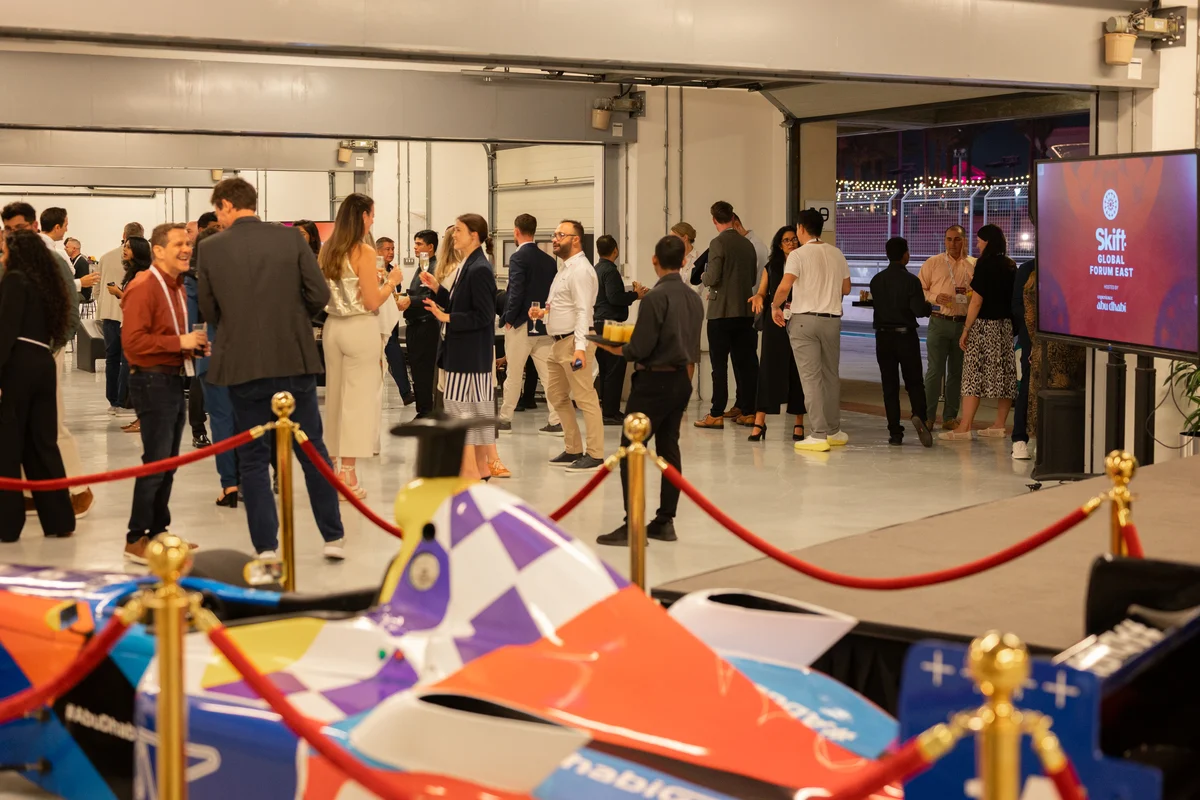
In the modern travel landscape, the line between a vacation and an event has all but evaporated. Destinations are no longer defined solely by their topography or historical landmarks; they are increasingly defined by their capacity to host the "live moment." Whether it is a global concert tour, a championship sporting event, or an immersive cultural festival, live entertainment has become the primary engine of modern tourism.
On September 22, in a high-stakes, closed-door summit in New York City, the architects of this burgeoning ecosystem will gather to address a fundamental shift in the global economy. Presented by Live Nation, the Skift Live Tourism Summit aims to bring together the disparate stakeholders who control the flow of live demand—from the promoters who book the talent to the destination marketing organizations (DMOs) that manage the infrastructure required to support them.
The Fragmented Chain: Why the Industry Needs a Unified Voice
The live tourism sector is notoriously fragmented. Historically, the journey of a "live moment"—a concert, a game, or a performance—has been siloed into disconnected industrial buckets. A promoter secures an artist; a venue secures a date; a hotel blocks out rooms; an airline adjusts flight paths; and a city attempts to manage the resulting surge in foot traffic.
Rarely do these stakeholders occupy the same room at the same time. The result is a broken chain where destination readiness often lags behind the speed of demand. When a massive tour is announced, the local infrastructure—from public transit capacity to hotel inventory management—is often caught off guard.
The Skift Live Tourism Summit seeks to dismantle these silos. By placing the Las Vegas Convention and Visitors Authority (LVCVA)—an entity that has successfully transformed a desert oasis into a global hub of perpetual live entertainment—on the same stage as Live Nation, the summit is attempting to map the entire lifecycle of a live tourism transaction. The goal is to move from a reactive model, where cities scramble to accommodate events, to a proactive, integrated model where tourism, entertainment, and urban planning are treated as a singular economic organism.
Chronology of the Live Tourism Explosion
To understand the urgency of this summit, one must look at the rapid evolution of the "experience economy" over the last decade.
- 2010–2015: The Rise of the Festival Era. The proliferation of boutique music festivals and large-scale sporting events began to signal that travelers were willing to fly specifically for events rather than simply for the destination.
- 2018–2019: The "Super-Destination" Pivot. Cities like Las Vegas, Nashville, and Dubai began aggressively investing in "anchor events"—major residencies, sports franchises, and recurring global summits—to smooth out the seasonality of tourism.
- 2020–2021: The Great Pause and the Rebound. The pandemic halted live events, causing a catastrophic loss for the hospitality sector. However, the subsequent "revenge travel" era saw live events recover faster than almost any other travel vertical.
- 2023–2024: The Eras Tour Effect. The unprecedented economic impact of global tours, such as Taylor Swift’s The Eras Tour, proved that a single artist can shift the GDP of a mid-sized nation. This has turned live events from a "nice-to-have" amenity into a core macroeconomic strategy.
Supporting Data: The Economic Gravity of Live Events
The data underpinning the Skift Live Tourism Summit reflects a market that is no longer peripheral but central to global travel. According to preliminary Skift Research, travelers who visit a destination for a live event stay 30% longer and spend 40% more per diem than the average leisure traveler.
Furthermore, the "ripple effect" of live tourism is profound. For every dollar spent on a concert ticket, an estimated $4 to $6 is injected into the local hospitality economy. This includes ancillary spending in bars, restaurants, retail, and local transportation.
However, the data also highlights the "readiness gap." Research indicates that 65% of mid-sized destinations believe they are ill-equipped to handle the logistics of a massive, sudden influx of visitors associated with global entertainment tours. This gap represents a massive opportunity for the stakeholders gathering in New York, as they aim to develop standardized frameworks for data sharing and infrastructure mobilization.
Official Perspectives: Bridging the Gap
While the summit is a closed-door affair, the rhetoric surrounding the event underscores a shift in how tourism boards view their mandate.
"We are no longer just selling a place," a representative for a major destination marketing authority remarked in a pre-summit briefing. "We are selling a calendar. The destination is the stage, but the events are the script. If the script is weak, the stage doesn’t matter."
Live Nation’s involvement signals a realization that their business model is inextricably linked to the success of the hospitality sector. By partnering with Skift, they are acknowledging that the "routing decision"—the choice of where to send a tour—is no longer just about venue availability. It is about the "destination readiness score"—a metric that evaluates a city’s transport, hotel capacity, and local policy environment.
The summit sessions are designed to be "unclosed calls." Each session will focus on a specific friction point:
- Dynamic Inventory Management: How can hotels and airlines talk to promoters in real-time?
- Infrastructure Resilience: How do cities upgrade public transit to handle 50,000-person spikes?
- Regulatory Flexibility: How do local governments expedite permitting for high-impact events?
Implications for the Future of Global Travel
The implications of this summit are far-reaching. If the participants succeed in creating a more unified "live tourism" ecosystem, we can expect to see several shifts in the coming years:
1. The Rise of the "Event-Centric" Hotel
Hotels will shift from being passive providers of accommodation to active partners in the event experience. Expect more hotels to integrate directly with ticket-selling platforms, offering bundled packages that include exclusive transport or backstage access as a standard feature rather than an afterthought.
2. The Digitization of Destination Readiness
We are moving toward a future where "Destination Readiness" will be a data-driven service. Expect software platforms to emerge that allow DMOs to see a promoter’s touring schedule two years in advance, enabling them to align their marketing, security, and staffing resources before a single ticket is sold.
3. A Shift in Public Policy
Cities that treat live tourism as a core economic strategy will likely see a change in how they manage their budgets. Tourism boards may begin to function more like talent agencies or event production houses, providing direct subsidies or infrastructure support to attract the world’s biggest live moments.
The Constraint of the Room
The decision to limit the summit to a small, curated group of senior leaders is intentional. By excluding the general public and media from the main sessions, Skift is creating a "safe space" for executives from competing airlines, rival hotel chains, and different government jurisdictions to have candid conversations about the failings of the current system.
The "constraint of the seat" is the ultimate testament to the summit’s intent. It is not designed to be a broadcast; it is designed to be a boardroom. The question posed to every attendee is simple: Is your organization positioned to lead the shift, or are you waiting for the market to move without you?
Conclusion: Defining the Next Era
As we look toward the remainder of the decade, the convergence of culture and commerce will continue to accelerate. The days of "passive tourism"—where travelers arrive in a city and hope for something interesting to happen—are coming to an end. The modern traveler is an "event-first" traveler. They decide where they are going based on what is happening, and they decide when they are going based on the caliber of the experience.
The Skift Live Tourism Summit represents the first major effort to professionalize this transition. By bringing together the gatekeepers of live entertainment and the stewards of global destinations, the event is laying the groundwork for a more synchronized, more profitable, and more immersive future.
Whether this room can truly resolve the logistical bottlenecks and competitive frictions that have historically plagued the industry remains to be seen. However, the fact that these power players are gathering in a single room on September 22 indicates that the era of fragmented live tourism is drawing to a close. The new era—one of integrated, high-velocity, event-driven travel—is already here. The only question is who will be in the room to write the rules.
