




By [Your Name/Journalistic Desk]
Published September 14, 2026
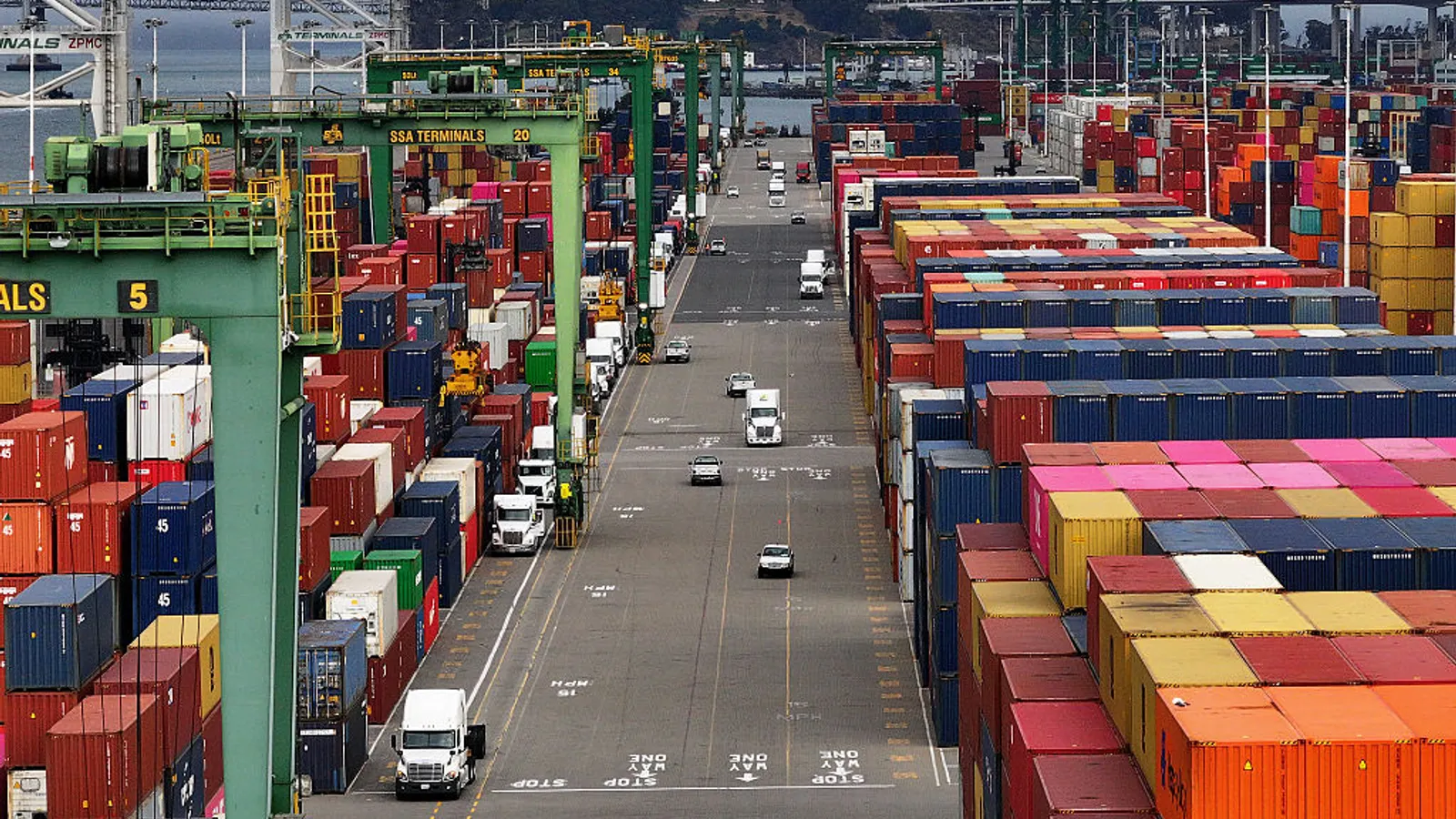
The global shipping industry, long accustomed to predictable cycles of ebbs and flows, finds itself navigating an unconventional landscape in the second half of 2026. Contrary to earlier projections that anticipated a cooling of import volumes following an aggressive early-summer surge, major U.S. ports are bracing for a record-breaking September.
According to the latest Global Port Tracker report, co-authored by the National Retail Federation (NRF) and Hackett Associates, shipping volumes are not only maintaining their momentum but are hitting a crescendo as the third quarter draws to a close. This resilience, which has confounded analysts and industry observers alike, suggests that the traditional "peak season"—a period typically characterized by a rush of holiday inventory—is behaving with a volatility not seen in years.
The Core Phenomenon: A Peak That Refuses to Fade
For months, industry experts predicted that the 2026 peak season would burn out prematurely. The rationale was logical: throughout the spring and early summer, shippers engaged in massive "frontloading," an aggressive strategy to move goods across the Pacific early to avoid the uncertainties of potential tariff escalations and geopolitical friction.
Typically, such frontloading leads to a "hollowed-out" autumn, where demand drops off as inventories are already stocked. However, the data for September paints a starkly different picture. The Global Port Tracker forecasts that U.S. ports will handle 2.31 million Twenty-Foot Equivalent Units (TEUs) in September alone—a staggering 9.6% increase compared to the same period last year.
This unexpected surge suggests that the "peak" has not only extended but has shifted its center of gravity. Rather than tapering off, the consumer appetite for imported goods has remained buoyantly high, forcing logistics providers to scramble to meet a sustained demand that shows few signs of retreating before the final quarter.
Chronology of the 2026 Import Surge
To understand why September has become the epicenter of this year’s shipping activity, it is necessary to look back at the trajectory of the preceding months.
- Q1 & Q2 2026: The Era of Precautionary Moves. Faced with fluctuating tariff policies affecting trade with China, Mexico, and the European Union, retailers and manufacturers shifted their procurement strategies into high gear. The uncertainty surrounding trade barriers forced a move away from "just-in-time" inventory toward a "just-in-case" model.
- July 2026: The Cooling Expectation. Analysts at the NRF and other logistics think tanks observed a flattening of growth, leading to a widespread consensus that the import rush would begin a steady decline in August.
- August 2026: The Record-Breaking Reality. Data from major gateways, particularly the Port of Los Angeles, revealed that the "cooling" was non-existent. August saw the busiest three-month stretch in the history of the Port of Los Angeles, processing 955,907 TEUs.
- September 2026: The Crest. We currently find ourselves at the peak of this wave. Port operations are running at near-maximal capacity as stakeholders struggle to manage the volume while facing the residual effects of supply chain bottlenecks and vessel delays.
Supporting Data: By the Numbers
The Global Port Tracker provides a granular look at the shifting volumes through the beginning of 2027. The figures underscore a market that is fundamentally stronger than the initial annual forecasts suggested.
| Month | Forecasted TEUs | Year-over-Year Change |
|---|---|---|
| September 2026 | 2.31 Million | +9.6% |
| October 2026 | 2.11 Million | +1.7% |
| November 2026 | 2.00 Million | -0.9% |
| December 2026 | 2.03 Million | +1.1% |
| January 2027 | 2.09 Million | +1.0% |
These numbers reveal a nuanced picture: while we expect a modest decline from the September high, the volume remains consistently above the 2 million TEU threshold—a benchmark that signifies a robust, high-pressure environment for terminal operators, drayage truckers, and warehouse managers.
Official Responses and Industry Sentiment
The resilience of the U.S. import market is being attributed to a combination of persistent consumer demand and a complex global trade environment.
The Hackett Perspective
Ben Hackett, founder of Hackett Associates, noted that the industry is navigating a "perfect storm" of challenges. "Imports have remained buoyant over the past three months despite geopolitical conflicts, changing tariff policies, rising inflation, and fuel prices," Hackett stated. He acknowledged that while cargo is moving, the sheer volume has exposed systemic fragilities, including vessel delays and an increase in the time required for cargo to clear inland nodes.
The Port of Los Angeles Strategy
Gene Seroka, Executive Director of the Port of Los Angeles, has been at the forefront of the conversation regarding the "early peak." According to Seroka, the summer of 2026 will go down as an "exceptionally strong" period for the port.

"Resilient consumer demand, early holiday shipments, and a broad mix of cargo have all contributed to that strength," Seroka said in a recent press statement. While he notes that the traditional peak season—which historically runs through mid-November—might conclude earlier this year (likely by the end of September), he views this as a result of successful frontloading rather than a drop in demand. "We have good momentum heading into the final months of the year," he added, emphasizing that the port’s infrastructure has managed to absorb the shock of these record-breaking volumes.
Implications for the Supply Chain
The current state of affairs carries profound implications for all stakeholders involved in the global supply chain.
1. The Cost of Congestion
The sustained high volume is putting immense pressure on inland infrastructure. As ports hit their capacity limits, the "dwell time" of containers—the amount of time a container spends at a terminal before being moved—has increased. This adds costs for importers who are forced to pay demurrage and detention fees, ultimately filtering down to the consumer in the form of higher prices.
2. The Inventory Paradox
Retailers find themselves in a precarious position. By frontloading their inventory to avoid tariffs and potential congestion, they have successfully avoided stock-outs. However, this has led to increased warehousing costs. If the expected holiday consumer demand does not match the record-high import volumes, retailers may find themselves with an "inventory overhang," forcing them to slash prices in early 2027 to clear shelf space.
3. Geopolitical and Macro-Economic Sensitivity
The data shows that supply chains are remarkably sensitive to political rhetoric. Every mention of new trade barriers or adjustments to existing tariffs triggers a reactive surge in shipping. This "policy-driven logistics" makes it increasingly difficult for carriers to plan vessel rotations and for terminal operators to forecast labor requirements.
4. Labor and Operational Resilience
With the industry working at such high capacity, the human element of the supply chain—longshore workers, truck drivers, and warehouse staff—is being pushed to the limit. The "early peak" has effectively robbed these workers of the traditional slack period usually found between the summer and the holiday rush, leading to concerns regarding burnout and the long-term stability of the labor force.

Conclusion: Looking Toward 2027
As the industry moves toward the end of 2026, the narrative of the "fading peak" has been decisively debunked. The resilience of the American consumer, combined with the strategic foresight (and fear) of retailers, has created a sustained shipping environment that continues to defy historical norms.
While September is slated to be the absolute peak of the year, the stability of the numbers for October, November, and December suggests that we are not looking at a sharp decline, but rather a transition to a "new normal" of higher baseline volumes. For the logistics sector, the lesson of 2026 is clear: in an era of global volatility, the traditional models of peak season are obsolete. Success now depends on the ability to remain agile in the face of constant, high-volume pressure.
As we look toward January 2027, the projected 2.09 million TEUs suggest that the industry will have little time to catch its breath, signaling that the challenges of 2026 will likely serve as the prologue to the operational complexities of the year to come.
