





By Kelly Stroh | Published Sept. 15, 2026
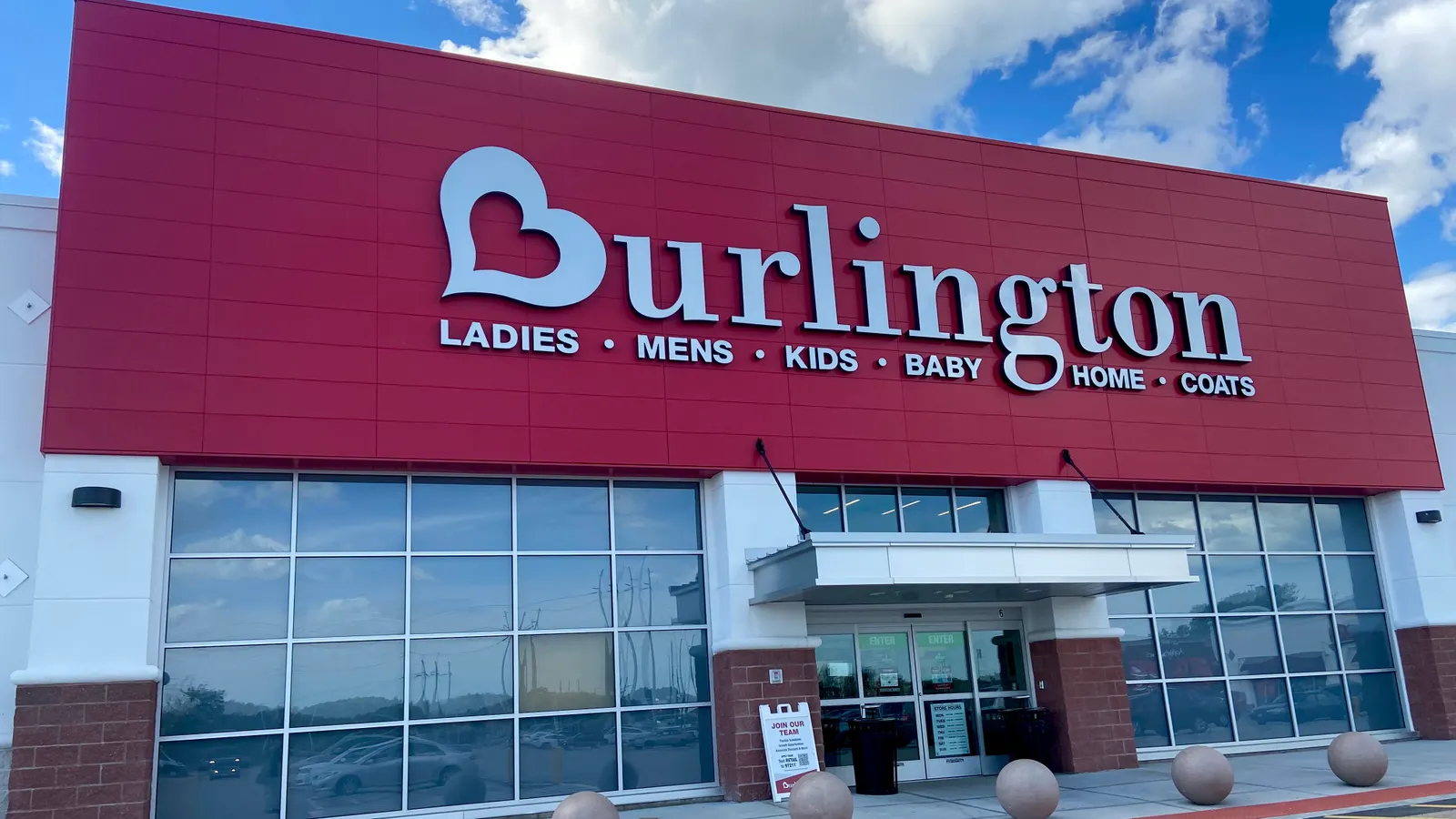
As the global retail landscape faces increasing pressure to decarbonize, the industry’s largest players are shifting their focus from mere carbon offsets to structural, on-site energy independence. Leading the charge is off-price powerhouse Burlington, which recently unveiled plans to integrate solar installations across its warehouse footprint in Arizona, California, and Georgia. This move is part of a broader, industry-wide trend of converting vast, flat-roofed distribution centers into massive power plants, effectively turning supply chain infrastructure into a cornerstone of corporate sustainability.
The Strategic Shift: Burlington’s Aggressive Energy Roadmap
Burlington’s latest initiative is not an isolated project but rather the latest iteration of a sophisticated energy strategy. In its most recent fiscal reporting, the retailer revealed that it has successfully reached a 25% renewable energy mix for its total electricity consumption. This achievement is particularly notable as it significantly outpaces the company’s original goal of 20% by 2030, a milestone that was reached four years ahead of schedule.
The strategy centers on a dual-pronged approach: expanding renewable supply agreements across the Midwest, Mid-Atlantic, and West Coast while simultaneously investing in on-site generation. By the end of fiscal year 2025, the company had finalized agreements for on-site solar projects across New Jersey, California, and Massachusetts. By adding upcoming installations in Arizona and Georgia, Burlington is creating a geographically diverse energy portfolio that hedges against regional grid volatility and rising utility costs.
Chronology of the Retail Energy Transition
The transition to renewable energy in the retail sector did not happen overnight. It is the result of a decade-long evolution in corporate environmental, social, and governance (ESG) mandates.
- 2018–2020: The Pilot Phase. Retailers began experimenting with small-scale solar installations, largely focused on corporate headquarters or flagship retail locations. The focus was primarily on public relations and testing the ROI of photovoltaic (PV) technology.
- 2021–2023: Supply Chain Integration. As ESG reporting requirements became more stringent, retailers realized that their Scope 2 emissions—the indirect emissions from the generation of purchased energy—were primarily driven by the massive power requirements of automated warehouses and distribution centers.
- 2024–2025: Scaling for Impact. Companies like Gap Inc. and TJX Companies accelerated their capital expenditure on solar, moving beyond pilot programs to full-scale rooftop deployments.
- 2026: The New Standard. With the current push by Burlington and its peers, on-site solar has moved from a "nice-to-have" sustainability project to a core operational strategy designed to ensure long-term energy security and compliance with tightening carbon reporting regulations.
Comparative Data: How Retail Giants Are Stacking Up
Burlington is far from alone in its pursuit of clean energy. The retail industry is currently locked in a race to achieve 100% renewable energy usage, with several household names providing a roadmap for the rest of the sector.
Gap Inc.
According to the company’s 2025 Impact Report released this past June, Gap Inc. is aggressively pursuing its target of 100% renewable electricity by 2030. As of January 31, 2026, the company reported that 46% of its electricity across company-operated facilities is sourced from renewables. A key component of this success is the company’s solar installation at its Fresno, California, distribution hub, which serves as a model for its broader supply chain decarbonization efforts.
Walmart
The world’s largest retailer continues to demonstrate that scale and sustainability can coexist. Walmart’s fiscal 2026 ESG report highlights that more than 53% of its global electricity consumption is now supplied by renewable sources. The company is currently on track to reach 100% by 2035. Within the United States alone, Walmart has achieved 125 megawatts of on-site solar capacity spread across 303 individual facilities, turning its vast real estate footprint into a localized power grid.
TJX Companies and Best Buy
TJX Companies has focused on geographical diversity in its installations, deploying on-site solar in Arizona, Connecticut, Massachusetts, Nevada, and Texas. Meanwhile, Best Buy has signaled a shift toward high-output generation, installing its first dedicated solar field in California this year. This field is projected to generate nearly 6 million kilowatt-hours annually, providing enough clean energy to power an entire distribution facility—a significant step in mitigating the environmental impact of modern logistics.
Official Perspectives: The Rationale Behind the Investment
For these organizations, the shift is driven by more than just altruism. Executives are increasingly viewing on-site solar as a critical component of risk management.

"Investing in on-site generation allows us to decouple our operational costs from the fluctuations of the public utility markets," noted one industry analyst familiar with the retail sector’s energy transition. "When you control your own power source, you aren’t just lowering your carbon footprint; you are securing your supply chain against grid failure and price spikes."
Furthermore, the integration of solar power is seen as a way to "future-proof" against upcoming carbon taxes and potential regulatory penalties in various jurisdictions. By proactively reducing their reliance on fossil-fuel-derived grid power, these companies are insulating themselves from the financial risks associated with the inevitable global energy transition.
Operational and Economic Implications
The transition to solar-powered supply chains carries profound implications for the logistics and real estate sectors.
1. Operational Resiliency
As distribution centers become more automated—relying on robotics, high-speed sorting, and climate-controlled storage—the power demand of these facilities has skyrocketed. On-site solar, often paired with battery storage systems, provides a critical buffer that ensures business continuity during grid outages, preventing the costly downtime that could otherwise ripple through the entire supply chain.
2. Real Estate Valuation
Commercial real estate developers are beginning to recognize the value of "solar-ready" warehouses. Distribution centers with reinforced roofs capable of supporting massive PV arrays are now commanding a premium. For retailers, owning or leasing these properties is an investment in long-term asset value.

3. The "Scope 3" Challenge
While on-site solar directly addresses Scope 2 emissions, it also indirectly aids in addressing Scope 3—the emissions occurring in the value chain. By partnering with vendors and logistics providers who are also committed to renewable energy, retailers are fostering an ecosystem of sustainability that extends from the manufacturing floor to the consumer’s doorstep.
The Path Ahead
As we look toward the remainder of the decade, the integration of renewable energy into the retail supply chain is expected to accelerate. The success of Burlington, Walmart, and Gap Inc. proves that the technology is mature, the economics are viable, and the environmental necessity is undeniable.
However, challenges remain. The interconnection of these systems to regional power grids requires complex negotiations with local utility providers, and the initial capital outlay for large-scale solar projects remains high. Despite these hurdles, the competitive advantage gained through energy independence and corporate responsibility is clear.
As the retail industry continues to evolve, the warehouses of tomorrow will look increasingly different from those of the past. They will be smarter, more autonomous, and—thanks to the rooftop solar revolution—far more sustainable. The move by Burlington to expand its solar footprint is not just a green initiative; it is a fundamental reconfiguration of how the modern retail supply chain powers its future.
