





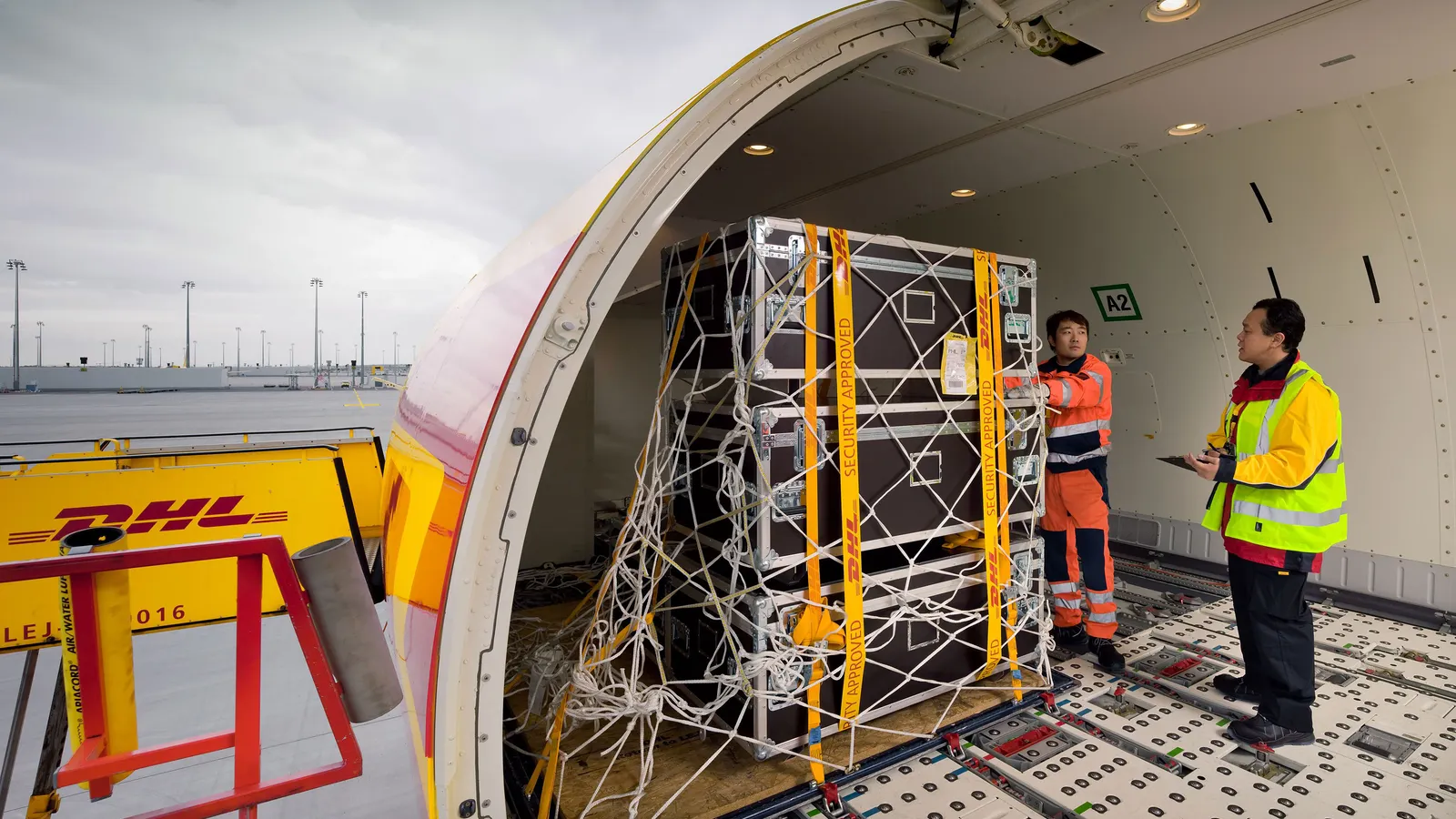
In a strategic move designed to reshape the landscape of international heavy-cargo logistics, DHL Express has officially launched its new "Heavy Weight Express" service. Announced on September 9, this standardized, scheduled air freight solution is engineered to provide US businesses—and their global counterparts—with an expedited, reliable method for transporting oversized shipments across international borders. By bridging the gap between traditional air freight and express courier services, DHL is positioning itself to capture a significant share of the industrial supply chain market, where time-sensitivity and heavy load capacity are increasingly at odds.
Main Facts: Redefining Heavy-Duty Transit
The core of the Heavy Weight Express service lies in its ability to marry the speed of express logistics with the structural requirements of heavy industrial goods. According to the company’s official announcement, the service is capable of moving shipments weighing up to 2,200 pounds per piece, or a total of 6,000 pounds per shipment.
Crucially, the service promises a standardized transit window of one to three business days, depending on the origin, destination, and the specific characteristics of the freight. This level of speed is typically reserved for small parcels, making the application of this timeframe to heavy, palletized cargo a major advancement in global logistics. The service is now active across DHL Express’s expansive international network, covering over 220 countries and territories.
By utilizing DHL’s proprietary infrastructure—which includes a dedicated aircraft fleet, global hubs, specialized gateways, and in-house customs brokerage—the company aims to eliminate the fragmentation often found in heavy cargo shipping. Instead of relying on a patchwork of third-party forwarders, DHL provides an end-to-end service, ensuring that heavy machinery or sensitive automotive parts remain under the company’s control from the moment of pickup until the final mile of delivery.
Chronology: The Evolution of DHL’s Strategic Expansion
The launch of Heavy Weight Express did not happen in a vacuum; it is the culmination of a multi-year shift in global supply chain requirements.
- Pre-2024: Global manufacturers faced a volatile landscape characterized by capacity constraints, unpredictable air freight pricing, and the inherent inefficiencies of traditional heavy-freight shipping, which often lacked the tracking visibility of express services.
- Early 2024: DHL began identifying a growing demand from the technology, automotive, and life sciences sectors for a "premium" heavy-cargo option that offered the same reliability as their small-parcel express services.
- September 9, 2024: DHL officially debuted the Heavy Weight Express service, formally integrating it into their global product portfolio.
- Q4 2024 and Beyond: The service is now being integrated into existing regional logistics hubs, with the rollout of "Heavy Weight Priority Desks" serving as the immediate next step in operational support.
This timeline reflects a deliberate effort by DHL to insulate its customers from the "hidden" delays that typically plague heavy air freight, such as customs bottlenecks and handoffs between different logistics providers.
Supporting Data: Why "Heavy Weight" Matters
The necessity for such a service is backed by the increasing complexity of modern multisite supply chains. Industrial sectors, particularly automotive manufacturing and pharmaceuticals, operate on "just-in-time" (JIT) principles. For these companies, a single delayed engine component or a shipment of temperature-sensitive vaccines can result in millions of dollars in losses.
Key metrics supporting the rollout include:
- Capacity Stability: By utilizing its own aircraft and standardized handling protocols, DHL aims to maintain capacity even during peak seasons or periods of geopolitical or environmental disruption.
- Operational Predictability: The model shifts away from "spot-rate" market volatility toward a scheduled, upfront pricing model. This allows CFOs and supply chain managers to better forecast shipping costs and reduce the "inventory buffers" that companies have historically held to protect against logistics failure.
- Reduced Downtime: By compressing transit times to 1–3 days, companies can significantly reduce their reliance on large, expensive warehouse inventories, effectively moving toward a leaner, more agile capital structure.
Official Responses: The "Integrated Model" Advantage
Laurice Bancroft, SVP of network operations for DHL Express Americas, emphasizes that the service is less about moving boxes and more about providing operational certainty. In an interview, Bancroft highlighted the "integrated model" as the defining differentiator for the service.
"This integrated model gives DHL greater control over the shipment journey and helps provide predictable transit times and capacity, even during periods of disruption or constrained air capacity," Bancroft noted.
Perhaps the most significant innovation mentioned by Bancroft is the introduction of Heavy Weight Priority Desks. These are not merely customer service lines; they are specialized teams tasked with proactive tracking and real-time intervention. In the world of logistics, "exceptions"—such as flight delays or documentation errors—are the primary cause of failure. By assigning "dedicated case ownership" to these priority desks, DHL ensures that if a shipment hits an obstacle, a human specialist is already working to reroute or expedite the cargo before the customer even identifies a problem.
Furthermore, the "one upfront quote" policy is designed to address a common pain point in international trade: the "fee creep." By bundling customs brokerage, handling, and transportation into a single, transparent price, DHL is simplifying the procurement process for businesses that are often overwhelmed by complex, multi-layered logistics invoices.
Implications for Global Industry
The introduction of Heavy Weight Express has profound implications for several critical sectors.
1. Automotive and Manufacturing
Modern automotive assembly plants run on razor-thin margins and tight schedules. A delay in receiving a custom-manufactured part can idle an entire production line. With Heavy Weight Express, manufacturers can treat major engine components or robotic arms as they would a standard express parcel, ensuring that emergency repairs or design changes do not lead to costly production halts.
2. Life Sciences and Pharmaceuticals
For the pharmaceutical industry, speed is often a matter of patient safety. As the industry moves toward personalized medicine and specialized therapies, the ability to move heavy, high-value equipment—or bulk active pharmaceutical ingredients—within a guaranteed 72-hour window is transformative.
3. Energy and Engineering
In the oil, gas, and energy sectors, the cost of downtime at a remote drilling site or a power generation facility is astronomical. The ability to ship critical heavy components rapidly across international borders via a single, reliable partner reduces the risk of long-term operational paralysis.
4. Supply Chain Agility
Beyond individual shipments, the service allows for a fundamental shift in supply chain architecture. Companies no longer need to maintain regional distribution centers filled with excess inventory to guard against transit delays. Instead, they can adopt a "hub-and-spoke" model where inventory is centralized and dispatched on-demand, knowing that the "Heavy Weight Express" backbone can handle the transit requirements.
Conclusion: The Future of Logistics
DHL’s Heavy Weight Express represents a mature evolution of the global express market. By applying the rigorous, time-bound standards of small-package delivery to the heavy-industrial sector, DHL is forcing a re-evaluation of what constitutes "standard" air freight.
As global trade continues to face challenges—from fluctuating fuel costs to geopolitical instability—the demand for predictable, transparent, and high-speed logistics solutions will only intensify. DHL’s focus on proactive human intervention, integrated infrastructure, and end-to-end visibility suggests that the company is not just selling a shipping service, but rather a form of "logistics insurance" that helps modern enterprises keep their operations moving, regardless of the weight of their cargo.
For the business community, this move signals a transition toward a more integrated global economy where heavy, complex goods can travel with the same ease and confidence as a document or a consumer parcel. As the service gains traction in the coming months, its success will likely serve as a benchmark for the rest of the logistics industry, potentially triggering a broader shift toward similar "express-heavy" solutions worldwide.
