


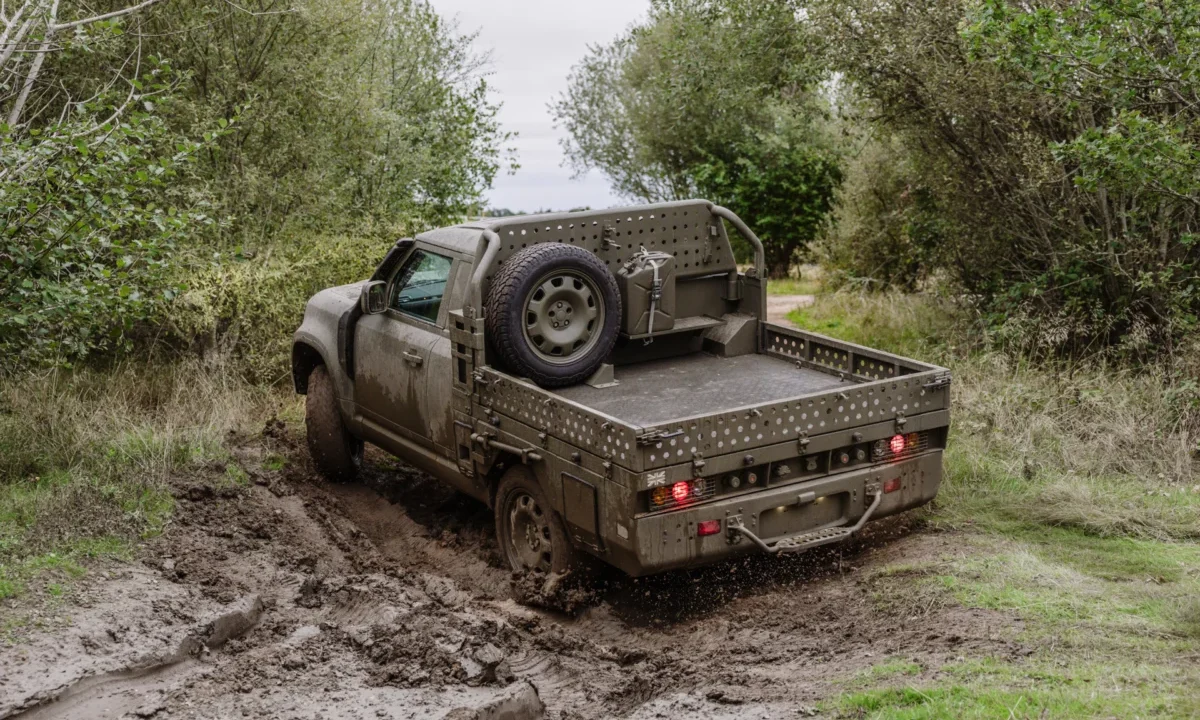


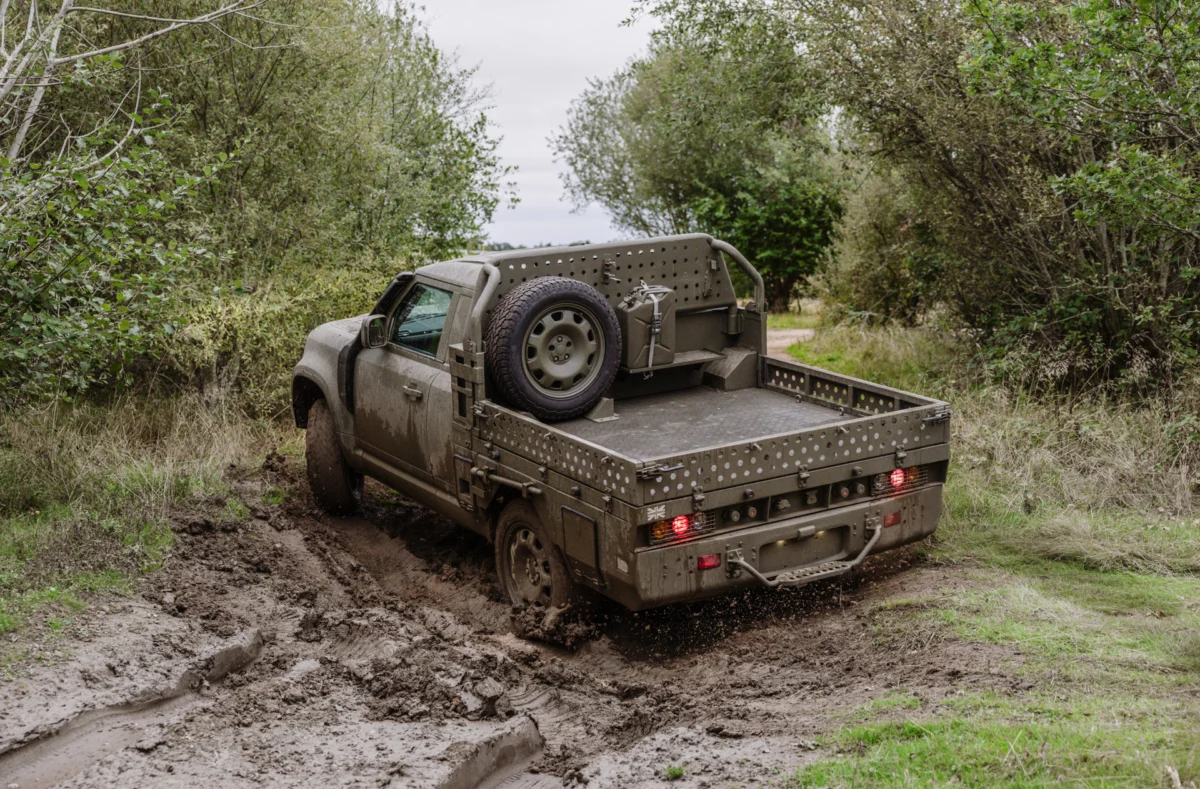
In a move that bridges the gap between high-end luxury engineering and the uncompromising demands of global defense forces, Jaguar Land Rover (JLR) has officially unveiled the Defender Wolf Series II at the DVD2026 defense exhibition in the United Kingdom. This launch marks a significant milestone in automotive history: the return of an officially designated “military-spec” Defender, a lineage that has been absent from the manufacturer’s portfolio since the retirement of the iconic, body-on-frame original in the late 1990s.
The introduction of the Wolf Series II is not merely a nostalgia play. It represents a fundamental shift in how modern armies procure their tactical mobility platforms. By pivoting from the traditional "ladder-frame" chassis of the past to the advanced D7x monocoque architecture found in the civilian Defender, JLR is making a bold claim: that the modern, computerized, and hyper-capable consumer SUV is the ideal foundation for the future of military logistics and tactical deployment.
Main Facts: The New Tactical Trinity
At the heart of the Wolf Series II project are three distinct variants, each tailored for specific military applications: the Tactical Mobility Vehicle (TMV), the Mono-Tactical Mobility Vehicle (M-TMV), and the Utility Vehicle (UV).
These vehicles are the first products to emerge from JLR’s newly established Defender Defence Division. This specialized unit was created with a clear mandate: to provide NATO-aligned defense organizations with off-the-shelf, modern, and highly capable logistical vehicles.
- Tactical Mobility Vehicle (TMV): Designed for personnel transport and rapid movement across challenging terrain, this variant emphasizes agility and speed.
- Mono-Tactical Mobility Vehicle (M-TMV): A stripped-down, “buggy-style” configuration, this variant sheds excess weight to prioritize visibility and off-road performance, likely serving as a reconnaissance platform.
- Utility Vehicle (UV): Featuring a dedicated pickup bed, this model is designed for logistics, supply runs, and heavy-duty field support. It is arguably the most visually striking variant, echoing the classic utility trucks of the previous century.
While specific powertrain specifications remain classified, it is widely expected that the Wolf Series II will leverage the robust modularity of the current Defender’s engine range, albeit tuned for the logistical realities of military fuel supply chains and high-stress operational environments.
A Chronological Perspective: From "Wolf" to "Wolf II"
To understand the significance of the Wolf Series II, one must look at the legacy of the original "Wolf." In the 1990s, the British Army adopted the Land Rover Defender "Wolf" (XD – eXtra Duty), which featured a reinforced chassis and upgraded running gear to withstand the rigors of combat and peacekeeping operations in theaters like the Balkans and Afghanistan.
For decades, the original Wolf remained the gold standard for light utility vehicles. However, as the 21st century progressed, the civilian Defender became increasingly sophisticated, eventually reaching a point where the legacy chassis could no longer meet modern emissions or safety standards. When JLR discontinued the classic Defender in 2016, a gap opened in the military market that was quickly filled by various third-party modifications and alternative platforms.
The journey to the Series II began with the 2020 launch of the all-new, monocoque-based Defender. Critics initially questioned whether a "luxury" vehicle could handle the abuse of a military environment. JLR spent the last six years proving the platform’s durability through global expeditions and extreme climate testing. By 2026, the company felt confident enough in the D7x architecture to formalize the military branch, culminating in the official reveal at DVD2026.
Supporting Data: The D7x Architecture and Military Utility
The choice to utilize the D7x monocoque chassis is the most controversial yet technically significant aspect of the Wolf Series II. Traditional military wisdom has long held that ladder-on-frame construction is superior due to its ease of repair in the field and its ability to absorb twisting forces.
JLR, however, argues that the D7x is a quantum leap forward. According to their technical briefing:
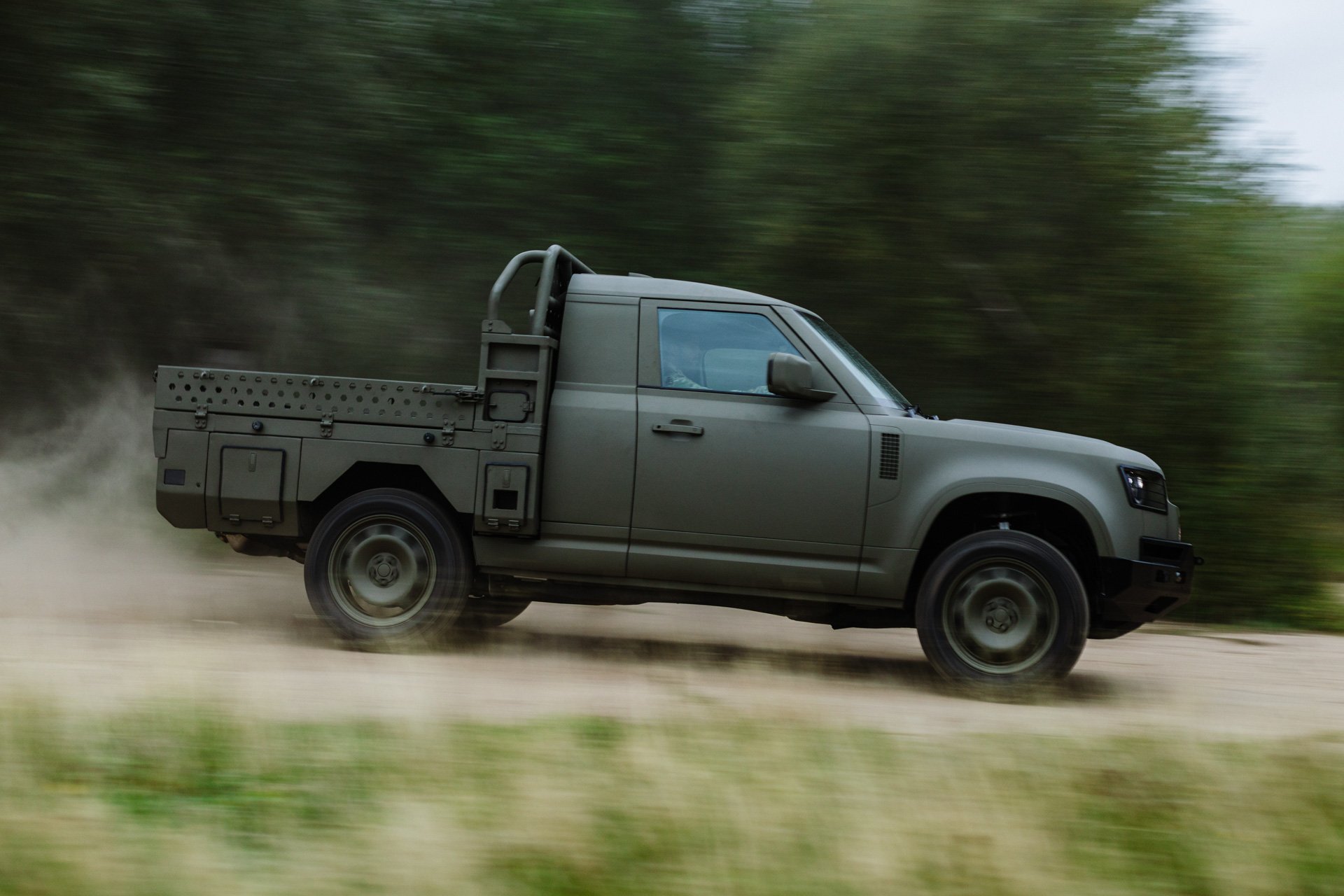
- Stiffness: The D7x is the stiffest body structure ever produced by Land Rover, which translates to superior handling under heavy payload conditions.
- Weight Management: By utilizing advanced aluminum alloys, the monocoque architecture allows for a higher payload-to-weight ratio compared to older steel-frame vehicles.
- Electronic Integration: The modern architecture allows for the seamless integration of communication suites, tactical awareness systems, and advanced driver-assistance systems (ADAS) that are essential for 21st-century warfare.
These technical advantages mean that the Wolf Series II is not just a transport vehicle; it is a mobile node in a larger digital battlefield. The ability to mount tactical gear, specialized lighting, and potential turret systems onto a factory-validated, high-strength chassis provides militaries with a "turnkey" solution that was previously unavailable.
Official Responses: JLR’s Strategic Pivot
In their official communications, Jaguar Land Rover has emphasized that the Wolf Series II is about sovereign capability. By taking "end-to-end control" of the engineering process, JLR is distancing itself from the fragmented supply chains that have historically plagued military vehicle procurement.
"We are removing the reliance on third-party OEMs," a JLR spokesperson noted during the press conference at DVD2026. "This allows us to produce a vehicle that meets military requirements at pace and scale, backed by our global supply chain."
This shift is a clear signal to NATO governments. JLR is positioning the Defender Defence Division as a reliable, long-term partner capable of sustaining a fleet for decades. The focus is on "enduring sovereign capability"—ensuring that parts, maintenance, and technical expertise remain readily available throughout the vehicle’s lifecycle, a critical factor for defense departments looking to avoid the obsolescence traps of bespoke, small-batch military hardware.
Implications for the Future of Tactical Mobility
The debut of the Wolf Series II has sparked intense speculation within both the defense and automotive enthusiast communities.
The Civilian Question
The most immediate question from the public is: "Can we buy one?" While JLR currently has no plans to offer a "Wolf" trim level to the general public, the civilian demand for an open-bed, utilitarian Defender is at an all-time high. If the military variant proves successful, it is highly probable that JLR will introduce a "Heritage" or "Hard Top" civilian pickup variant that mirrors the aesthetic of the Wolf Series II.
The Changing Face of Warfare
The move toward using a "soft-roader" platform for military duty reflects a broader change in modern conflict. The battlefield of the 2020s is less about heavy-armor frontal assaults and more about rapid deployment, reconnaissance, and logistics in difficult, off-road terrain. The Wolf Series II is designed to be "light, fast, and connected." Its silhouette is lower and more aerodynamic than the blocky predecessors, and its interior is built for ease of use in high-pressure environments.
Industry Impact
JLR’s decision to re-enter the military space puts pressure on other manufacturers. It signals that the line between civilian performance vehicles and tactical vehicles is becoming increasingly blurred. If a luxury SUV can successfully transition into a military asset, it opens the door for other manufacturers to leverage their high-performance platforms for defense applications, potentially leading to a new era of "tactical-civilian" dual-use technology.
Conclusion: A New Chapter
The Land Rover Defender Wolf Series II is a testament to the resilience of the Defender nameplate. By embracing the monocoque D7x platform, JLR has managed to retain the spirit of the original Wolf while bringing the performance, safety, and technological capability into the modern era.
As the Defender Defence Division begins its outreach to NATO partners, the eyes of the automotive world will remain fixed on these vehicles. Are they truly as capable as their predecessors? Can a luxury-born platform survive the unforgiving environment of the front lines? The early evidence suggests that the Wolf is back, and it is more sophisticated than ever. Whether for a specialized tactical unit or, perhaps one day, the driveway of a collector, the Defender Wolf Series II is a powerful reminder that some icons never truly retire—they just evolve.
