





By Editorial Staff | August 28, 2026
As the American labor landscape navigates a period of profound technological transition and shifting economic paradigms, the National Employment Law Project (NELP) has announced a significant expansion of its leadership roster. In a move designed to cement its position at the forefront of the workers’ rights movement, the organization has recruited four of the nation’s most prominent labor policy experts. This infusion of talent marks a strategic pivot for NELP as it enters its seventh decade, aiming to move beyond traditional advocacy toward the active architecting of a “Good Jobs Economy.”
The Mandate: Redefining the American Workplace
For over sixty years, NELP has served as a cornerstone of labor advocacy, providing the legal and analytical muscle behind some of the most significant workplace victories in U.S. history. However, the current economic climate—defined by rapid automation, the green energy transition, and the lingering scars of pandemic-era labor market disruptions—demands a more proactive approach.
The organization’s leadership, headed by President and CEO Rebecca Dixon, has explicitly articulated a vision where “every job is a good job.” This objective requires more than reactive litigation; it necessitates deep policy integration, collaborative governance, and the design of systems that ensure the fruits of economic growth are shared equitably with the workforce. By bringing together a cohort of veterans from both federal and state administrative roles, NELP is positioning itself to bridge the gap between abstract policy theory and the practical realities of workplace enforcement.
A Chronology of Influence: The New Leadership Cohort
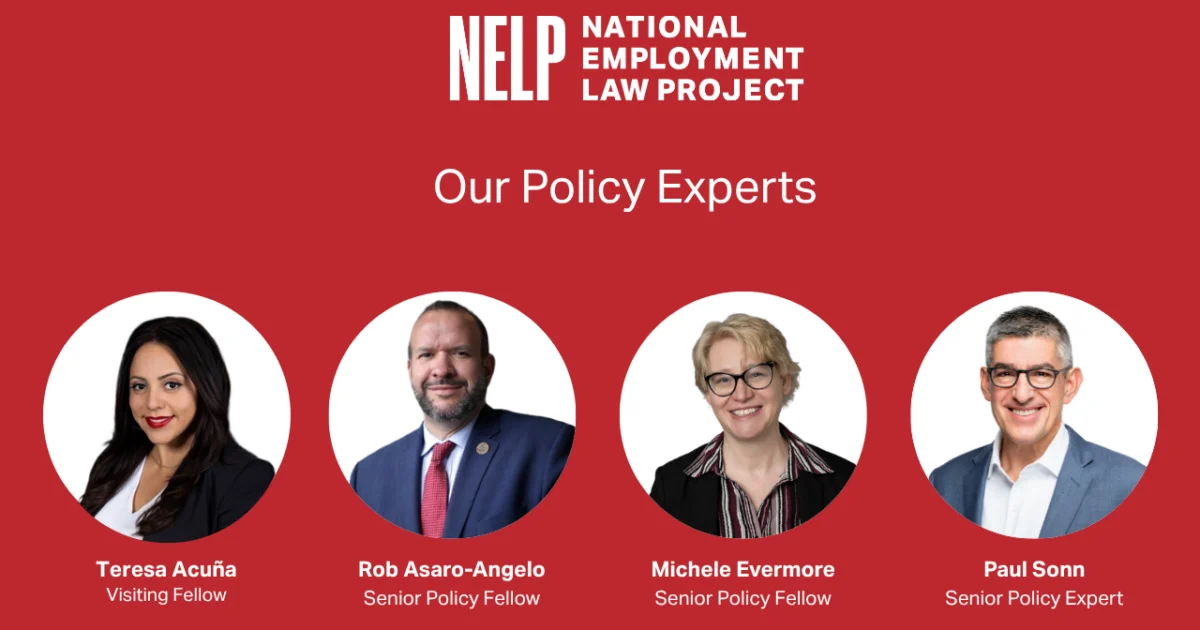
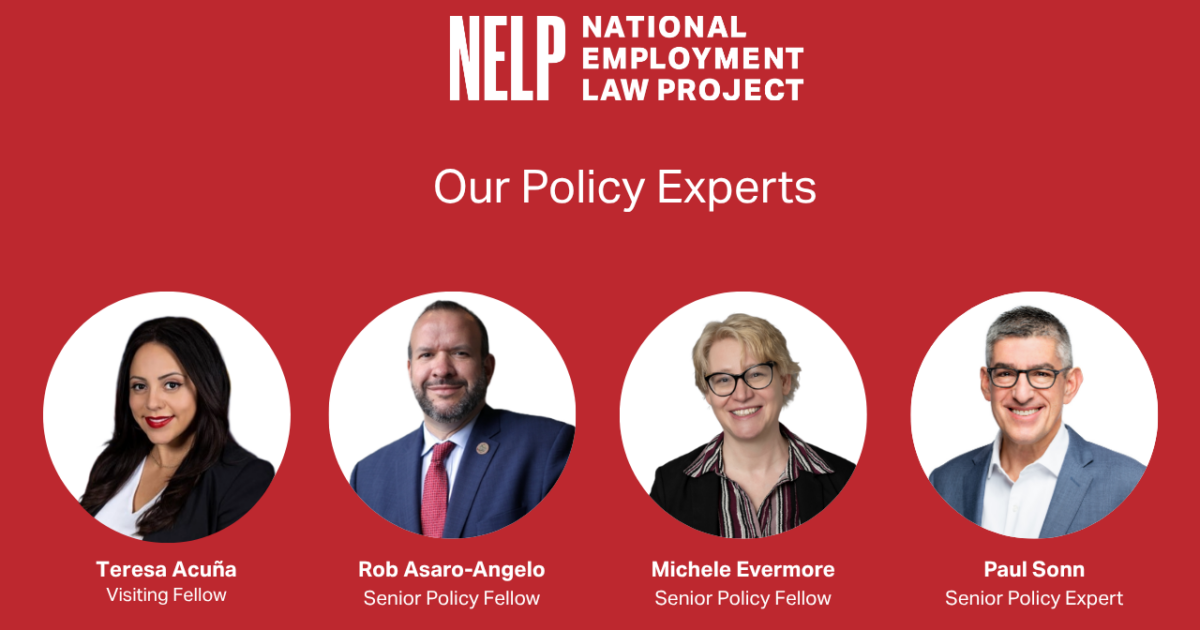
The appointment of these four leaders—Teresa Acuña, Rob Asaro-Angelo, Michele Evermore, and Paul Sonn—represents a homecoming for some and a high-profile transition for others. Each appointee brings a unique pedigree of legislative success and administrative expertise.
Teresa Acuña: Championing Good Jobs Democracy
Acuña joins NELP as the Visiting Fellow for Good Jobs Democracy. Her career has been defined by her work at the U.S. Department of Labor, where she originated the “Good Jobs Initiative.” During the Biden-Harris administration, she served as the initiative’s director, overseeing the complex task of ensuring that federal subsidies in infrastructure, clean energy, and advanced manufacturing were tied to rigorous job-quality standards. Her expertise is expected to be vital as NELP attempts to influence how state and local governments implement federal funding mandates to prevent a "race to the bottom" in labor standards.
Rob Asaro-Angelo: Integrating Worker-First Protections
As the new Senior Policy Fellow for Worker-First Protections, Rob Asaro-Angelo brings an executive perspective forged in the crucible of state government. Serving as the Commissioner of the New Jersey Department of Labor and Workforce Development from 2018 to 2026, Asaro-Angelo navigated the state through the unprecedented labor shocks of the early 2020s. His experience in managing diverse workforce services and state-level protection programs provides NELP with a blueprint for how state agencies can effectively serve as the primary enforcement mechanism for worker rights.
Michele Evermore: Architecting Economic Security
Returning to NELP after a high-impact tenure at the federal level, Michele Evermore steps into the role of Senior Policy Fellow for Economic Security and Worker Transitions. Evermore is perhaps best known for her instrumental work in the historic expansion of Unemployment Insurance (UI) during the COVID-19 pandemic. Her subsequent role as Deputy Director for Policy in the U.S. Department of Labor’s Office of Unemployment Insurance Modernization gives her a unique vantage point on the systemic weaknesses in the American safety net. Her return signals that NELP intends to make the overhaul of UI and worker transition programs a central plank of its future advocacy.
Paul Sonn: Sustaining Wage Growth
Paul Sonn, a long-time pillar of the NELP policy team, takes on the mantle of Senior Policy Expert for Wages and Affordability. Sonn’s influence on the American labor movement is difficult to overstate; he was a primary architect behind the initial campaigns for municipal living wages and a key strategist in the national “Fight for $15” movement. His new role will focus on the next frontier of wage policy: ensuring that statutory wage growth is not merely static, but is indexed to keep pace with the rising costs of housing, healthcare, and energy—the “affordability gap” that continues to erode the purchasing power of the working class.
Supporting Data: The Case for Transformative Policy
The necessity of this expanded leadership team is underscored by current labor market data. While the U.S. has seen record-low unemployment rates in recent years, the quality of these jobs remains a point of contention. According to recent Bureau of Labor Statistics (BLS) reports, the proliferation of "gig" work and independent contracting has created a shadow workforce often excluded from traditional labor protections.
Furthermore, the green energy transition is expected to displace hundreds of thousands of workers in fossil-fuel-dependent industries. NELP’s research indicates that without intentional policy intervention, the “transition” risks creating a new generation of low-wage, non-unionized jobs in the manufacturing sector. By aligning the expertise of Acuña, Asaro-Angelo, Evermore, and Sonn, NELP aims to produce data-driven white papers and model legislation that can guide state and federal policymakers in mitigating these risks.
Official Responses: A Unified Vision for the Future
In her address regarding the new appointments, CEO Rebecca Dixon emphasized the urgency of the moment. “Creating a Good Jobs Economy for all workers where every job is a good job requires leaders with deep policy expertise and a clear vision to achieve bold, lasting change,” Dixon stated. She noted that the consolidation of this talent pool is not merely an administrative expansion, but a strategic escalation of the organization’s mission to combat systemic inequality.
“I am exceedingly proud to acknowledge this extraordinary group of policy experts and labor movement leaders,” Dixon added. “Their decision to come together at NELP signifies a recognition that the challenges facing the American worker today are interconnected—from wage stagnation to the fragility of our unemployment systems—and require a holistic, high-impact advocacy strategy.”
Implications: The Road Ahead for NELP
The implications of this leadership expansion are significant for both the labor movement and the political establishment. By staffing the organization with individuals who have successfully maneuvered within the halls of federal and state power, NELP is signaling a move toward “insider-outsider” advocacy. This dual-track approach allows the organization to draft implementable policy at the regulatory level while continuing to mobilize grassroots support through traditional advocacy campaigns.
Legislative and Regulatory Hurdles
The incoming team faces a complex political environment. Legislative gridlock in Washington remains a persistent obstacle to federal labor law reform. Consequently, the team’s work on state-level policy—leveraging the experience of figures like Asaro-Angelo—will likely become the primary testing ground for innovative labor regulations.
The Focus on “Transition”
Perhaps the most critical challenge for the new team is the concept of “Worker Transitions.” As the economy moves toward automation and decarbonization, the traditional model of a “career-long” job is disappearing. Michele Evermore’s focus on economic security and transition is therefore timely. The team is expected to advocate for a more robust “social contract,” potentially including portable benefits and lifelong learning accounts that follow the worker, regardless of their employment status or the specific firm for which they work.
Toward a New Consensus
The ultimate goal of this initiative is to shift the national consensus on what constitutes a “good job.” By integrating wage growth, worker protections, and democratic participation in the workplace, NELP is attempting to define a new standard for the American social contract. Whether this strategy will successfully penetrate the polarized environment of modern American politics remains to be seen, but the caliber of the leadership team suggests that NELP is preparing for a long, disciplined, and sophisticated campaign.
As the organization embarks on this seventh decade, the addition of these four leaders signals a transition from legacy organization to modern policy engine. The focus is no longer just on defending existing rights, but on defining the architecture of a future economy where labor is valued as the primary engine of national prosperity. For workers across the country, the work of this new nucleus of policy experts may well define the quality of their livelihoods for years to come.
