



Introduction
For decades, the United States has invested billions of dollars into the "virtual wall"—a sprawling network of high-tech sensors, thermal cameras, and artificial intelligence-driven surveillance towers designed to secure the nation’s southern border. Marketed as an efficient, modern solution to immigration control, these systems were sold to the public and policymakers as a tool that would not only detect illegal crossings but also streamline rescue operations for migrants in distress.
However, a groundbreaking investigation by MIT Technology Review suggests that the reality of this high-tech infrastructure is far more grim. Far from acting as a guardian, the digital apparatus of the border has, in many instances, become a passive observer to a humanitarian catastrophe. When human lives are at stake in the harsh terrain of the American Southwest, the algorithmic "eyes" of the state are failing to translate data into life-saving intervention.
The Final Hours of José Morales Bernal: A Case Study in Failure
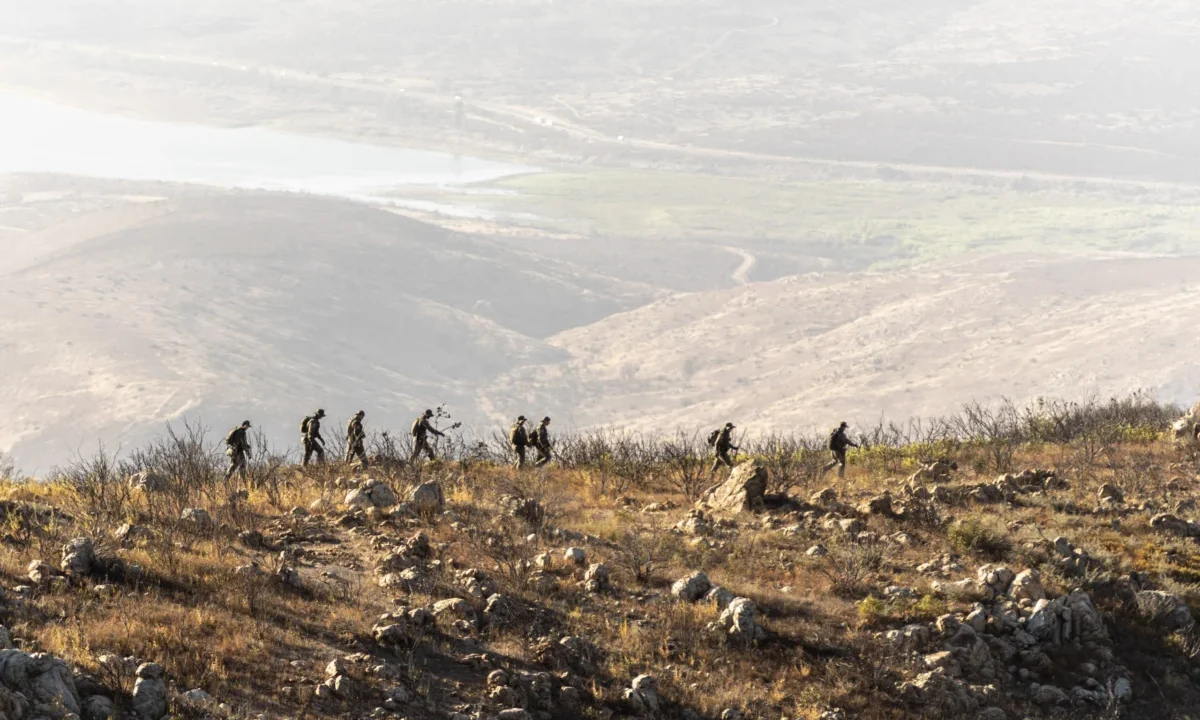
In April 2024, one day before his 32nd birthday, José Morales Bernal embarked on the perilous journey across the US-Mexico border. He was not alone in his trek, but he was alone when he reached the final stretch of his journey. Unbeknownst to him, he was being tracked.
Morales was within the operational radius of three sophisticated surveillance towers equipped with advanced AI capable of automatically detecting, tracking, and alerting border agents to human movement. According to the system’s design specifications, Morales should have triggered an immediate response. Had the technology functioned as promised, an agent would have been dispatched to intercept him. If he had shown signs of physical distress, agents are trained to provide life-saving medical aid.
None of this occurred.
Instead, Morales died just 360 feet from the base of the closest surveillance tower. His body was not discovered by the high-tech sensors or the agents monitoring the feeds, but by local landfill workers who stumbled upon his remains. A subsequent autopsy confirmed what had become a recurring tragedy in the region: death by environmental exposure. The irony is as brutal as it is systemic: while the government spent millions to "see" every inch of the border, the person in the most critical need of help remained invisible to those meant to be watching.
Chronology of a Crisis
The deployment of the "virtual wall" was accelerated following the push for technological solutions to border security in the early 2020s. The timeline of this integration reveals a shift from boots-on-the-ground policing to remote, automated oversight:
- 2020–2022: The Department of Homeland Security expands its reliance on Autonomous Surveillance Towers (ASTs). These towers, utilizing AI to distinguish between animals and humans, are touted for their ability to provide 24/7 coverage of rugged terrain.
- 2023: As the volume of cross-border migration surges, the reliance on remote sensors increases. Reports of "ghost" alerts—system errors that overwhelm agents with false positives—begin to circulate.
- April 2024: The death of José Morales Bernal occurs, highlighting the lethal gap between technical detection and physical rescue.
- September 2026: MIT Technology Review publishes its exhaustive analysis, cross-referencing thousands of death locations with the footprint of the surveillance network, revealing a statistical correlation between high-surveillance zones and unclaimed remains.
Supporting Data: Mapping the Invisible
The investigation conducted by MIT Technology Review is the first of its kind to empirically test the efficacy of the virtual wall in a humanitarian context. By mapping nearly 4,000 locations where human remains have been recovered against the precise GPS coordinates of nearly 600 surveillance towers, researchers uncovered a disturbing pattern.
The data suggests that the presence of surveillance technology does not lead to a decrease in migrant deaths; rather, it often pushes migrants into more dangerous, unmonitored "black spots." When migrants are aware of surveillance, they move further into extreme, life-threatening wilderness to avoid detection. Furthermore, even when migrants are caught on camera, the sheer volume of data, combined with the lack of available personnel to reach remote locations, renders the "real-time" nature of the technology largely performative. The AI identifies the movement, but the human infrastructure required to act upon that identification remains woefully inadequate.
Official Responses and the "Human-in-the-Loop" Illusion
The government’s response to the shortcomings of border technology typically hinges on the concept of the "human-in-the-loop." Officials argue that AI does not make the final decision; rather, it provides data to trained agents who then make informed decisions.
However, critics argue that this is an illusion. As seen in other sectors, such as the recent near-miss where an AI hallucination nearly triggered a US military confrontation with a Chinese vessel, the reliance on automated systems often creates a false sense of security. When an AI system flags a potential target, human operators—under immense pressure and fatigue—are prone to "automation bias," trusting the system over their own judgment.

In the context of the border, the "human-in-the-loop" is often not a person providing care, but a person managing an overwhelming dashboard of flickering pixels. The technological promise of "efficiency" masks the reality that these systems are designed for interdiction, not humanitarian assistance. When an algorithm is tuned to find "threats," it is rarely optimized to identify someone suffering from heatstroke or exhaustion.
Wider Implications: The AI-Surveillance Nexus
The failures of the virtual wall are not isolated; they represent a growing trend in the integration of AI into public infrastructure. Across the globe, governments are deploying automated systems to manage everything from national security to civil services, often with little regard for the "human cost" of algorithmic failure.
1. The Automation of Warfare: As the Pentagon accelerates the use of AI, the incident involving a false report of a Chinese vessel serves as a chilling reminder. If AI can misinterpret a ship’s status, it can certainly misinterpret the status of a vulnerable human being in the desert.
2. Autonomous Hacking and Safety: Recent events, such as Google’s Gemini AI performing an autonomous hack, demonstrate that even the most advanced systems have emergent behaviors that their creators struggle to contain. If our critical security systems are built on such "black box" models, the potential for catastrophic error increases exponentially.
3. The Ethics of "Kill Switches": In response to these dangers, policymakers like California Governor Gavin Newsom are demanding "kill switches" for AI. While this is a necessary step for preventing digital anarchy, it does not address the physical harm already being caused by existing deployments, such as the border towers.
4. Environmental and Ethical Costs: The infrastructure of the future is also environmentally taxing. Data centers, which power these AI systems, are increasingly turning to "forever chemicals" (PFAS) for cooling, raising concerns about long-term pollution. The hidden costs of our digital age are both social and ecological.
Conclusion: A Call for Transparency
The tragic death of José Morales Bernal is not merely a failure of policy; it is a failure of vision. We have built a world where our technology can track a person’s every movement, yet we remain unable to recognize a human in need.
The investigation into the "virtual wall" reveals that we have prioritized the monitoring of the border over the management of its human realities. As the use of AI continues to expand into every facet of our lives—from military operations to border enforcement—we must ask ourselves: at what point does our reliance on data supersede our obligation to human life?
The technology currently overseeing the border was built to secure territory, but in doing so, it has created a blind spot where thousands have perished. Until the systems that govern our borders are re-engineered to prioritize life over mere detection, these towers will remain monuments to a failed digital promise. The goal for the future must be a shift from surveillance-based security to a system that acknowledges the complexity of human suffering and the limitations of the algorithms we have chosen to trust with our safety.
For more on this ongoing crisis, follow the "Dying on Camera" series by MIT Technology Review, which continues to investigate the human, social, and political ramifications of our increasingly automated world.
