


By Lillian Perlmutter
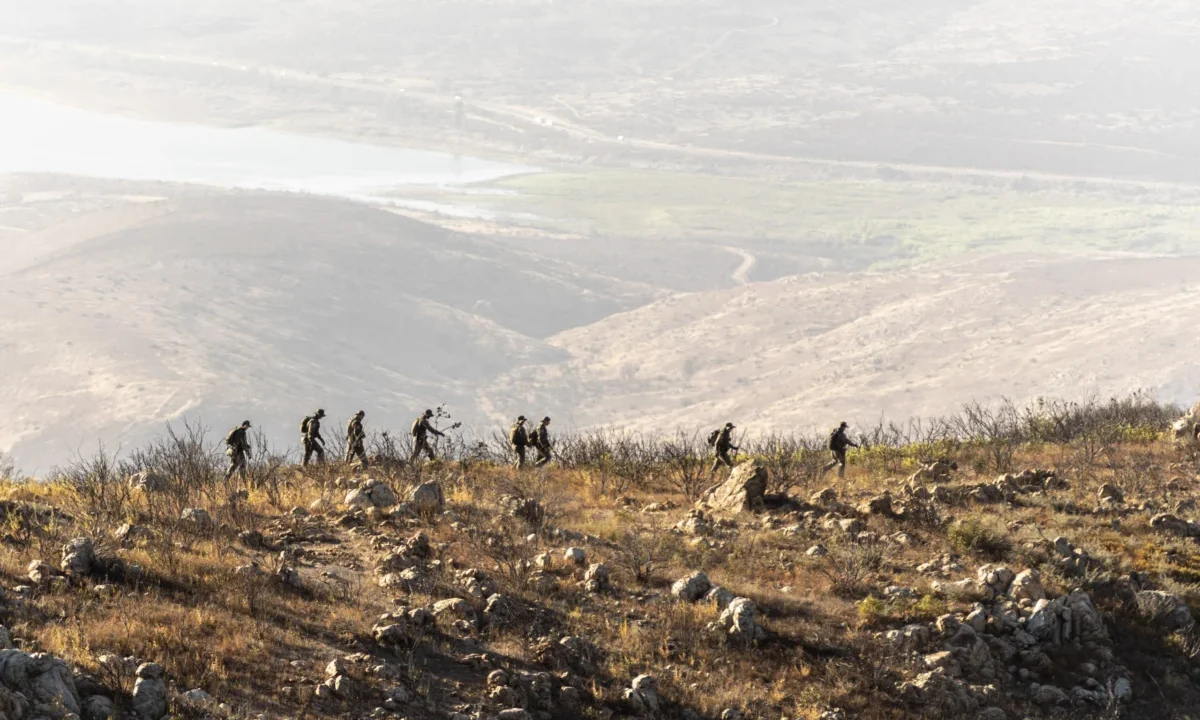
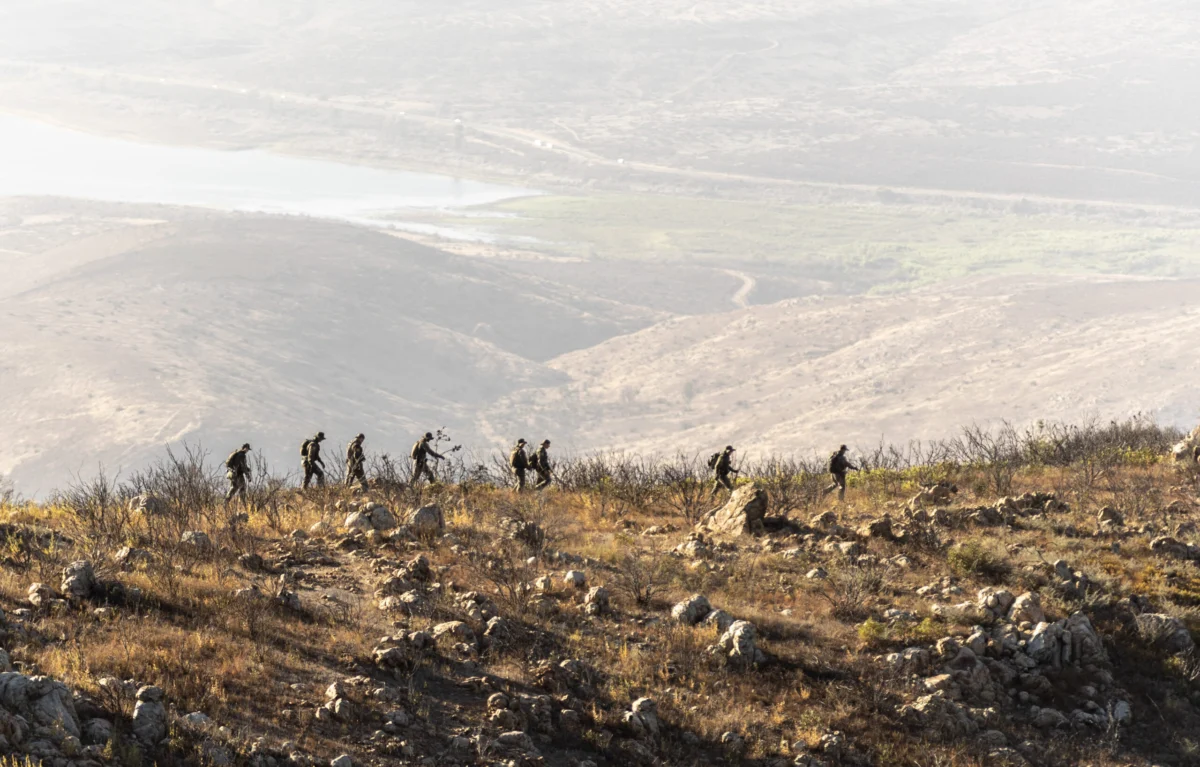
In the rugged, sun-bleached expanse of the Otay Mountain Wilderness, the line between security and tragedy has become perilously blurred. It is a landscape defined by sharp ridgelines, dense sagebrush, and a billion-dollar web of high-tech surveillance. Yet, within this heavily monitored corridor, people continue to die—often within the literal reach of the very cameras designed to intercept them.
Among them was 30-year-old Graciela Gómez Hernández. On the afternoon of September 14, 2025, she crossed the border from Tijuana into Southern California, driven by the desperate hope of securing work to support her three children and parents back in southern Mexico. Her oldest son, just 11, had asked for a bicycle—a small wish that propelled a mother into the wilderness.
Gómez Hernández died alone, yet she was surrounded by a sophisticated, interconnected network of artificial intelligence, long-range infrared cameras, and aerial drones. Her final, whispered message to her mother—“I can’t do it anymore”—was sent while she was, by all accounts, under the watchful gaze of the U.S. border security apparatus. When her remains were recovered two weeks later, she had already begun to return to the earth, a victim of the unforgiving terrain and a system that failed to see her humanity.

A Chronology of a Final Journey
Gómez Hernández’s decision to cross was born of acute financial distress. Her husband, already in the United States, had stopped sending support, leaving the family in Mexico struggling to afford basic necessities. Despite her family’s desperate pleas, she kept her plans secret until the final hour. She paid 20,000 pesos—roughly $1,150—to smugglers who provided the route but no guide, relying on a mobile phone to track her progress.
On the day of her crossing, the border was a hive of activity. She sent voice notes to her family, detailing the helicopters overhead and the white Border Patrol trucks patrolling the roads below. By 2 p.m., she was exhausted, struggling against the heat and the steep, unforgiving inclines of the wilderness.
Her sister, Irma, recalls the agonizing final communication. "I told her to give it her all, to think of her children," Irma said. By 4 p.m., the location pings stopped. For two weeks, the family pleaded with smugglers, only to be met with indifference. It wasn’t until the search group "Armadillos" intervened that the last known GPS coordinates were shared with the Border Patrol. On October 4, 2025, searchers and authorities located her skeletal remains 100 yards north of the international border. She had no food, no water, and no way home.
The Paradox of the "Smart Border"
Gómez Hernández died one mile from a General Dynamics surveillance tower, installed in 2019, which boasts long-range lenses capable of tracking targets from five to seven miles away. She was not an anomaly; she was part of a systemic pattern of mortality.

An investigation by the Times of San Diego and MIT Technology Review has revealed that hundreds of migrants have perished within the range of surveillance infrastructure. Data analysis indicates that at least 138 people have died in the California borderlands in the past four years alone, with more than half of those cases occurring in spots where, topographically, there was a clear, unobstructed line of sight for a camera.
The technology is billed as a "smart system." With over 800 towers currently fielded and plans to reach 2,300 by 2034, the government is investing $1.4 billion to ensure that "every single agent is more effective." These systems use AI to distinguish between wildlife and humans, supposedly providing real-time awareness of every movement.
However, the efficacy of these "eyes" is widely contested. Internal reports have shown that, at times, up to 30% of older-style towers were non-operational, acting as little more than "million-dollar scarecrows." Even the newer, AI-enabled towers—many manufactured by defense contractor Anduril—face significant operational hurdles. Military reports from early 2026 noted that towers in the Otay Mountain Wilderness were prone to mechanical failures, including cameras getting stuck in "zoomed-in" positions or suffering from battery and connection issues caused by the extreme environment.
Official Responses and Tactical Failures
The defense and security agencies responsible for these towers offer a starkly different narrative than that of the advocates on the ground. Anduril has publicly touted its systems, claiming they have "directly contributed to saving lives" and autonomously identified hundreds of thousands of crossings. Border Patrol leadership, including sector chiefs, have gone so far as to suggest they are "dang close to pretty much knowing everything that comes across."

Yet, when pressed on specific cases like that of Gómez Hernández, both the Border Patrol and the private contractors have remained largely silent or deferred to other agencies. There is no official mechanism to reconcile the presence of high-resolution surveillance with the discovery of bodies in the direct field of view of that technology.
Critics, such as Dave Maass of the Electronic Frontier Foundation, argue that there is no independent evaluation of the system’s effectiveness. The fundamental question remains: Did the technology fail to detect these individuals, or did it detect them and result in no action?
Bryce Peterson, a researcher with the advocacy group No More Deaths, suggests that in many cases, migrants in distress simply are not a priority. "If you’re going north and then you decide to go south because you’re lost, you are essentially invisible to a system that only cares about large groups or high-value interceptions," Peterson notes. "They don’t want to waste time on a single person."
The Human Cost of Deterrence
The strategic goal of the border surveillance network is not merely detection, but deterrence. By making the border increasingly difficult to cross, officials hope to force migrants away from the "easy" routes. However, the result has been a predictable humanitarian catastrophe. Migrants are being funneled into more extreme, dangerous, and remote terrain where search and rescue operations are nearly impossible.

"People are crossing through areas that are further out and more extreme," says Rafael Hernández Larraenza, leader of the search and rescue group Desert Angels. "We have very little hope of finding them in a search once they reach those depths."
This environment of fear has changed the behavior of those attempting the journey. Advocates report that migrants, terrified of being tracked by sensors, are moving faster and for longer periods without rest or water. They are effectively running through the desert to beat the 15-minute response time they expect from agents. The irony is that the technology meant to secure the border has created a pressure cooker environment where the cost of a single mistake—a twisted ankle, a moment of confusion, or a lack of water—is almost always fatal.
Implications for the Future
As the government continues to dump billions into artificial intelligence and tower infrastructure, the human toll continues to rise. The story of Graciela Gómez Hernández is a microcosm of a larger, systemic failure. Her family remains in mourning, her children left to grapple with the loss of a mother who simply wanted to provide a better life.
The memorial left by the Armadillos—a cross placed in the dirt where her body was found—serves as a haunting reminder of what this "smart" technology cannot see. It cannot see the desperation of a parent, the exhaustion of a three-day trek, or the value of a human life.

As the surveillance network expands toward the 2,300-tower goal, the borderlands are becoming more crowded with hardware and, paradoxically, more lethal for those who cross them. The "deterrence" strategy is working, but at a price that is paid in blood. Until the policy shifts from one of cold, technological surveillance to one that acknowledges the humanitarian reality of migration, the Otay Mountain Wilderness will continue to be a place where cameras watch, but people still die.
In the words of César Ortigoza, who has spent years documenting these tragedies: "If the riches of the world were distributed more equitably, we wouldn’t have to do things like this to reach a better life." Until then, the towers stand—silent, unblinking, and indifferent to the suffering beneath their lenses.
