




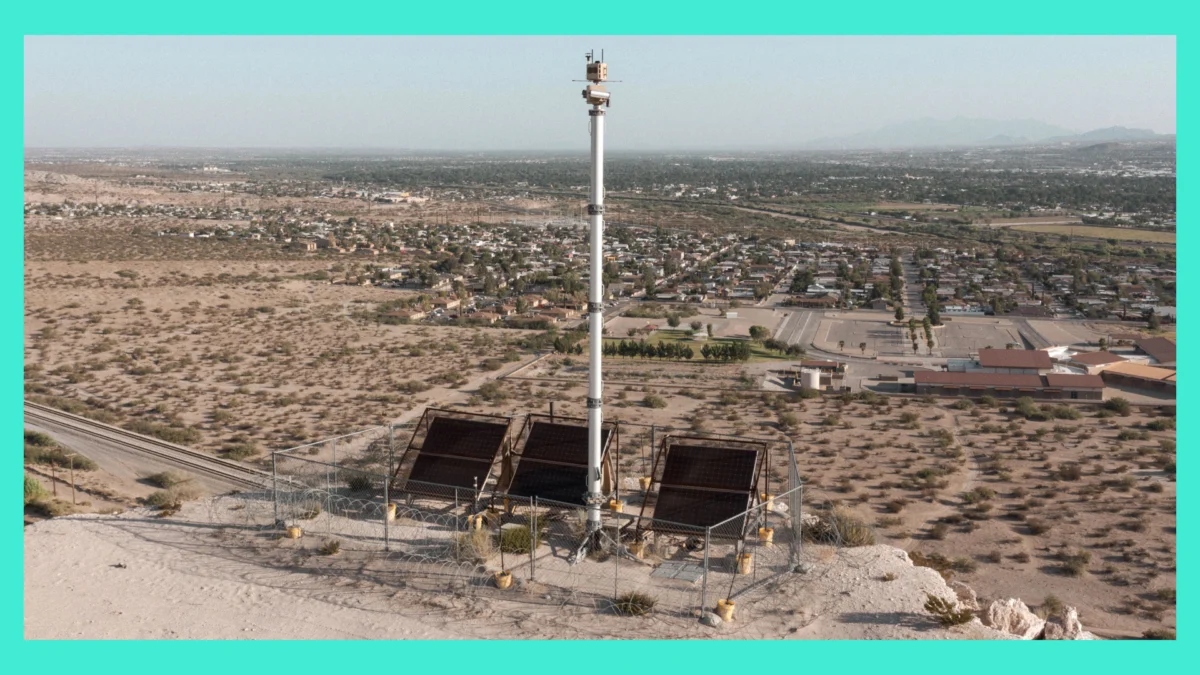
For over a quarter of a century, the United States has poured billions of taxpayer dollars into the creation of a "virtual wall"—a sprawling, high-tech network of surveillance towers, ground sensors, and aerial drones designed to monitor the southern border. The pitch from successive administrations has remained consistent: technology would enhance national security, streamline interdiction efforts, and, crucially, save lives by alerting authorities to migrants in distress.
However, a groundbreaking investigation by MIT Technology Review suggests that this technological promise is failing at a catastrophic human cost. By analyzing data and documenting cases, the investigation has uncovered that over a thousand individuals have perished in the borderlands while moving through areas under the active watch of these surveillance systems. In some instances, these tragic deaths occurred within the view of newly deployed, AI-powered towers explicitly marketed for their ability to automatically detect human presence.
The Evolution of the Virtual Wall: A Chronology of Surveillance
The concept of a "virtual wall" did not emerge overnight; it is the culmination of 25 years of evolving technological strategies.
The Early Efforts: SBInet (2006–2011)
The modern era of border surveillance began in earnest with the Secure Border Initiative (SBInet). Managed by Boeing, this project aimed to create a "tactical infrastructure" of radar, cameras, and sensors. By 2011, the project was largely scrapped after massive cost overruns and technical failures. It became a cautionary tale of how federal procurement often outpaced the actual capabilities of the technology being deployed.
The Rise of Integrated Systems (2012–2019)
Following the failure of SBInet, the Department of Homeland Security pivoted to a more decentralized approach, deploying a mix of mobile surveillance trucks and fixed towers. These systems were intended to provide agents with a "common operating picture," allowing them to monitor vast, rugged terrains that are difficult to patrol on foot.
The AI Era (2020–Present)
The current phase of the virtual wall is defined by the integration of artificial intelligence. These "smart" towers use machine-learning algorithms to differentiate between animals, vegetation, and humans. The logic is compelling on paper: AI removes human error and reduces fatigue, ensuring that no border crosser goes unnoticed. Yet, as the MIT Technology Review investigation highlights, the gap between algorithmic detection and actual human intervention remains lethal.
Supporting Data: When Technology Meets Tragedy
The investigation’s findings are chilling. MIT Technology Review documented more than 1,000 cases of individuals who died in areas covered by surveillance infrastructure without ever being intercepted by Border Patrol.
The Detection Gap
The data indicates that the "virtual wall" functions more as a mechanism for observation than for rescue. In many documented instances, surveillance equipment successfully logged the movement of migrants through the desert. However, these logs often did not result in an immediate dispatch of agents, or the agents were unable to locate the individuals in time to prevent death from exposure, dehydration, or injury.
The Paradox of AI Surveillance
The deployment of AI-powered towers was marketed as the solution to the previous failures of passive monitoring. However, the investigation found that even with these advanced systems, the humanitarian outcome has not improved. This raises a critical question: If the technology is capable of "seeing" a person in the desert, why is that information not effectively translated into life-saving intervention?
The data suggests that the "virtual" nature of the wall creates a false sense of security. Policy makers point to the towers as evidence of a "secure" border, but for those on the ground, the wall is effectively invisible—it provides surveillance without a corresponding increase in rescue capacity.
Official Responses and Bureaucratic Stagnation
The federal response to the failures of the virtual wall has been characterized by defensive posture and technical deflection.
DHS and CBP Stance
U.S. Customs and Border Protection (CBP) maintains that technology is an essential "force multiplier." Officials argue that without these towers, the border would be even more dangerous and that the surveillance network has indeed intercepted thousands of migrants who might otherwise have perished. They point to the vast, unforgiving nature of the Sonoran and Chihuahuan deserts, noting that even with perfect surveillance, the physical distance between tower locations and human agents makes immediate rescue impossible in many cases.
The Accountability Gap
Despite these defenses, there is little evidence of internal audits that specifically track the correlation between tower alerts and subsequent mortality rates. The investigation notes that the government often treats "successful detection" as a metric of success, ignoring the ultimate outcome for the human beings being detected. There is a profound disconnect between the technical metrics of success (e.g., number of alerts generated) and the humanitarian metrics of survival.
Implications: A Crisis of Policy and Ethics
The findings of the MIT Technology Review investigation carry significant implications for the future of border policy and the ethics of surveillance.
1. The False Promise of Technological Determinism
The virtual wall is a prime example of "technological determinism"—the belief that a technical solution can solve a complex socio-political and humanitarian issue. By focusing on sensors and AI, policy makers have avoided the more difficult questions surrounding immigration policy, the lack of legal pathways, and the push factors that drive migration. Technology has become a way to manage the symptoms of a crisis while ignoring its underlying causes.
2. Surveillance Without Accountability
The existence of an "all-seeing" eye in the desert creates an ethical quandary. If the government knows where people are—and chooses to prioritize interdiction over humanitarian aid—are they complicit in the deaths that follow? The investigation suggests that the virtual wall has effectively transformed the desert into a "surveillance trap," where people are monitored but not protected.
3. The Future of Border Tech
As the government continues to invest in more sophisticated AI, there is a risk that we will see a further reliance on automated decision-making. If algorithms are programmed to prioritize "security threats" over "humanitarian needs," the number of deaths is likely to climb even as the border becomes technically "more secure."
Joining the Conversation: Addressing the Failure
The failure of the virtual wall is not just a technological issue; it is a profound humanitarian failure that demands public scrutiny. MIT Technology Review is hosting a digital event to explore these findings in depth.
Event Details:
- Discussion: Examining the failures of border surveillance technology and the real-world stories behind the data.
- Speakers:
- Mat Honan, Editor in Chief, MIT Technology Review
- James O’Donnell, Senior AI Reporter
- Eileen Guo, Senior Features and Investigations Reporter
- Registration: Register via Zoom
Conclusion: Beyond the Lens
As we move further into the 21st century, the temptation to rely on "smart" borders will only increase. Yet, the history of the virtual wall warns us that no amount of data, radar, or AI can substitute for a humane and comprehensive immigration policy. The towers may be watching, but the thousands of lives lost in the shadow of this surveillance serve as a sobering reminder that technology, when divorced from humanitarian urgency, can become an instrument of abandonment rather than security.
To solve this, the focus must shift from the hardware of the wall to the reality of the people navigating it. It is time to hold technology vendors and policy makers accountable not just for the performance of their machines, but for the human outcomes of the systems they have built.
