





By Policy Analysis Desk
August 31, 2026
As artificial intelligence continues to integrate into the backbone of the American economy, the fear of widespread job displacement has shifted from a futuristic hypothesis to a present-day anxiety. Yet, according to labor experts and policy analysts, the most significant risk isn’t just the arrival of AI—it is the catastrophic fragility of the nation’s unemployment insurance (UI) system. With historical evidence of systemic neglect and a labor market currently plagued by “ghost jobs” and record-low participation, the United States stands at a precarious crossroads.
The State of the Safety Net: A System in Decay
The primary function of the Unemployment Insurance (UI) system is to act as an economic shock absorber. By stabilizing individual income during transitions, it allows workers the breathing room to find roles that match their skill sets, thereby maintaining labor market efficiency. Furthermore, UI serves as a powerful countercyclical tool; for every dollar injected into the economy through benefits, nearly two dollars of local economic activity are generated.
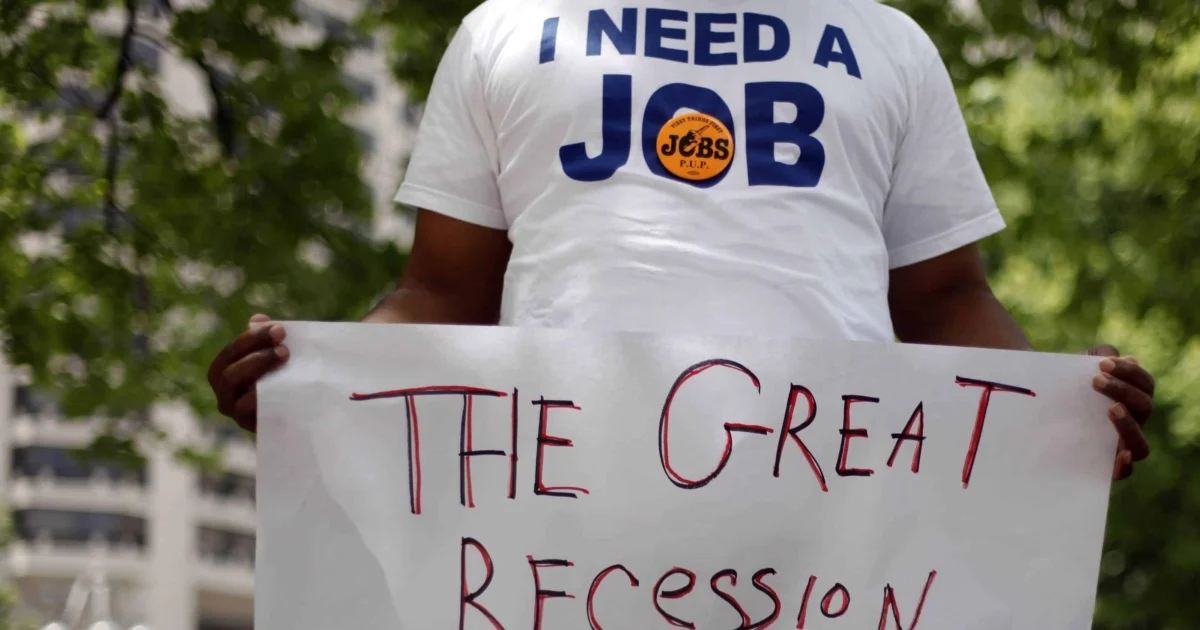
Despite these vital functions, the current UI landscape is, by many accounts, broken. Since the Great Recession, a disturbing trend has emerged: a “race to the bottom.” States have aggressively curtailed eligibility, reduced the duration of benefits, and lowered the replacement rate of lost income. As a result, in many jurisdictions, the system no longer fulfills its mandate to protect workers or stabilize the economy.
Michele Evermore, Senior Policy Fellow for Economic Security at the National Employment Law Project (NELP), warns that the system is effectively hollowed out. "We have seen what happens when we ignore UI until it is urgently needed," she notes. The structural decay—characterized by decades of under-investment and reliance on legacy technology—has left the system ill-equipped to handle even routine economic fluctuations, let alone the potential seismic shifts promised by widespread AI adoption.
A Chronology of Neglect: From the 1980s to the Present
To understand how the U.S. arrived at this point, one must look back at the bipartisan consensus that existed decades ago.
- 1980: The National Commission on Unemployment Compensation, a bipartisan body, issued a landmark report calling for significant, systemic improvements to the UI infrastructure. Their recommendations—aimed at creating a modern, robust safety net—were largely ignored by successive administrations.
- 1996: A second bipartisan commission reiterated the urgent need for reform, highlighting that the system was becoming increasingly disconnected from the realities of a modern workforce. Again, the recommendations remained on the shelf.
- 2008–2010: The Great Recession tested the system, leading to a period of retrenchment where states began tightening eligibility criteria to preserve their trust funds, effectively weakening the social safety net during a time of high need.
- 2020: The COVID-19 pandemic acted as a stress test that the system failed. With claims surging, agencies—operating on 50-year-low funding levels—were forced to pivot to remote work while simultaneously managing the launch of three brand-new, federally mandated programs. The result was a humanitarian crisis of delayed payments and, eventually, widespread exploitation by criminal syndicates who targeted the antiquated digital infrastructure.
- 2025–2026: Legislative efforts, including major bicameral bills led by Senator Ron Wyden, Senator Michael Bennet, and Congressman Don Beyer, have been reintroduced to address these long-standing deficits, signaling a renewed, if late, effort to modernize the system before AI-driven displacement accelerates.
The New Labor Landscape: “Ghost Jobs” and Despair
The challenges facing the modern job seeker go beyond the threat of automation. We are currently navigating a bizarre labor market characterized by what economists call “ghost jobs”—fake or expired job postings that populate recruitment boards. Estimates suggest as many as one in three job postings are not legitimate hiring opportunities.
For the average worker, this creates a “black hole” effect. A candidate may send out hundreds of resumes, investing hours of labor into applications that never reach a human recruiter. This has led to a documented rise in long-term unemployment and a historic decline in the labor force participation rate.
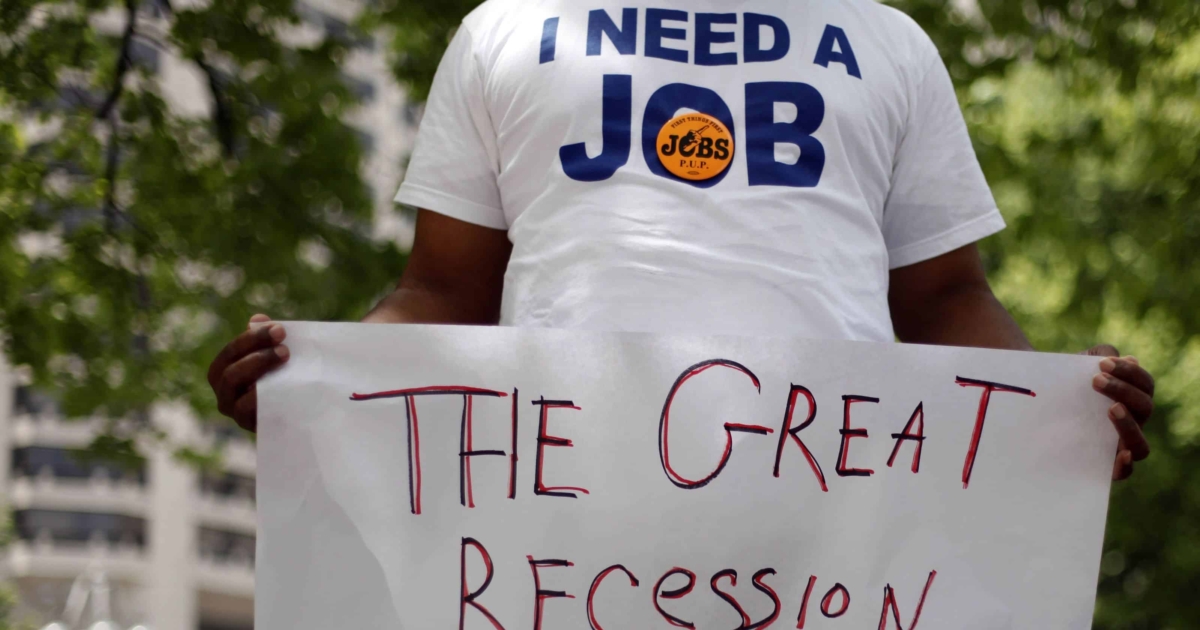
When workers are discouraged, they don’t just stop looking; they often leave the workforce entirely, creating long-term scarring effects on the economy. The Employment Service, an agency specifically designed to bridge the gap between job seekers and employers, has been systematically dismantled over the last few decades. The loss of these local offices has left millions of workers to navigate the digital job market in isolation, without the coaching, training, or placement support that was once a staple of the American employment model.
Supporting Data: The Economic Cost of Inaction
The data supporting the need for reform is stark. Beyond the individual hardship, there is a clear macroeconomic argument for a robust UI system.
- The Multiplier Effect: Research consistently shows that UI benefits are one of the most efficient ways to stimulate a local economy. During downturns, every dollar in UI benefits circulates through grocery stores, utility payments, and local services, providing a multiplier effect of nearly 2.0.
- Funding Deficits: The U.S. Department of Labor has documented a multi-decade decline in administrative funding for UI offices. This lack of investment has led to a reliance on “skeleton staffs” and software that dates back to the 1980s, making the system vulnerable to both operational failure and cyber-fraud.
- Labor Participation: The current trend of long-term unemployment is closely linked to the lack of adequate job-search support. As the gap between the skills workers possess and the skills the economy demands grows due to AI, the need for re-skilling—historically facilitated by the Employment Service—has never been higher.
Official Responses and Legislative Impetus
The current legislative push by Senators Wyden and Bennet and Congressman Beyer represents the most comprehensive attempt to codify the recommendations of the 1980 and 1996 commissions. The proposed legislation focuses on:
- Standardizing Eligibility: Ensuring that state-level variations in UI don’t result in a “postcode lottery” for unemployed workers.
- Modernizing Technology: Providing the federal funding necessary to bring state systems into the 21st century, making them resilient against both spikes in claims and digital fraud.
- Restoring the Employment Service: Reinvigorating the U.S. Department of Labor’s division responsible for job placement, ensuring that local offices are staffed and equipped to provide real-world assistance to workers in transition.
Critics of these measures often point to the cost, arguing that the system must be “lean.” However, proponents argue that the cost of inaction—measured in lost tax revenue, increased social service reliance, and the social cost of long-term unemployment—far outweighs the price of modernization.
Implications for the Future: Preparing for the AI Shift
The integration of AI into the workplace is inevitable, but the resulting job loss does not have to be a catastrophe. If the government treats the current system as a foundation to be rebuilt rather than a relic to be abandoned, the U.S. could foster a more resilient workforce.
The implications of failing to act are profound. If AI-driven displacement hits a workforce already struggling with “ghost jobs” and a hollowed-out safety net, the resulting economic instability could be far more severe than the 2020 pandemic-induced crisis.
The primary lesson of the last fifty years is that crises do not wait for policy. By the time a wave of AI-driven unemployment reaches the peak of the public consciousness, it will be too late to build the infrastructure required to manage it. The time to modernize—to restore the Employment Service, to ensure the solvency and reach of the UI system, and to restore the dignity of the job search process—is now.
Breaking the cycle of “crisis-reactive” policy is the only way to ensure that the AI era results in an evolution of the American labor market, rather than its collapse. As Evermore emphasizes, we have already ignored the solutions for half a century. We can no longer afford the luxury of waiting.
