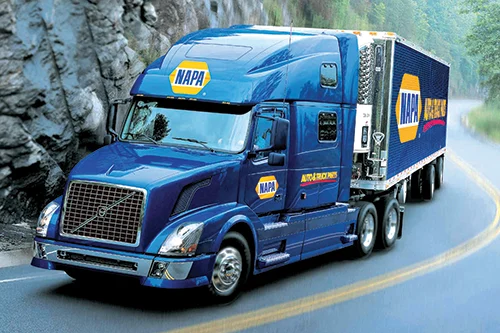




Genuine Parts Company (GPC), the global powerhouse behind the NAPA Auto Parts brand, has navigated a challenging third-quarter economic landscape with resilience, reporting a notable increase in sales despite what leadership characterized as "softer market conditions." As the organization prepares for a historic corporate split, its performance underscores the efficacy of its acquisition strategy and operational discipline.
Main Facts: A Quarter of Strategic Resilience
For the third quarter ended September 30, 2026, Genuine Parts Company posted total global sales of US$6.5 billion, a 4.2% increase over the $6.3 billion reported during the same period in 2025. This growth was bolstered by a 2.9% rise in comparable sales, with an additional 0.9% contribution stemming from strategic acquisitions.
The company’s performance in Canada stood out as a beacon of success. Despite broader economic cooling, the Canadian arm of the business recorded a 9% increase in local currency sales compared to the prior-year period. Comparable sales in the region rose by 1%, a figure that would have been lower were it not for the successful integration of the Benson Group. According to GPC, the financial and operational integration of Benson is currently tracking ahead of initial projections, validating the company’s aggressive inorganic growth strategy in the North American market.
While topline revenue moved in a positive direction, the bottom line saw mixed results. Net income for the quarter dipped slightly to $224 million, compared to $226 million in the same period last year. However, adjusted net income paints a more favorable picture of the company’s underlying profitability, rising to $286 million, or $2.07 per diluted share, up from $276 million and $1.98 per share in the prior year.
Chronology of Performance: A Nine-Month Perspective
When viewing the year-to-date performance, the trajectory of Genuine Parts Company remains one of sustained expansion. For the first nine months of 2026, total company-wide sales reached $19.3 billion, a 5.6% increase compared to the same nine-month period in 2025.
The year began with a focus on stabilizing supply chains and integrating previous acquisitions, which allowed the company to maintain momentum throughout the second and third quarters. While the first nine months saw a slight decline in net income to $641 million from $675 million, the adjusted net income for the same period climbed to $827 million from $810 million. This discrepancy highlights the impact of one-time costs associated with the ongoing corporate restructuring and the costs of integrating large-scale acquisitions into the global GPC ecosystem.
Supporting Data: Segment-by-Segment Analysis
The diversity of Genuine Parts Company’s portfolio—spanning automotive and industrial sectors—has provided a critical hedge against volatility. The following breakdown illustrates how each segment contributed to the consolidated financial picture:
North American Automotive Parts Group
The North American automotive segment, a core pillar of GPC’s identity, reported sales of $2.5 billion, a 2.2% increase. This growth was driven by a 1.7% increase in comparable sales and a 1.1% boost from acquisitions. However, profitability in this sector faced pressure; segment EBITDA declined by 2.9% to $194 million. The EBITDA margin also saw a contraction of 40 basis points, settling at 7.6%. Analysts suggest that inflationary pressures on labor and logistics, combined with a shift in consumer demand toward more budget-conscious automotive repairs, may be responsible for the margin compression.
International Automotive Parts Group
The International segment, which encompasses GPC’s extensive operations in Europe and the Asia-Pacific region, performed robustly with a 4.5% increase in sales, reaching $1.6 billion. This performance indicates that while North American markets are contending with specific economic headwinds, the global footprint of GPC continues to provide a vital buffer for the parent company.
Industrial Parts Group
The Industrial Parts Group, which serves as a major component of the business ahead of the upcoming split, showed the strongest growth of the three segments. Sales rose by 6.1% to $2.4 billion. This segment’s resilience demonstrates the continued demand for industrial maintenance, repair, and operations (MRO) supplies, which remain essential regardless of the fluctuations in the automotive retail sector.
Official Responses: Leadership’s Vision for the Future
Will Stengel, chairman and chief executive officer of Genuine Parts Company, framed the third-quarter results as a testament to the company’s foundational strength and the agility of its workforce.
"Our third quarter performance demonstrates the strength of our market-leading businesses and our teams’ continued focus on serving customers and executing our strategic priorities," Stengel stated in an investor briefing.
Beyond the quarterly financials, the most significant takeaway from the executive leadership team is the unwavering commitment to the corporate split. "We also achieved important milestones in our separation process and remain on track to launch GPC and Motion as two independent, leading companies in the first quarter of 2027," Stengel added.
The leadership’s emphasis on the separation is not merely logistical; it is a strategic maneuver designed to unlock shareholder value. By creating two distinct entities—one focused on the automotive aftermarket and the other (Motion) focused on industrial components—GPC aims to allow each business to pursue a tailored capital allocation strategy and operational focus.
Implications: The Road to 2027
The results of the third quarter carry profound implications for stakeholders and the broader automotive industry.
1. The Separation as a Value Driver
The transition into two independent companies is the most critical event on the GPC horizon. By spinning off its industrial segment, the company is effectively decoupling the cyclical nature of the retail automotive market from the often more stable, B2B-oriented industrial sector. This move is expected to provide investors with a clearer view of the growth potential and risk profile of each business, potentially leading to a re-rating of the company’s stock.
2. Market Softness vs. Operational Efficiency
The "softer market conditions" mentioned by the company suggest that consumers are delaying non-essential vehicle maintenance. However, the 9% growth in Canada and the steady performance of the Industrial Parts Group suggest that GPC has successfully diversified its revenue streams. The company’s ability to grow sales in a cooling environment indicates that its MRO and automotive parts businesses are viewed as "essential" rather than "discretionary," providing a layer of security against a potential economic downturn.
3. Acquisition Integration
The success of the Benson acquisition in Canada serves as a blueprint for GPC’s expansion strategy. As the company moves toward 2027, the focus will likely remain on integrating existing assets and ensuring that the operational synergy between NAPA and the industrial divisions is optimized before the split. Investors will be watching closely to see if the margin compression seen in the North American automotive segment can be reversed through cost-rationalization measures or if it represents a new baseline in a higher-cost environment.
4. Competitive Positioning
As GPC enters the final stages of its current corporate structure, the landscape of the automotive aftermarket is becoming increasingly competitive. With major retailers and e-commerce giants encroaching on traditional territory, GPC’s investment in local infrastructure, exemplified by its Canadian performance, remains its strongest competitive advantage. By maintaining a deep, localized presence, GPC ensures that it remains the preferred partner for professional technicians and DIY enthusiasts alike.
Conclusion
Genuine Parts Company’s third-quarter performance serves as a powerful indicator of a company in transition. Despite experiencing minor margin pressures and a competitive retail environment, the organization has leveraged its diverse international and industrial portfolio to sustain growth. As GPC marches toward its 2027 separation, the focus remains clear: maximize operational efficiency, integrate strategic acquisitions, and ensure that both the future automotive entity and the future Motion entity are positioned to lead their respective markets. For shareholders and industry observers, the next eighteen months will be defined by the execution of this monumental corporate shift, a process that is, thus far, proceeding exactly according to plan.
