




Introduction: A Strategic Partnership in a Warming World
As geopolitical fault lines shift and the existential threat of climate change accelerates, the bilateral relationship between India and Germany has evolved from a traditional diplomatic engagement into a critical climate-centric alliance. Recognizing the vital role of media in navigating this complex transition, Clean Energy Wire and The Migration Story, in partnership with the Heinrich Böll Foundation, have launched a landmark initiative to empower journalists from both nations.
This program, which seeks to foster cross-border reporting on green technology, labor migration, and the scramble for critical minerals, underscores the reality that the climate crisis cannot be solved in isolation. By pairing fourteen journalists—seven from India and seven from Germany—the initiative aims to bridge the information gap between the Global North and the Global South, creating a collaborative framework for reporting on the energy transition that defines our era.
Main Facts: The Anatomy of the Programme
The initiative is designed to move beyond superficial reporting, offering participants a deep dive into the policy frameworks and industrial realities of both nations.
- Eligibility: The program is exclusively open to journalists based in India and Germany.
- Structure: The curriculum consists of comprehensive online training modules, expert-led workshops, and insights into the nuances of Indo-German climate policy.
- The Grant Component: A unique feature of the program is the provision of cross-border reporting grants. Participants are encouraged to form collaborative partnerships—one Indian journalist working with one German counterpart—to produce investigative or narrative journalism that connects the dots between the two countries.
- The Goal: To move climate journalism from a domestic focus toward a global, interconnected perspective, highlighting the shared challenges of decarbonization and the mutual benefits of a "Green and Sustainable Development Partnership."
Chronology: The Path to Cooperation
The current push for deeper integration is not an overnight development but the result of sustained diplomatic efforts and a realization of mutual dependency.
2022: Setting the Foundation
In May 2022, during the 6th Indo-German Inter-Governmental Consultations, the two nations signed a joint declaration establishing the Green and Sustainable Development Partnership. This marked the formal recognition that climate action was the cornerstone of their future bilateral ties.
2025: Expanding the Scope
Throughout 2025, the focus shifted toward the practicalities of implementation: supply chain resilience, the transition to green hydrogen, and the integration of skilled labor to support these industrial shifts.
January 2026: A Symbolic Visit
The catalyst for this specific journalism initiative follows the January 2026 visit of the German Chancellor to India. This high-level summit served as a focal point for the energy partnership, emphasizing that the "green transition" is as much a political and economic project as it is an environmental one. The visit solidified commitments to accelerate cooperation in critical minerals—essential for the battery and solar industries—and to harmonize labor standards to facilitate the flow of skilled workers between the two economies.
Supporting Data: Why India and Germany?
To understand the significance of this collaboration, one must look at the data points driving the policy.
The Energy Landscape
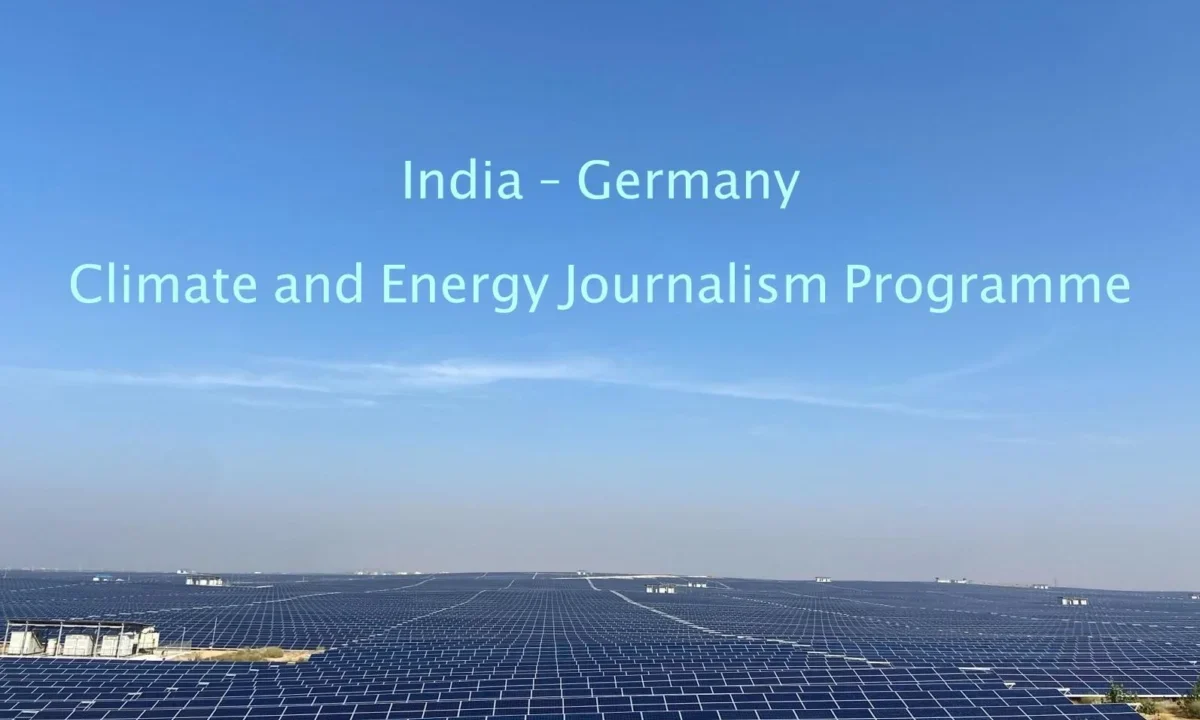
- India: As one of the world’s fastest-growing economies, India’s energy demand is projected to surge. The country is currently home to some of the world’s largest solar installations, such as the Bhadla Solar Park in Rajasthan. However, the reliance on coal remains a significant hurdle in meeting net-zero targets.
- Germany: Having largely exited nuclear power, Germany is in the throes of an ambitious transition—the Energiewende. The country faces the dual challenge of maintaining industrial competitiveness while rapidly scaling up wind and solar infrastructure.
The Critical Minerals Nexus
The global transition to electric vehicles (EVs) and high-capacity storage requires a steady supply of lithium, cobalt, and rare earth elements. Germany, a global leader in automotive engineering, needs a reliable supply chain. India, with its growing manufacturing base and emerging mineral exploration initiatives, represents a key strategic partner. Journalists in this program are tasked with investigating how this mineral dependency is managed—balancing the "green" label with the environmental and social costs of extraction.
Official Responses and Strategic Perspectives
The initiative has garnered support from various stakeholders who see the media as a crucial accountability mechanism.
The Institutional View
Representatives from the Heinrich Böll Foundation have highlighted that climate journalism often suffers from a lack of "ground-truthing" in partner countries. By facilitating direct collaboration, the foundation hopes to move past the "Western-lens" vs. "Developing-world-lens" dichotomy.
"Journalists are the translators of complex geopolitical shifts," says a spokesperson for the program. "When an Indian journalist explains the social impact of a solar park in Rajasthan to a German audience, and a German journalist explains the industrial policy challenges of Berlin to an Indian reader, we move closer to a truly global understanding of the climate crisis."
The Journalist’s Perspective
For the journalists involved, the program offers more than just funding. It provides access to the "hidden" stories—the migrant worker navigating the German labor market for green tech, the village in Rajasthan impacted by a new transmission line, or the policy boardroom where trade deals are finalized. The collaborative nature of the reporting ensures that the final output resonates with audiences in both New Delhi and Berlin.
Implications: Reporting the "Green" Future
The implications of this program extend far beyond the immediate production of articles. It represents a shift in how international news is constructed.
Strengthening Democratic Oversight
As governments in India and Germany commit billions to green energy projects, the potential for policy misalignment, corruption, or environmental degradation is significant. Cross-border journalism provides a vital layer of oversight. When journalists work across borders, they can track the entire lifecycle of a project—from the raw material extracted in one region to the technology installed in another.
Shaping Public Opinion
Climate change is often presented as a distant, abstract threat. By grounding reporting in the personal stories of those affected—the worker, the engineer, the farmer—this program aims to humanize the data. It asks the public to consider the "human cost" of the energy transition, ensuring that the shift to green energy is also a "just transition."
Fostering Cross-Cultural Dialogue
The collaboration forces a collision of perspectives. German journalists, often focused on regulatory frameworks and carbon-neutrality targets, will interact with Indian journalists who are frequently more focused on energy access, poverty alleviation, and climate adaptation. This dialogue is essential. If the world is to solve the climate crisis, it must find a middle ground between the development imperatives of the Global South and the stringent environmental standards of the Global North.
Conclusion: A Blueprint for the Future
The deadline for applications for this specific cohort has passed, signaling the commencement of what is arguably the most intensive phase of the project: the actual reporting. As these fourteen journalists begin their work, they do so with the weight of a monumental task on their shoulders.
The success of the Indo-German climate partnership will not be measured solely in gigawatts of power or tons of carbon saved; it will be measured in the transparency, the depth of public understanding, and the quality of the discourse surrounding these changes. By investing in the people who tell these stories, the Clean Energy Wire and The Migration Story are ensuring that the green transition is not just a policy directive, but a shared, well-understood, and critically analyzed journey.
In an age where information is fragmented and polarized, the act of cross-border, collaborative journalism is, in itself, a radical act of climate action. As the world watches to see how India and Germany navigate the coming decade, these journalists will be the ones documenting the successes, the failures, and the complex human realities of the transition.
