



WASHINGTON, D.C. — October 23, 2026 — In a significant legislative maneuver aimed at fortifying the nation’s economic resilience, a coalition of Senate leaders has introduced a comprehensive overhaul of the U.S. Unemployment Insurance (UI) system. The reform package, spearheaded by Senators Ron Wyden (D-OR) and Michael Bennet (D-CO), gained immediate momentum today with the addition of Senate Majority Leader Chuck Schumer (D-NY) and Senator Elizabeth Warren (D-MA) as original cosponsors.
The legislation represents the culmination of years of policy development and stakeholder advocacy. As the American labor market faces the dual threats of cyclical downturns and the looming, transformative impact of artificial intelligence on employment, proponents argue that the current UI framework is fundamentally unequipped to handle the realities of the 21st-century economy.
Main Facts: The Core of the Reform
The proposed bill is not a reactionary measure but a structural realignment. It seeks to codify long-standing recommendations from a series of bipartisan commissions dating back to 1980—many of which have been ignored by successive Congresses despite clear evidence of systemic failure.
The bill’s primary objectives include:
- Federal Minimum Standards: Establishing national benchmarks for benefit duration and weekly payout amounts, preventing the "race to the bottom" seen in various state-level programs.
- Modernizing Eligibility: Expanding the definition of "covered workers" to include the gig economy, independent contractors, and those in precarious employment arrangements that currently fall outside traditional safety nets.
- Technological Integration: Mandating federal funding for the modernization of state IT systems, which have historically served as a bottleneck during periods of high demand.
- Countercyclical Triggers: Implementing automatic benefit extensions based on local economic data, removing the need for chaotic, last-minute congressional intervention during future crises.
A Chronology of Stagnation and Advocacy
The push for UI reform has a long and often frustrating history. Following the 2008 financial crisis and the subsequent COVID-19 pandemic, the inadequacies of the existing system were laid bare.
- 1980–2010: A series of bipartisan commissions were formed to analyze the long-term viability of the UI system. Despite findings that warned of structural gaps, legislative action remained stalled in partisan gridlock.
- 2020: The COVID-19 pandemic triggered a total collapse of many state systems, leading to the creation of the Pandemic Unemployment Assistance (PUA) program. While it kept millions afloat, the administrative nightmare of implementing it highlighted the archaic nature of state UI infrastructure.
- 2023–2025: Senators Wyden and Bennet spent these years conducting deep-dive hearings, engaging with labor economists, and refining language for a permanent, robust replacement for the temporary fixes seen during the pandemic.
- October 23, 2026: The formal introduction of the bill, now backed by Senate leadership, signals that the reform has moved from a "wish-list" policy to a priority legislative agenda.
Supporting Data: Why the System is Failing
The urgency behind the bill is supported by a growing body of economic data that suggests the current system is disconnected from the realities of the modern workforce.
The "200,000 Claims" Anomaly
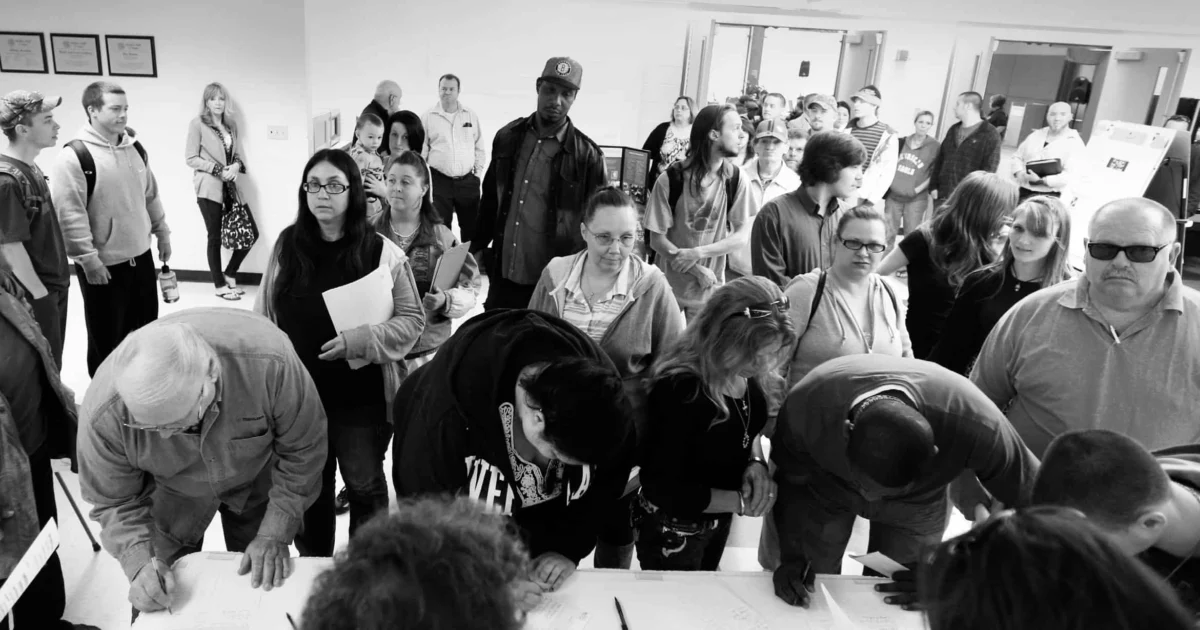
As Michele Evermore, Senior Director of Economic Security and Worker Transitions at the National Employment Law Project (NELP), noted, initial claims for UI benefits have remained consistently below 200,000 for several weeks. To the casual observer, this might appear to be a sign of a "tight" labor market. However, experts interpret this differently.
"This is a figure not seen since the 1960s, when the workforce was less than half its current size," Evermore explained. "This does not mean people aren’t losing their jobs; it means the system is so inaccessible, so broken, and so punitive that workers are simply not bothering to apply. It is a sign of a failed safety net, not a healthy economy."
Disparities and Inequities
The current UI system serves to exacerbate existing socioeconomic fissures. Data indicates that workers of color are disproportionately represented in the sectors most vulnerable to AI-driven automation. Furthermore, the unemployment rate for Black workers currently sits at double that of white workers. Without federal intervention, these gaps are projected to widen as the economy transitions, leading to a potential "pain spiral" in which consumer spending collapses in already marginalized communities.
Official Responses and Stakeholder Perspectives
The introduction of the bill has been met with vocal support from labor advocacy groups, though it faces an uphill climb in a divided Congress.
The NELP Endorsement
The National Employment Law Project (NELP) has been the primary institutional engine behind the bill’s development. In a statement released shortly after the announcement, the organization praised the inclusion of Senator Schumer and Senator Warren, noting that their involvement elevates the bill from a committee-level proposal to a national legislative mandate.
"Our current unemployment insurance system is failing workers," Evermore reiterated. "It does not cover enough people, nor does it provide them enough money to meet basic living costs, nor does it last long enough for them to find a good replacement job. This must-pass bill meets the current moment perfectly."
The Political Calculus
By bringing the Majority Leader on board, proponents are signaling that they intend to put the bill to a floor vote. However, the opposition remains concerned about the fiscal impact. Fiscal conservatives have long argued that higher UI benefits act as a disincentive to work, a claim that proponents of the new bill counter by pointing to the "countercyclical" nature of the funding—arguing that the bill actually saves the economy money by preventing a deeper recessionary spiral during downturns.
Implications: The Looming Shadow of AI
Perhaps the most pressing catalyst for this legislation is the rapid acceleration of artificial intelligence. Unlike previous industrial shifts, the AI transition is impacting white-collar and knowledge-based roles at an unprecedented rate.
The New Vulnerability
With AI-driven mass unemployment becoming a central concern for policymakers, the UI system is viewed as the first line of defense. The proposed reforms include provisions for "bridge training" and extended benefits for workers whose skill sets have been rendered obsolete by automated processes.
Avoiding an Economic Death Spiral
The bill’s authors argue that if the U.S. falls into an economic downturn with the current "broken system," UI programs will fail to function as an automatic stabilizer. In a healthy economy, UI acts as a pump, moving money back into local markets when workers are displaced. Currently, that pump is clogged. If that mechanism remains broken, the resulting loss in consumer demand could turn a moderate recession into a prolonged period of economic stagnation.
Conclusion: A Test for the 119th Congress
The introduction of this legislation marks a defining moment for the 119th Congress. It forces a conversation about the social contract in an era of technological disruption. As the nation grapples with the uncertainty of the next decade, the question is no longer whether the UI system needs reform, but whether the political will exists to pass it before the next economic crisis hits.
For now, the bill sits in committee, but with the backing of the Senate’s upper echelon, it represents the most serious attempt in nearly half a century to modernize the foundation of the American social safety net. Whether it survives the legislative process will likely depend on how effectively its proponents can frame the bill not as a handout, but as a vital infrastructure project for the American economy.
