





The global manufacturing landscape is undergoing a seismic shift. No longer the stuff of science fiction, humanoid robots are transitioning from experimental prototypes to functional assets on the factory floor. As Tesla pushes forward with early production of its Optimus humanoid at its Fremont, California facility, the company finds itself locked in an escalating race against industry titans like Toyota and Hyundai. The prize? A dominant position in the next generation of industrial labor, where human-like dexterity meets the tireless precision of artificial intelligence.
Main Facts: Tesla’s Strategic Pivot
During an earnings call on October 21, 2026, Tesla CEO Elon Musk confirmed that the company has officially commenced early production of its Optimus humanoid robots. While Tesla is historically recognized as a leader in electric vehicles and energy storage, the company is increasingly positioning itself as a vertically integrated robotics and AI powerhouse.
The primary objective for these initial units is strictly industrial. Musk emphasized that early customers will deploy Optimus to handle "dangerous, repetitive tasks"—the classic "dull, dirty, and dangerous" mantra that has driven industrial automation for decades. However, unlike traditional robotic arms bolted to a floor, the humanoid form factor is designed for human-centric environments, allowing Tesla’s creations to navigate existing facilities without requiring massive infrastructure overhauls.
A Chronology of the Humanoid Surge
The push toward general-purpose humanoid robots has accelerated dramatically over the past 24 months.
- Mid-2025: Industry interest in humanoids reached a fever pitch as major automotive manufacturers began seeking solutions to persistent labor shortages and aging workforces.
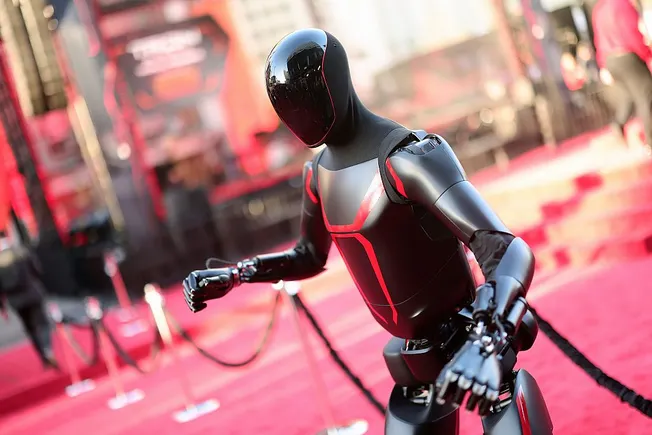
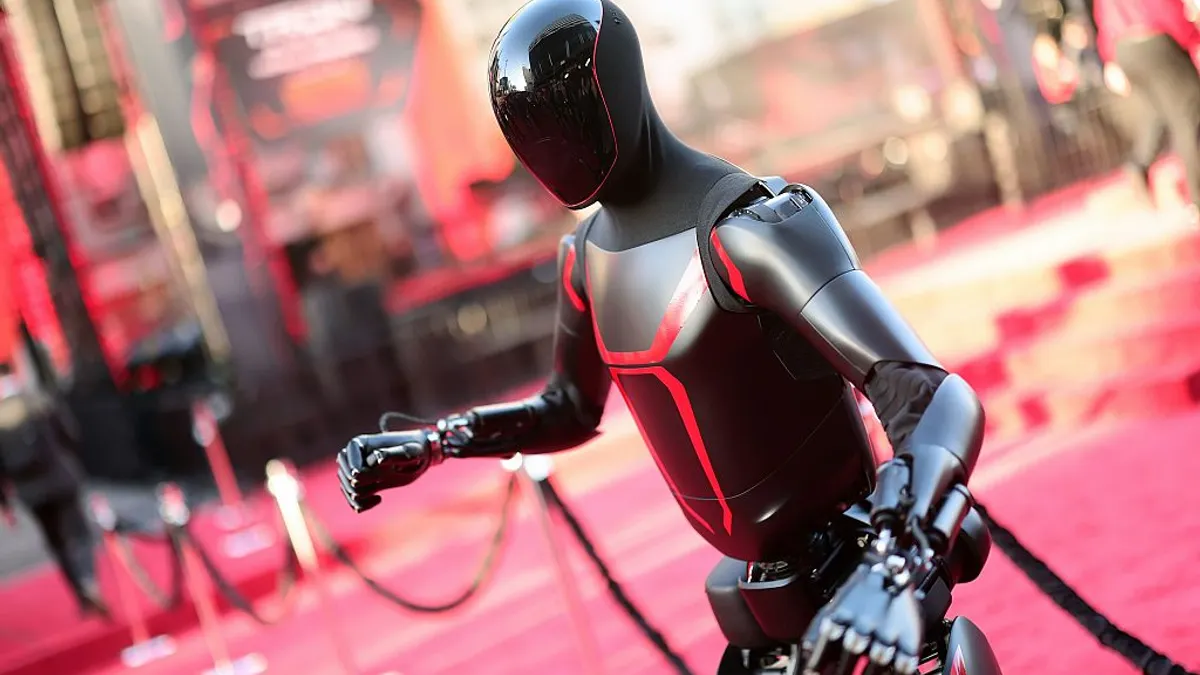
- October 6, 2025: Public visibility peaked when Tesla robots were featured at high-profile events, signaling a move toward wider integration into public and semi-public spaces.
- Late 2026: Boston Dynamics, a subsidiary of Hyundai, officially opened a dedicated robotics center in Savannah, Georgia. This facility serves as a testing ground for the next generation of Atlas humanoids, specifically designed to function within Hyundai’s global automotive production network.
- October 2026: Toyota announced a massive $6.4 billion annual investment plan aimed at automating assembly lines, with a stated goal of deploying 400,000 robots to bolster manufacturing efficiency.
Supporting Data and Competitive Dynamics
The competitive landscape is split between pure-play robotics innovators and massive conglomerates leveraging their existing scale.
Toyota’s "ELEY" Strategy
Toyota’s strategy centers on "Embodied Learning for Enhancing Yield" (ELEY). The company’s research division has developed foundational models that allow these robots to observe human workers and learn complex assembly tasks autonomously. By deploying 400,000 units, Toyota is attempting to saturate its supply chain with agents that can adapt to changing production needs in real-time.
Hyundai and Boston Dynamics
Hyundai’s acquisition of Boston Dynamics has proven to be a masterstroke of vertical integration. By embedding their robotics testing center directly within their manufacturing hub in Savannah, they have created a "living laboratory." The Atlas humanoids are currently being trained to perform specific automotive tasks, with plans to expand their operational capabilities to other industrial sectors as early as 2027.
The Scale of the Market
While humanoid robots currently represent a small slice of the global robotics market, the growth trajectory is vertical. According to the International Federation of Robotics (IFR), roughly 7,000 humanoid units were purchased globally last year. This figure is dwarfed by the 603,000 industrial robots—primarily arms and warehouse AGVs—sold in the same period. However, the pivot toward humanoids suggests that manufacturers are betting on a future where general-purpose machines replace specialized, single-task hardware.

Official Responses and the "Optimus Academy"
The most significant hurdle for Tesla, according to Musk, is the "data moat." Unlike self-driving cars, which can pull training data from a massive fleet of existing vehicles on public roads, Optimus is starting from a blank slate.
"We have to bootstrap it by making the robots and having them do self-play," Musk explained during the call. To solve this, Tesla is developing the "Optimus Academy," a massive testing ground housing between 10,000 and 20,000 units. These robots will be tasked with practicing a wide array of activities, allowing Tesla to build a "flywheel" of data that improves decision-making capabilities.
Musk drew a candid analogy regarding the developmental stages of the robot, likening the current version to a toddler. "Initially, they’re sort of wobbly and they don’t know how to do things, and eventually they learn to wipe [themselves], which is a big milestone," he noted.
To bridge the gap between "toddler" and "industrial worker," Tesla is turning to its Terafab facility in Texas. The facility will be instrumental in producing the company’s next-generation AI5 chips. These in-house processors are expected to provide the necessary computing density to power the advanced cognitive functions required for autonomous operation. Musk stated that the integration of these chips into the Optimus chassis is scheduled for April 2027, with deliveries to customers likely by the end of that year.

Implications: The Future of Industrial Labor
The transition to humanoid labor in the factory has profound implications for the global economy.
1. The Human-Centric Factory
The primary advantage of the humanoid form factor is its ability to operate in environments designed for humans. Existing factories are built with stairs, doorways, and tools intended for human anatomy. Humanoid robots can theoretically integrate into these spaces without the multi-billion dollar capital expenditure required to reconfigure a plant for specialized automation.
2. Solving Labor Gaps
As demographics shift and birth rates decline in industrialized nations, manufacturers are facing a long-term labor crisis. Robots that can handle the "dangerous and repetitive" tasks that lead to high turnover and injury rates are no longer viewed as a threat to human jobs, but as a necessary bridge to maintain output.
3. The "Mobility Company" Evolution
Tesla, Toyota, and Hyundai are all undergoing a metamorphosis. They are moving away from being categorized as "car manufacturers" and toward being "mobility and robotics companies." By owning the entire stack—from the chips and the software to the hardware and the data loop—these firms are positioning themselves to dictate the standards for the future of industrial work.
4. The Marketing of Autonomy
Tesla intends to release a marketing video in the coming weeks demonstrating Optimus performing tasks that are not preprogrammed. This is a critical milestone; if successful, it will demonstrate the transition from "scripted motion" to "generative action." If a robot can perceive an object, understand its purpose, and manipulate it without specific code, the ceiling for industrial productivity effectively vanishes.
Conclusion: The Road Ahead
Musk’s confidence remains high, bordering on provocative. "I’d be stunned if anyone has a robot that is remotely competitive with Optimus when we start delivering it to customers," he declared.
However, the road to mass deployment is littered with technical challenges—power management, battery longevity, latency in AI processing, and the sheer complexity of bipedal balance in unpredictable environments. As Tesla, Toyota, and Hyundai continue their race, the winners will not necessarily be those with the most advanced hardware, but those who can most effectively scale the "Academy" model—turning raw experience into intelligent, productive action. The humanoid era is no longer arriving; it is being forged in the factories of today.
