




In a landmark move that signals a pivot toward long-term financial stability, China has initiated a massive 300 billion yuan ($45 billion) capital injection into its premier state-owned banks and insurance giants. This capital infusion, the largest of its kind in nearly two decades, is designed to fortify the nation’s financial architecture against systemic shocks while ensuring that lending channels remain open to support a cooling economy.
As the world’s second-largest economy navigates a complex transition, Beijing is moving beyond traditional monetary stimulus. By reinforcing the balance sheets of its "Big Five" banks and major insurers, the government is essentially "pre-loading" its financial institutions with the resources necessary to withstand the dual pressures of a domestic property crisis and shifting global trade dynamics.
The Anatomy of the Capital Injection
The Ministry of Finance confirmed on Sunday that it will issue special sovereign bonds to recapitalize eight key financial institutions. This ambitious plan is not an emergency reaction to a sudden collapse, but rather the execution of a strategy that has been in development since 2024.
The institutions receiving this support represent the bedrock of China’s financial system. The list includes the Industrial & Commercial Bank of China (ICBC), the Agricultural Bank of China (AgBank), and the People’s Insurance Company (Group) of China (PICC).
Breakdown of the Funding:
- Agricultural Bank of China: Seeking 160 billion yuan through private placements.
- Industrial & Commercial Bank of China (ICBC): Targeting 100 billion yuan.
- Insurance Sector: Significant allocations are slated for China Life Insurance, China Taiping Insurance Group, China Reinsurance (Group) Corp., and the China Export & Credit Insurance Corp.
The Ministry of Finance will act as the primary subscriber for these share placements, alongside institutional investors such as the China National Tobacco Corp. These funds are explicitly earmarked to replenish core Tier-1 capital, the most critical buffer against potential loan defaults and market volatility.
A Chronology of Strategic Support
To understand the magnitude of this intervention, one must view it as the latest chapter in a multi-year effort to modernize and secure the Chinese financial system.
- 2024: The Strategic Pivot: Beijing first signaled its intent to replenish the capital of its largest lenders, moving away from reactive bailouts toward a proactive, policy-driven approach to capital adequacy.
- Early 2025: Expanding the Scope: The government began an aggressive injection phase, with a combined 500 billion yuan deployed to bolster financial resilience.
- Late 2025: The Sovereign Note Framework: Four major lenders, including the Bank of China and the Postal Savings Bank of China, received a combined $69 billion injection financed through sovereign notes. This set the precedent for the current, broader rollout.
- September 2026: The Current Expansion: The government confirmed the 300 billion yuan package, formalizing the commitment made in this year’s government work report.
This sequence reveals a government that is not merely "putting out fires" but is intentionally engineering its banking sector to meet the stringent demands of international regulatory frameworks, specifically the Total Loss-Absorbing Capacity (TLAC) requirements.
The Logic Behind the Moves: Supporting the Real Economy
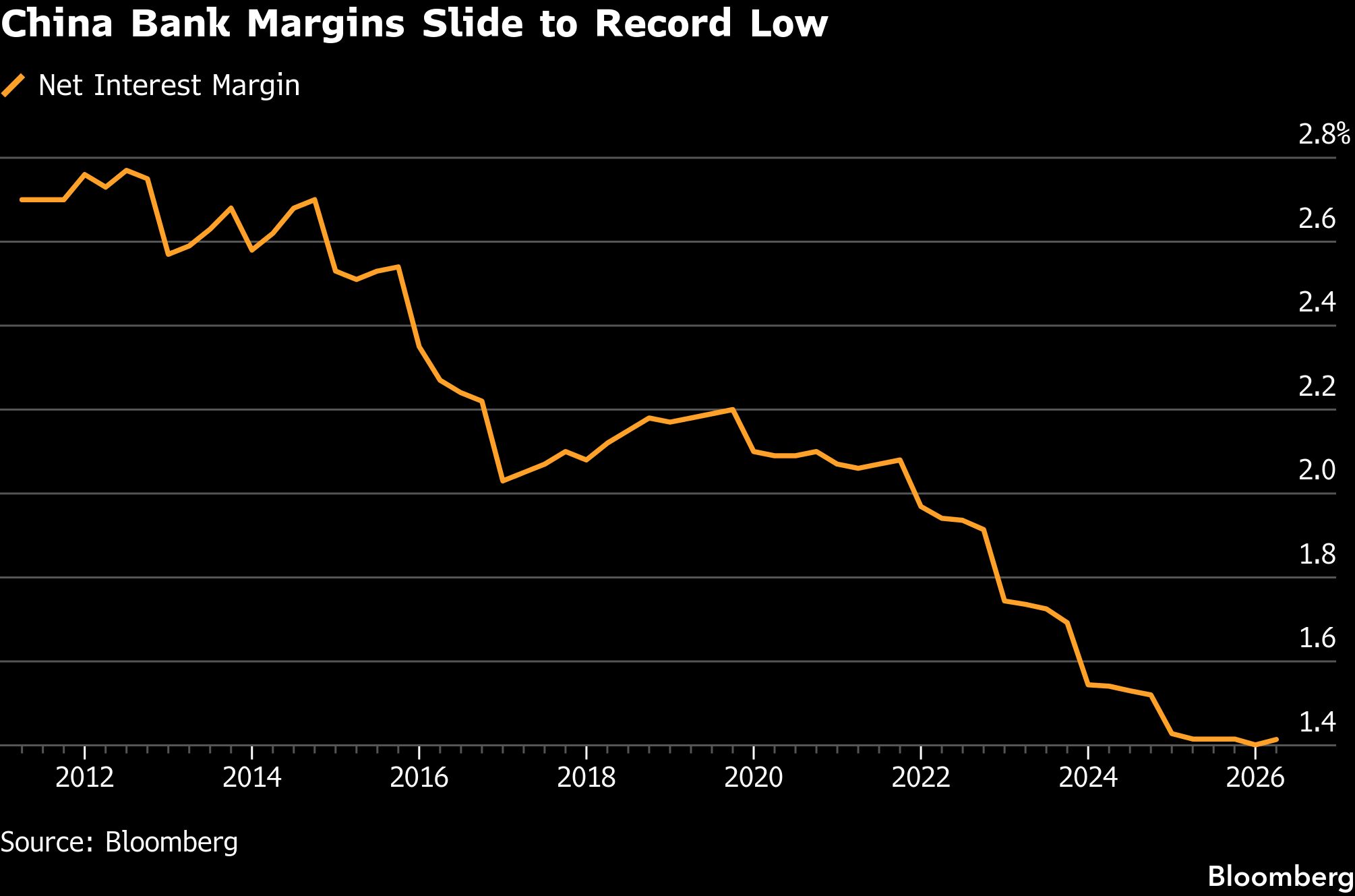
The core mission of this injection is to provide "firepower" for the real economy. As China’s net interest margins (NIMs) hit historic lows—severely limiting the ability of banks to replenish their own capital through retained earnings—the state has stepped in to bridge the gap.
Addressing the Capital Adequacy Challenge
As of June 2026, Chinese banks reported an average capital adequacy ratio of 15.26% and a core Tier-1 ratio of 10.72%. While these figures appear healthy by international standards, they are increasingly insufficient to handle the complexities of the modern global market. By injecting fresh capital, Beijing ensures that its banks have the cushion required to continue lending to strategic sectors—such as high-tech manufacturing and green infrastructure—even as profitability margins remain suppressed.
The Insurance Sector’s Vulnerability
The inclusion of insurance giants is equally significant. The insurance industry in China is currently grappling with a "double squeeze": a prolonged low-interest-rate environment that hampers investment returns, and the rising cost of liabilities. Recent draft amendments to the Insurance Law, the first major update since 1995, indicate a shift toward tighter oversight. The capital injection is a crucial precursor to these reforms, ensuring that insurers remain solvent as the government raises the bar for capital thresholds and shareholder accountability.
Official Responses and Market Reactions
The policy has met with cautious optimism from analysts, who view it as a necessary, albeit dilutive, step.
"The recapitalization of major state-owned financial institutions has been a policy arrangement for the past two years, rather than an emergency measure," says Liao Zhiming, an analyst at Huayuan Securities Co. "The key is to make capital arrangements in advance so that the banks have sufficient capacity to meet regulatory requirements and support the real economy."
Market reaction has been measured. In Hong Kong trading, shares of ICBC saw a modest decline of 0.78%, while AgBank slid 0.69%. Analysts at Bloomberg Intelligence note that the share placements will cause a modest annualized EPS dilution for these lenders—approximately 3.5% for ICBC and 6.3% for AgBank. However, investors appear to be balancing this dilution against the long-term stability that the government backing provides.
Implications: A New Era for Financial Governance
The decision to leverage state-owned enterprises to recapitalize banks is a hallmark of the current administration’s economic philosophy. By avoiding reliance on broad-based monetary easing, which can trigger inflation or currency instability, Beijing is utilizing its command over the financial system to surgically direct capital where it is needed most.
1. Risk Ring-Fencing
The recapitalization serves as a "moat" around the financial system. By shoring up the Big Five banks, the government is insulating the broader economy from the fallout of the distressed property sector and the mounting debt of local governments.
2. Strategic Lending Capacity
With a stronger capital base, these banks are now better positioned to act as instruments of state policy. This includes financing government-led initiatives in technology and trade, ensuring that private companies and strategic industries do not face a credit crunch as the economy attempts to rebalance.
3. Global Positioning
China’s banks are among the world’s most systemically important. By meeting and exceeding international TLAC requirements, Beijing is signaling to the global financial community that its banks are not merely state-run conduits, but globally compliant, stable, and robust institutions capable of absorbing significant shocks.
4. The Regulatory Tightening
The simultaneous move to revise the Insurance Law suggests that this capital injection comes with strings attached. The government is not providing a "free ride"; it is providing liquidity in exchange for higher standards of governance, stricter shareholder oversight, and a more disciplined approach to risk management.
Conclusion: The Long Game
As President Xi Jinping’s agenda continues to prioritize financial stability as a cornerstone of national security, the current recapitalization is likely not the final move in this playbook. China is effectively transforming its financial institutions from passive repositories of capital into active, resilient engines of growth that are insulated from the volatility of the real estate sector and the uncertainties of the global trade environment.
For the international observer, the takeaway is clear: Beijing is playing the long game. By proactively managing the balance sheets of its most important financial entities, China is preparing its economy for a future of structural challenges, ensuring that regardless of external pressures, its internal financial machinery remains functional, adequately capitalized, and firmly under the guidance of the state. The 300 billion yuan injection is not just about numbers on a ledger—it is about the enduring stability of the Chinese economic model in an increasingly unpredictable world.
