



For decades, the term "legacy modernization" has been a boardroom euphemism for a headache. CIOs have long viewed the replacement of business-critical, aging technology stacks as a high-stakes gamble—a process characterized by ballooning budgets, operational disruption, and the looming risk of technical debt. However, a recent, successful transformation at global healthcare giant Bupa, executed in partnership with technology services firm Infosys, suggests that the "break-fix" era of IT is coming to a close.
By reframing modernization not as a technical migration, but as a holistic business transformation powered by artificial intelligence, Bupa has managed to move beyond mere maintenance. The result is a more resilient, agile, and user-centric platform that sets a new standard for how enterprises can navigate the end-of-life cycle of mission-critical software.
The Looming Crisis of End-of-Life Technology
The catalyst for Bupa’s transformation was a ticking clock. Its primary customer-facing mobile application, My Bupa, was built on the Xamarin framework. With Microsoft signaling the sunset of support for the platform, Bupa faced the classic "compounding risk" scenario.
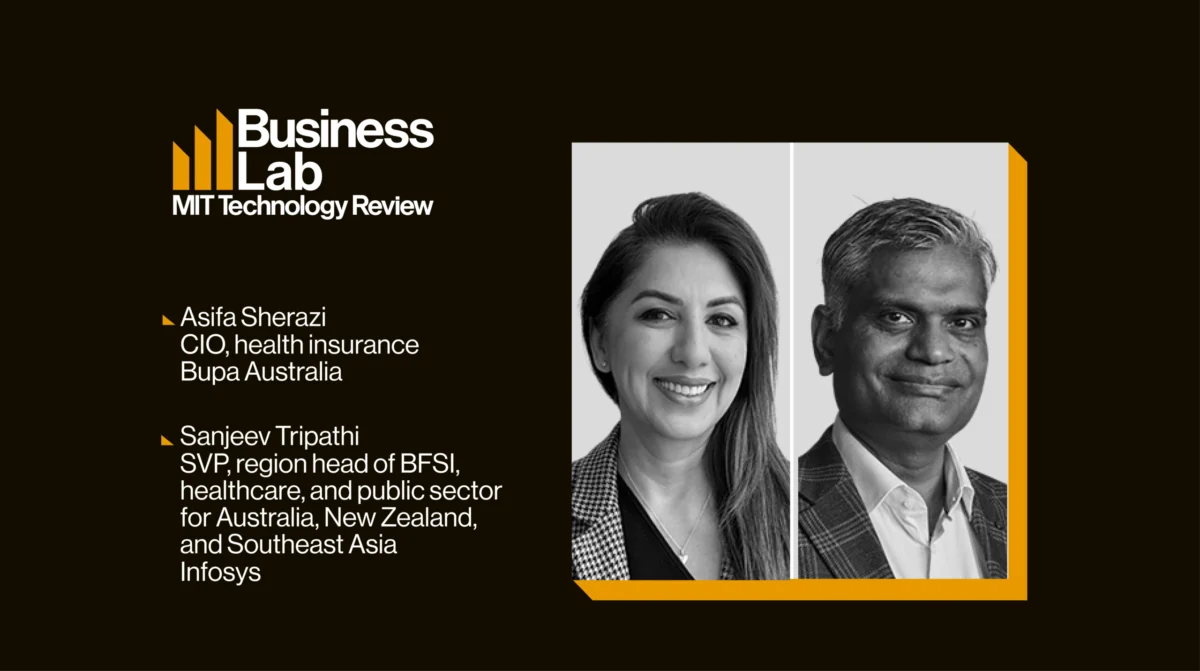
Asifa Sherazi, CIO of Health Insurance at Bupa, notes that legacy risks often remain invisible until they become an emergency. "The end-of-life technology is a risk that compounds quietly, and then arrives all at once," she explains. For Bupa, the risk was three-fold: security vulnerabilities in unsupported software, a total loss of control over the development roadmap due to shifting OS requirements from Apple and Google, and a rapidly shrinking talent pool of developers capable of maintaining the aging codebase.
In the healthcare sector, where trust is the primary currency, these risks are not merely technical—they are existential. "In healthcare, we hold some of the most sensitive information a person will ever share with an organization," Sherazi says. "That isn’t data to us; it’s trust. And trust is extraordinarily expensive to rebuild."
Chronology: A Seven-Month Sprint
The traditional industry timeline for an application migration of this magnitude would typically span 18 months or more. Bupa and Infosys, however, completed the transition from Xamarin to native Swift and Kotlin in just seven months.
The project was structured into two core phases: Reverse Engineering and Forward Engineering.
- The Archeology (Reverse Engineering): Before building anew, the team had to understand the "hidden" logic of the existing system. Using AI-assisted tools, the team extracted business rules, processes, and legacy logic from the Xamarin codebase. This allowed them to map approximately 1,500 regression scenarios to new native epics, ensuring that critical functionality was preserved by design rather than by human memory.
- The Build (Forward Engineering): Once the logic was secured, the focus shifted to re-architecting for the future. The team prioritized scalability and maintainability, ensuring that the new platform was not just a replica, but a foundation for innovation.
- The Human Integration: Throughout the process, Bupa maintained a "one-team" approach, embedding cross-functional squads across engineering, testing, and release. By providing visual progress trackers and fostering an environment where "bad news" could be surfaced early, leadership managed to compress the timeline without sacrificing quality.
Supporting Data: The Impact of AI-Driven Modernization
The results of the Bupa migration provide a compelling case for the efficacy of AI-augmented development. By automating the discovery and documentation phases, the team reclaimed an estimated 400 hours of manual effort from business analysts.
The impact on the customer experience was immediate and quantifiable:
- App Rating: Improved from 3.7 to 4.7 stars.
- Stability: User-perceived crash rates dropped by nearly 24 percentage points on Android and eight points on iOS.
- Accessibility: Android login success rates doubled to 77%.
- Efficiency: The team now releases features approximately four times faster than in the pre-modernization era.
- Lean Operations: The codebase was reduced by 30%, and the application footprint shrunk by 18%, simplifying long-term maintenance.
"What they’ll notice is that when they need us, often at a stressful moment, it just simply works," says Sherazi. This underscores a shift in success metrics: moving from technical uptime to "emotional uptime" for the user.
The Shifting Economics of Modernization
Sanjeev Tripathi, senior vice president at Infosys, argues that the emergence of AI has fundamentally rewritten the economics of modernization. Traditionally, the "cost-complexity-risk" triad deterred many organizations from pursuing necessary upgrades. AI, however, acts as a force multiplier.
"The emergence of AI is fundamentally shifting the economics of modernization," Tripathi explains. "It reduces the effort, risk, and time traditionally associated with these programs." By utilizing AI for both reverse and forward engineering, Infosys was able to deliver the Bupa project in approximately 60% less time than the pre-AI era would have allowed.
Tripathi emphasizes that AI does not replace sound engineering principles; rather, it allows those principles to be executed at scale. "AI does not replace good engineering practices. It enables organizations to execute those practices faster, and it enables it faster, but also more consistently."
Implications for the Future: Building Intelligent Ecosystems
The most profound implication of Bupa’s success is the change in the nature of organizational conversation. Asifa Sherazi observes that the question asked by her leadership team has evolved from "Can our platform support that?" to "Is that the right thing to do for our customers?"
This shift highlights the true payoff of modernization: optionality. By shedding the constraints of legacy technology, the organization has created the "future-ready foundation" needed to pivot toward personalized, predictive care.
The Rise of Agentic AI
Looking toward the next five years, both Sherazi and Tripathi point to the integration of "agentic AI"—systems capable of completing end-to-end outcomes with human oversight. The Bupa case proves that the constraint on adopting such technology is no longer the AI models themselves, but the underlying data, architecture, and processes.
The Modern Platform as an Ecosystem
Modern platforms are evolving from simple functional interfaces into the base for intelligent, AI-driven ecosystems. In this future, AI is not an add-on feature—it is embedded into every layer, from design and operations to customer service.
For other organizations currently grappling with the "legacy dilemma," the advice from both leaders is clear:
- Stop thinking in silos: Do not view modernization as a technology project; view it as a business transformation.
- Focus on first principles: Sound architecture and clear business objectives remain the bedrock of success.
- Prioritize the human element: Technology is only half the battle. Creating a culture where teams feel empowered, safe to report issues, and focused on the end-customer is what ultimately drives a project across the finish line.
Ultimately, Bupa’s journey demonstrates that modernization is not about chasing the latest shiny object—it is about earning the right to innovate. By proactively addressing their legacy debt, Bupa has transitioned from a position of reacting to technical failure to one of defining their own strategic future. As the industry looks toward an increasingly automated future, the ability to build flexible, high-performance platforms will likely be the primary differentiator between organizations that lead and those that are left behind.
