





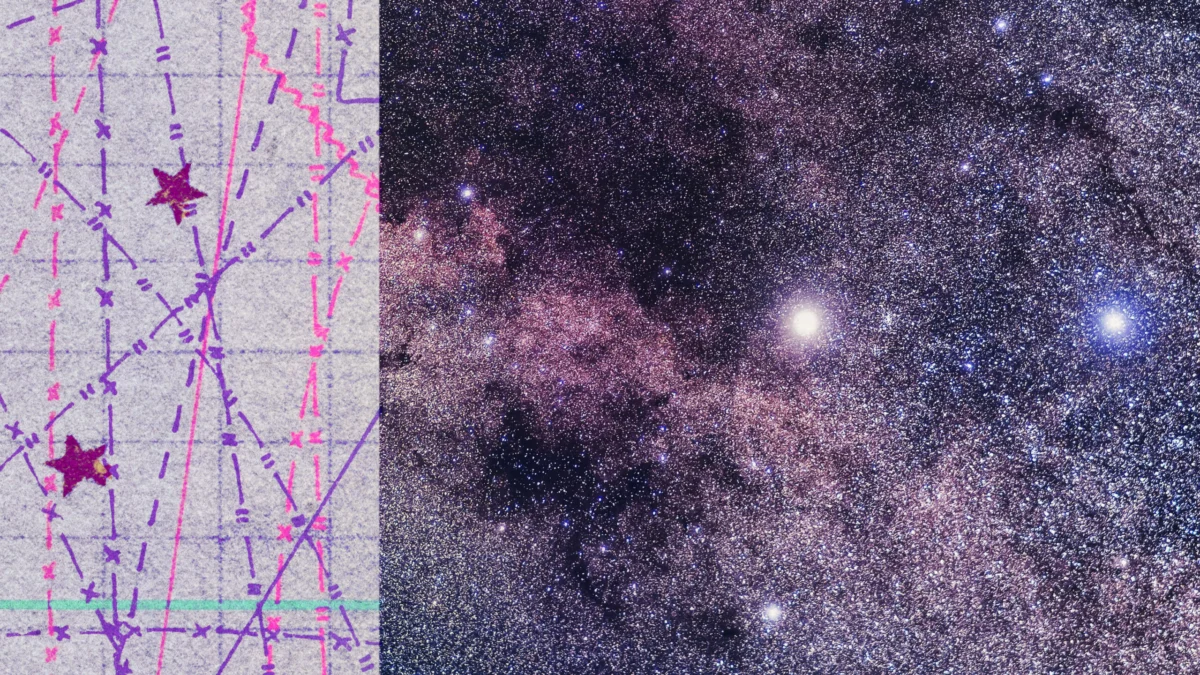
In a bold move that challenges the conventional wisdom of space exploration, the Fermi Explorer Mission has announced its intention to launch a spacecraft bound for our nearest stellar neighbor, Alpha Centauri, by the end of 2029. Unlike the multi-billion-dollar, laser-propelled dreams of the past, this mission is defined by its radical frugality and a reliance on artificial intelligence to solve the intractable physics of deep-space travel.
The project, which operates on a modest budget of $15 million, does not aim to reach another star within a human lifetime. Instead, it seeks to become the first human-made vessel to initiate a journey into interstellar space with a concrete, actionable plan. By leveraging a novel trajectory designed by a specialized AI research lab, the mission hopes to transform humanity into an interstellar species—even if the results of that transformation won’t be seen for tens of thousands of years.
The Chronology of Interstellar Ambition
The quest to reach the stars has long been a pursuit of billionaire-backed consortia and national space agencies, yet progress has been agonizingly slow.
- 1977: NASA launches Voyager 1. Despite being one of the fastest objects ever built, it has covered less than 1% of the 25-trillion-mile distance to Alpha Centauri in nearly half a century.
- 2016: Billionaire Yuri Milner announces "Breakthrough Starshot," a $100 million initiative aimed at using high-powered lasers to propel tiny, light-sail-equipped probes to 20% of the speed of light. The goal was to reach Alpha Centauri within 20 years.
- 2024: Following years of stalled development and technical hurdles, Breakthrough Starshot remains grounded, with no confirmed launch date.
- 2025: Physical Superintelligence (PSI), an AI physics research lab, is founded with $58 million in funding led by Bill Gates’ Breakthrough Energy.
- Late 2025: The Fermi Explorer Mission engages with PSI’s AI system, "Get Physics Done," to solve the power-to-weight ratio problem inherent in small-scale interstellar probes.
- 2029 (Target): The Fermi Explorer Mission plans to launch its inaugural probe.
Engineering the Impossible: AI as the Architect
The fundamental problem facing any interstellar mission is mass. Adding solar panels, fuel, or shielding increases the weight of the spacecraft, which in turn requires more energy to accelerate. For a mission capped at a $15 million budget, conventional chemical propulsion is impossible, and the massive laser arrays required for light-sails are prohibitively expensive.
Philip Johnston, cofounder and president of the Fermi Explorer Mission, spent a year searching for a viable route. "We were looking for a way to get to another star without a multi-decade, multi-billion-dollar infrastructure," he explains. The breakthrough came when Johnston presented the problem to Alex Wissner-Gross, a physicist and cofounder of PSI.
Wissner-Gross ran the problem through "Get Physics Done," an open-source AI system that utilizes models like Anthropic’s Claude and OpenAI’s GPT to decompose complex physics problems into granular simulations. Within a week, the AI returned a non-intuitive trajectory that had eluded the human team.
The AI’s solution involves a series of complex orbital maneuvers that swing the spacecraft closer to the sun than the orbit of Mercury. By timing engine burns at the perihelion—the point where the spacecraft is closest to the sun—the solar panels can capture four times the light, providing a high-energy burst of thrust that significantly increases the probe’s velocity. This design allows the spacecraft to remain incredibly light, as it avoids the need for heavy, long-term power storage.
Supporting Data and Technical Realities
The technical paper outlining this trajectory—currently awaiting peer review—demonstrates that the mission will carry at least one kilogram of cargo. This "interstellar payload" is designed to be a time capsule of human civilization. It will include scientific sensors, artistic representations, and a modern version of the Golden Record—the iconic gold-plated disc carried by the Voyager probes containing the sights and sounds of Earth.
However, the reality of the mission’s timeline is stark. Alpha Centauri is 4.4 light-years away. At the speeds attainable by this small, solar-powered probe, the journey will take approximately 80,000 years.
"We are not constraining ourselves to doing it in a human lifetime," Johnston says. "Let’s just figure out the way to get to another star."
Critics and internal observers alike, including Matt Pines, CEO of PSI, caution that while the AI provided a creative solution, it is not infallible. The AI operates on raw computational power, having processed over a billion tokens to refine the trajectory, yet it lacks the "scientific taste" of a human researcher. It often struggles to distinguish between a novel, brilliant solution and a mathematical dead end. "I don’t think we’ve yet figured out how these models can internally represent something like research judgment," Pines notes.
Official Responses and Strategic Philosophy
The Fermi Explorer Mission represents a fundamental shift in the philosophy of space exploration. It moves away from the "race" mentality that defined the Space Age and toward a "legacy" mentality.
Johnston is candid about the potential for his mission to be surpassed by future technology. "We’re pretty confident that we will not be the first to arrive," he admits. "If an engine a thousand years from now is even 20% faster than today’s, a spacecraft launched then would still beat Fermi’s probe to Alpha Centauri by more than 10,000 years."
Yet, the value of the mission, according to its backers, is not in the arrival date, but in the departure. By launching, humanity moves from a species that simply looks at the stars to one that actively reaches toward them.
The Philosophical Implications: The Great Filter
The name of the mission is no accident. It is a direct reference to the "Fermi Paradox"—the glaring contradiction between the high probability of extraterrestrial life and the lack of evidence for it. Enrico Fermi famously asked, "Where is everybody?" if the galaxy is teeming with old, intelligent civilizations.
If the Fermi Explorer Mission succeeds in its launch, it proves that interstellar travel is not an insurmountable technological hurdle. This leads to several unsettling conclusions about the nature of the universe:
- The Rarity of Intelligence: It may be that life, or at least technological life, is exceptionally rare, and we are the first to reach this level of capability.
- The Great Filter: Perhaps intelligent life is common, but it encounters a "Great Filter"—a developmental wall that most civilizations cannot pass through.
Johnston suggests that this filter might be self-destructive. "Maybe in the next 50 years, there’s some great filter that we do not pass through," he says. "That all intelligent civilizations, for some reason, do not pass through."
By launching the probe, the Fermi Explorer Mission is conducting a high-stakes, long-term experiment. If we can reach another star, the silence of the cosmos becomes more deafening. It suggests that our lack of contact with others is not due to the impossibility of the task, but perhaps because the paths taken by other civilizations have ended in silence before they could ever reach out to us.
In this light, the 80,000-year voyage is not merely an engineering feat; it is a message in a bottle cast into the dark, a testament that, for a brief moment in cosmic history, humanity had the desire—and the technological curiosity—to try.
