





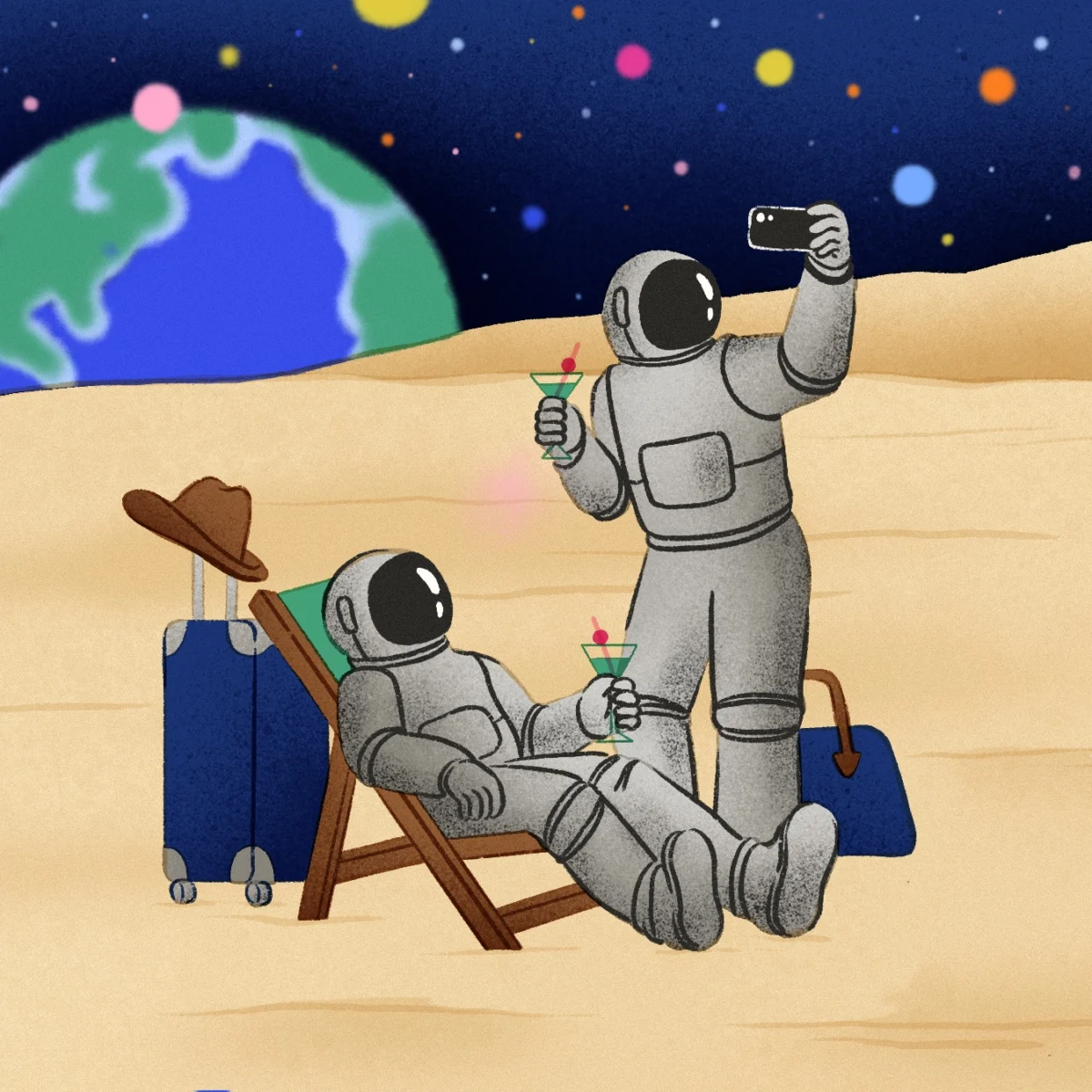
For two decades, Roman Chiporukha has operated in the rarefied air of the ultra-high-net-worth (UHNW) lifestyle market. As the co-owner of the luxury consultancy Roman & Erica, he has spent his career turning the impossible into the routine. His resume includes orchestrating the bespoke construction of custom superyachts and securing vacations in Bahamian locales so exclusive that guests are required to sign non-disclosure agreements before arrival. Yet, even for a man accustomed to catering to the world’s most demanding clientele, his latest venture represents a literal and figurative shift in trajectory: the privatization of outer space.
Chiporukha is the founder of SpaceVIP, a luxury space-travel agency designed to bridge the gap between the adventurous elite and the burgeoning commercial aerospace industry. In an era where the “final frontier” is increasingly becoming a corporate marketplace, Chiporukha is positioning himself as the ultimate concierge for the next generation of pioneers.
The Genesis: A $150 Million Phone Call
The pivot from terrestrial luxury to celestial exploration was not a gradual transition, but a singular, life-altering event. In 2018, Axiom Space—the Houston-based company currently building the world’s first commercial space station—reached out to Chiporukha with a daunting proposition. They were seeking three citizen explorers, each willing to front $50 million, to join the first fully private mission to the International Space Station (ISS), scheduled for April 2022.
“That phone call changed everything,” Chiporukha recalls. It was the moment he realized that the sky was no longer a philosophical boundary; it was a burgeoning asset class. By successfully vetting and signing those inaugural private astronauts, Chiporukha proved that the demand for orbital travel existed, provided it was packaged with the same white-glove service his firm had provided on Earth. In 2021, he launched SpaceVIP, an agency aimed at synthesizing culture, science, and the sheer thrill of spaceflight into a seamless consumer experience.
Chronology: From Superyachts to Starships
- 2000s–2010s: Chiporukha builds his reputation as a premier lifestyle consultant, managing the intricate needs of the world’s wealthiest individuals.
- 2018: Axiom Space contacts Chiporukha to recruit private citizens for the first commercial ISS mission.
- 2021: SpaceVIP is officially launched, serving as a digital portal for private space travel.
- April 2022: The Axiom-1 mission launches, marking a milestone in human history as the first all-private crew reaches the ISS.
- 2023–Present: SpaceVIP expands its portfolio, offering everything from suborbital hops to high-altitude balloon excursions, while launching the Space Prize Foundation to foster STEM education.
Navigating the Cosmic Marketplace
To become the “Expedia of the cosmos,” Chiporukha had to navigate a landscape characterized by extreme technical complexity and high fragmentation. Unlike booking a hotel, where standards are universal, the aerospace sector is a labyrinth of proprietary technology, strict federal regulations, and shifting launch schedules.
The Homework Phase
Chiporukha is neither an aerospace engineer nor a rocket scientist. To remain credible, he underwent a rigorous self-directed education, immersing himself in the physics and logistics of commercial spaceflight. He realized that for his clients—who are accustomed to efficiency—the current state of the space industry was a deterrent. By centralizing information, he transformed a fragmented sector into a unified digital portal where adventurers can research suborbital flights with the same ease one might use to book a Mediterranean cruise.
Aligning Ambition with Aerospace Reality
SpaceVIP receives dozens of inquiries each month, yet the agency maintains a highly exclusive roster. Chiporukha acts as a "reality filter," balancing the starry-eyed desires of his clients with the cold, hard physics of aerospace operations. He works in tandem with industry titans—SpaceX, Blue Origin, and Virgin Galactic—to match individuals with the right experience.
For those not quite ready to commit to a multiday stay on the ISS, he offers alternatives. These include zero-gravity parabolic flights—which mimic the weightlessness of space—and stratospheric balloon voyages that rise 15 miles above Earth. The latter, which offers a serene, six-hour journey with a view of the curvature of the planet, is considered “relatively affordable” in the world of extreme luxury. “If you are a person for whom a few hundred thousand dollars isn’t that much,” Chiporukha notes, “this is the most accessible entry point to the overview effect.”
Supporting Data: The Cost of the New Frontier
The cost of entry into space remains a primary barrier to entry, but historical trends suggest a downward trajectory.
- ISS Mission: Roughly $50 million per seat.
- Suborbital Flight (Virgin Galactic/Blue Origin): Approximately $450,000 to $1.25 million per seat.
- Stratospheric Ballooning: $100,000 to $200,000 per seat.
While these prices are prohibitive for the general public, they are increasingly viable for the “ultra-high-net-worth” demographic, which currently numbers over 400,000 individuals globally. As launch frequency increases, economies of scale are expected to drive these costs down, mirroring the early days of aviation in the 1920s.
Official Perspectives and Industry Implications
The rise of agencies like SpaceVIP has drawn both praise and skepticism from the broader scientific community. Critics often argue that space travel for the wealthy is an egregious display of excess during a time of global climate crisis. However, industry proponents argue that private investment is the only mechanism capable of funding the R&D required to make space travel sustainable and safe for future generations.
Chiporukha acknowledges these concerns and argues that the utility of space travel extends beyond tourism. “We aren’t just selling a ticket; we are creating a bridge,” he says. “The technology developed for these missions—life support systems, orbital manufacturing, and medical research—will eventually benefit life on Earth.”
Inspiring the Next Generation
Central to Chiporukha’s mission is the Space Prize Foundation, a nonprofit initiative aimed at democratizing access to the industry. The foundation runs science competitions for young women and underrepresented groups in STEM, with winners earning zero-gravity flight experiences and immersive training.
“Making space more mainstream isn’t just about bringing down the cost of a ticket,” Chiporukha emphasizes. “It’s about creating pathways into the industry and helping people understand that this future shouldn’t belong to a tiny group of people. We need to normalize the idea that space is a place where human potential is expanded.”
Future Implications: The Normalization of the Beyond
As Chiporukha continues to refine his service model, the implications for the luxury travel sector are profound. We are witnessing the birth of "experiential wealth," where the most status-conscious consumers are moving away from tangible assets—like yachts and jets—toward transformative, once-in-a-lifetime events.
The success of SpaceVIP suggests that the space industry is moving out of its infancy. What began as a series of government-funded experiments is becoming a service-oriented economy. If Chiporukha’s thesis holds true, the next decade will see a surge in orbital tourism, research-oriented private missions, and a greater integration of civilian life with the space environment.
For the client who has everything, the only remaining frontier is above. And as Roman Chiporukha has learned, if you can build the bridge, there will always be someone willing to cross it. Whether this leads to a more equitable future or merely a new playground for the elite remains to be seen, but one thing is certain: the celestial gates have been opened, and for those with the capital and the curiosity, the sky is no longer the limit—it is simply the destination.
