





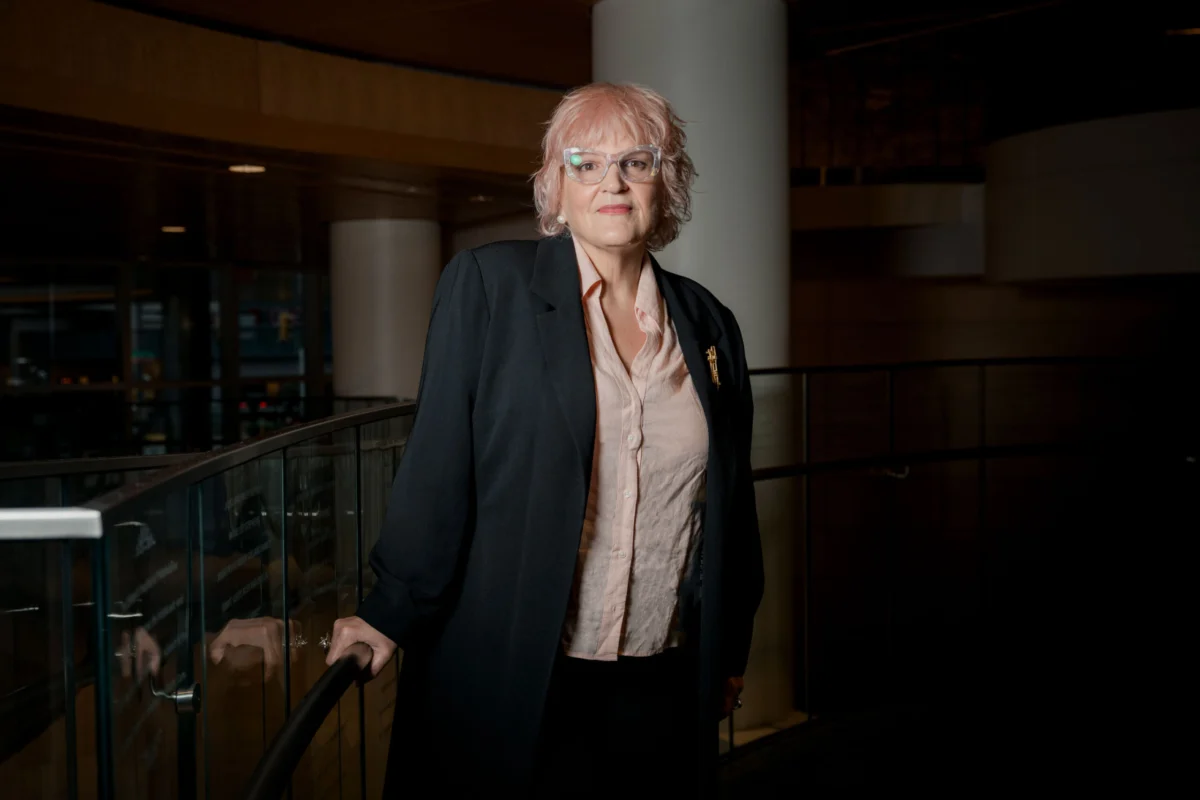
For decades, the standard approach to medical research has been built upon a silent, often dangerous, assumption: that children are simply "miniature adults." This perspective has long dictated the design of clinical trials, the development of pharmaceuticals, and the focus of genomic mapping. However, for Deanne Taylor, director of bioinformatics at the Children’s Hospital of Philadelphia (CHOP), this oversight represents one of the most significant blind spots in modern science.
Taylor is now spearheading a movement to change that. By championing the inclusion of pediatric data in the global Human Cell Atlas project and leading the massive Developmental Genotype-Tissue Expression Project (dGTEx), she is building the first comprehensive molecular map of the developing human body. Her work aims to provide the "assembly manual" for the human genome, revealing how genes function across every stage of a child’s life.
The Catalyst: A Turning Point in 2017
In 2017, while attending a presentation at the University of Pennsylvania, Taylor listened as researchers unveiled the ambitious Human Cell Atlas (HCA)—a global initiative designed to map every cell type in the human body. While the scale of the project was revolutionary, Taylor was struck by a glaring omission: the researchers had no plans to include pediatric data.
"That’s when my little alarm went off," Taylor recalls. "Not again."
Having spent years observing the systemic neglect of pediatric-focused medical investment, Taylor recognized the HCA’s oversight as a continuation of a tired tradition. She knew that pediatric cells are fundamentally distinct from adult cells. They operate on different developmental timelines, expressing genes in patterns that shift rapidly during growth. This biological variance is why certain drugs, which are safe and effective for adults, can be life-threatening to children. Recognizing that a map of adult cells would provide only half the story, she pivoted from a concerned attendee to a central architect of the project’s pediatric expansion.
Chronology: From Biophysics to the Frontier of Medicine
Deanne Taylor’s path to this monumental task has been, in her words, a "random walk." Her intellectual journey is rooted in an early, intense curiosity for the mechanics of the world. By age five, she was already poring over her mother’s medical texts; by 12, she was engrossed in physics.
- 2001: Taylor earns her PhD in biophysics, just as the Human Genome Project is nearing completion. Inspired by the potential of genomic data, she transitions into the private sector, working at Pfizer to code algorithms for rare-disease research.
- The Early 2000s: She shifts into reproductive medicine, helping to develop some of the first computational programs designed to screen embryos for chromosomal abnormalities—technology that remains a cornerstone of fertility medicine today.
- 2014: Taylor joins the Children’s Hospital of Philadelphia, where the disparity between adult and pediatric medical resources becomes the primary focus of her career.
- 2017: The Human Cell Atlas presentation triggers Taylor’s campaign for pediatric inclusion. She joins the HCA volunteer team and begins lobbying for the creation of a dedicated pediatric section.
- 2019: Taylor leads a cross-hospital coalition to publish a seminal paper outlining the scientific necessity of studying pediatric development. This serves as a "flag in the ground" for the field.
- 2021: The NIH awards a $38.5 million grant to the Developmental Genotype-Tissue Expression Project (dGTEx), effectively green-lighting the creation of a comprehensive pediatric tissue database.
Supporting Data: Why "Small Adults" is a Dangerous Fallacy
The Human Genome Project provided the parts list for human life, but it failed to provide an instruction manual. DNA is a constant, but its expression—the process by which genes are turned on or off to build proteins and tissues—is highly dynamic.
In childhood, this process is hyper-active. For example, astrocytes, essential cells in the brain, undergo critical formation within the first five years of life. Similarly, the immune system undergoes a massive maturation phase during puberty. When researchers ignore these windows of development, they miss the biological nuances that dictate health and disease.
The dGTEx project is designed to bridge this gap. By banking and analyzing samples from healthy children whose families have chosen to donate their bodies to science, the project is creating a "baseline" of normal gene expression. This database acts as a reference point. When clinicians treat a sick child, they can now compare that child’s cellular behavior against this healthy baseline to identify exactly where the disease is interfering with development.
The implications for drug safety are profound. Because children’s cardiac genes are expressed differently than those of adults, standard chemotherapy can often cause irreversible heart damage in pediatric patients. With the data provided by dGTEx, scientists hope to develop "pediatric-specific" protocols that target diseases without damaging the developing organ systems of the child.
Official Responses: "The Glue" of International Research
Taylor’s role has evolved into that of a master orchestrator. The HCA and dGTEx projects rely on a loose, international coalition of researchers—pathologists, bioinformaticians, and tissue banks—each with their own specific goals and institutional pressures.
"Deanne took a big-picture view and said, ‘We don’t just need to understand the pediatric kidney or the pediatric brain or the pediatric immune system. We need a holistic view of pediatric development,’" says Sarah Teichmann, a cofounder of the Human Cell Atlas. "She embodies that interdisciplinary spirit."
Her colleagues often describe her leadership style as "herding cats." This requires a unique blend of technical expertise and interpersonal diplomacy. For instance, Taylor frequently acts as a mediator, explaining the physical constraints of research—such as why a single tissue sample from a one-month-old cannot be subdivided into twenty different research streams—to eager scientists.
Beyond the lab, Taylor is known for her unconventional approach to science. With tattoos of Schrödinger’s and Boltzmann’s equations and a background that spans everything from high-level physics to volunteer work at Burning Man, she brings a refreshing, humanizing energy to the often-sterile world of big data. Her colleagues note that it is this very personality—her ability to ask the right questions and bridge disparate fields—that makes her so effective at keeping such a complex project on track.
Implications: A Window of Intervention
The ultimate goal of Taylor’s work is to fundamentally change the trajectory of pediatric medicine. By creating a granular, cell-by-cell map of childhood, researchers hope to move from reactive medicine to proactive intervention.
If scientists can identify the "signals" of a chronic condition years before symptoms appear, they could potentially screen for and treat diseases before they cause permanent damage. This would shift the medical paradigm from "treating the sick" to "protecting the developing."
"We’re just older kids," Taylor reminds her colleagues. By failing to prioritize the pediatric stage of the human lifespan, the medical community has been ignoring the most vital window for disease intervention.
The dGTEx data, now feeding directly into the Human Cell Atlas, ensures that future research will be grounded in the reality of human growth rather than the static assumption of adult physiology. As Taylor continues to push for more funding and broader collaboration, her work serves as a reminder that the most sophisticated technology in the world is only as good as the questions it is asked to answer. By asking what it means to be a child at the molecular level, Deanne Taylor is not just mapping cells; she is writing the manual for the next generation of human health.
