




In the modern digital landscape, the concept of "brand protection" has evolved far beyond simple trademark litigation or monitoring for unauthorized logo usage. Today, brand protection is an existential struggle for clarity, authority, and trust within search engines and the burgeoning ecosystem of Artificial Intelligence (AI).
It is no longer just about how a brand is perceived—that is the domain of traditional reputation management. Modern brand protection is about sovereignty: ensuring that users, search algorithms, and AI agents can accurately identify the authentic entity, access official information, and bypass the sophisticated traps set by impersonators and unauthorized intermediaries.
The New Frontier: Why Brand Protection is Evolving
The risk profile for brands has shifted dramatically. While fake websites and social media impersonators remain persistent threats, they have been joined by "slopsquatting"—a malicious practice where attackers register packages or naming conventions that AI coding assistants are prone to hallucinating.

In a high-profile case documented by Aikido, attackers registered the malicious npm package “unused-imports” to intercept developers searching for the legitimate “eslint-plugin-unused-imports.” Because AI coding tools frequently suggest these libraries, the risk of developers inadvertently pulling malicious code into their infrastructure is unprecedented. Similarly, LLMs have been observed “inventing” package names by combining legitimate tools, allowing bad actors to squat on these hallucinated names before the official developers can claim them. These cases highlight a terrifying reality: a product’s brand name can now be intercepted within the very infrastructure that developers and AI agents trust to function.
Defining Your Brand Identity: The Foundation of Defense
Before a company can defend its territory, it must first define its borders. Brand protection begins with a comprehensive, centralized knowledge graph—a master repository of every asset associated with the brand.
The Inventory Checklist
To build a robust defense, you must document:

- Corporate Identity: Legal names, previous aliases, and alternative monikers.
- Digital Infrastructure: Official domains, subdomains, mobile applications, and verified social media handles.
- Human Assets: Founders, owners, and key executives.
- Commercial Claims: Official support channels, regional offices, and specific product-market offerings.
- Provenance: Every fact should be linked to a verifiable source with a "last-checked" date.
By formalizing this data, you create a "source of truth" that can be used to challenge conflicting information appearing in search results or AI-generated responses.
Market-Specific Auditing: A Global Requirement
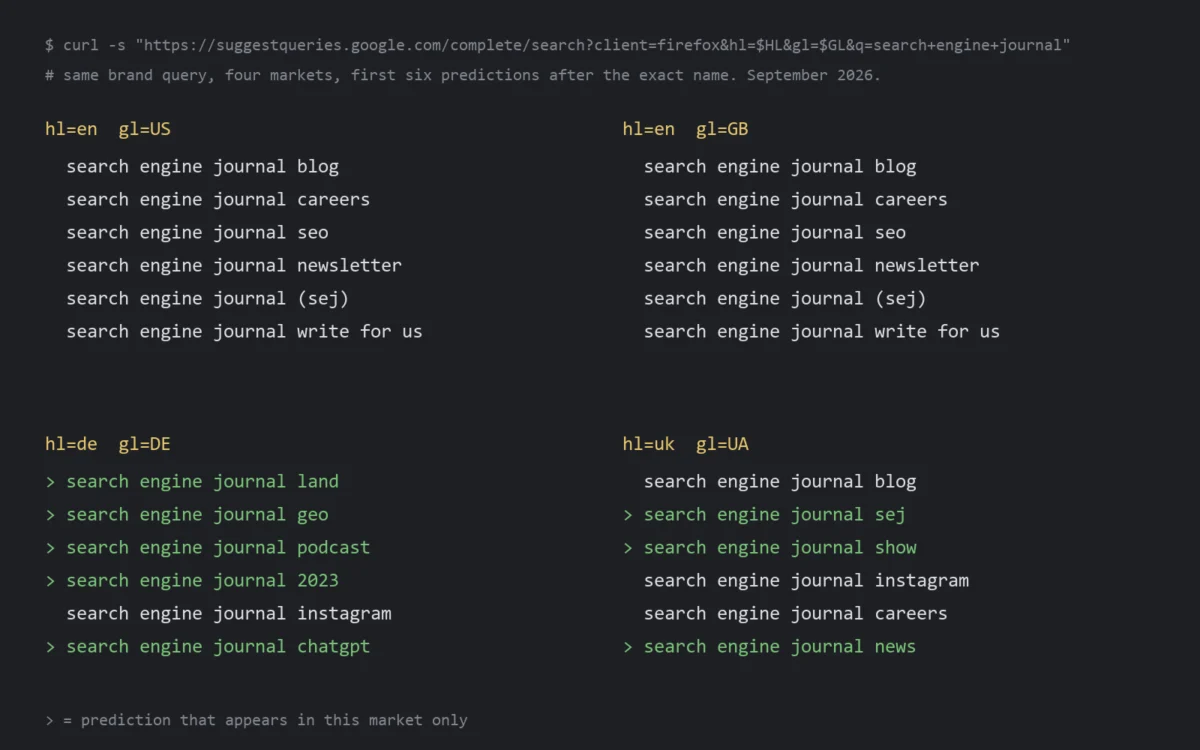
A common mistake is assuming that a search query for your brand yields the same results globally. In reality, search results are highly dependent on location, language, and device, creating a fragmented landscape where a brand might be protected in one region but heavily impersonated in another.
Conducting the Audit
- Localized Testing: Never rely on your logged-in, personalized browser history. Use a clean, incognito environment, or ideally, a VPN that mimics the user’s location in your target market.
- Mobile vs. Desktop: Given that most branded traffic originates on mobile, auditing desktop-only is a fatal oversight. The layout and prominence of results on a smartphone screen can make the difference between a user finding your official support page or an attacker’s phishing portal.
- Autocomplete Intelligence: Use Google’s suggestion endpoint (via API) to monitor what users see when they type your brand name. Autocomplete predictions often serve as the first point of user interaction, and they are susceptible to black-hat manipulation. Monitoring for "yourbrand + scam" or "yourbrand + login" is essential for identifying emerging threats.
Auditing AI Systems: The Next Great Challenge
AI models, including ChatGPT, Gemini, and Perplexity, do not just retrieve information; they synthesize it. This makes them dangerous vectors for misinformation.

The Protocol for AI Audits
- Diverse Prompting: Use both "direct" prompts (e.g., "What is the official support contact for [Brand]?") and "decision" prompts (e.g., "Compare [Brand] with [Competitor] and suggest an alternative").
- Disable Memory: Run tests in fresh sessions to ensure you are seeing the model’s base logic, not its learned preferences from your history.
- Tiered Testing: Because paid and free versions of AI models often draw from different indices (e.g., OpenAI’s internal index vs. live web retrieval), you must audit the version that your average customer is actually using.
- Crawler Visibility: Use the published user agents for major AI crawlers (OpenAI, Anthropic, Perplexity) to verify that your site is not just accessible, but indexable. An HTTP 200 status does not always mean a bot can actually parse your content.
Establishing a Defensive Strategy
Once an audit identifies an issue—whether it is a fake support page, a trademark-infringing ad, or a hallucinated AI claim—you must choose the appropriate response.
The Four-Layer Defensive Model
- Internal Correction: Fix any inaccuracies on your own website or controlled assets first.
- Influence & Correction: For third-party platforms (like review sites or business directories), submit evidence-based corrections to update outdated or false information.
- Formal Reporting: For phishing sites or blatant impersonation, utilize official reporting channels. This includes filing DMCA takedowns for copyright theft, using domain dispute processes (UDRP) for bad-faith registrations, and contacting ad platforms to address trademark abuse.
- Content Counter-Offensive: Where removal is not possible—such as with negative but accurate reviews or public opinion—the best defense is a stronger first-party narrative. Publish clear, official information that outcompetes the misleading content in search rankings.
Containing the Damage
While awaiting a formal takedown, prioritize containment. Use your official channels (social media headers, official websites, and newsletters) to issue clear warnings to your community. Providing a "verify this channel" page can save customers from falling victim to phishing while you wait for platforms to process your reports.
Implications for the Future
The battle for brand sovereignty is a continuous process, not a one-time project. As AI models become more integrated into daily search behavior, the speed at which you identify and mitigate threats will determine the long-term health of your brand.

By treating your digital footprint as an asset that requires constant monitoring, you reduce the surface area for attacks. The ultimate goal is to reach a state of "AI-proofed" authority, where your official channels are so well-indexed and authoritative that search engines and AI agents have no choice but to prioritize them over the noise of impersonators.
In the coming years, brands that succeed will be those that view search and AI not as static destinations, but as dynamic, contested ecosystems where brand presence must be aggressively maintained, documented, and defended.
Key Takeaway: If you aren’t monitoring how your brand is represented in AI and global search environments today, you are already leaving the door open for attackers to redefine who you are to your customers. Start by auditing, build a source-of-truth knowledge graph, and never stop monitoring the systems that your audience trusts.
