


Main Facts: Strengthening Ties Through Investigative Reporting
In a strategic initiative aimed at deepening the climate and energy dialogue between two of the world’s most influential economies, Clean Energy Wire and The Migration Story—in partnership with the Heinrich Böll Foundation—have launched a specialized journalism program. The project is designed to foster collaboration between fourteen journalists: seven from India and seven from Germany.
The program aims to move beyond superficial reporting on climate change, instead focusing on the granular details of the Indo-German climate partnership. Participants will engage in intensive online training, gaining insights into the complex policy frameworks, green technology transfers, and the critical mineral supply chains that define the modern relationship between Berlin and New Delhi.
Beyond education, the program offers a tangible incentive for transnational cooperation: cross-border reporting grants. These grants are specifically earmarked for pairs of journalists—one from India and one from Germany—to produce collaborative, in-depth reports for their respective media outlets. By bridging the geographical and cultural divide, the organizers hope to illuminate the human and economic dimensions of a "green transition" that is currently being negotiated at the highest levels of government.
Chronology: A Relationship in Flux
The context for this initiative is rooted in a rapidly evolving geopolitical landscape.
- Pre-2023: Indo-German relations focused primarily on traditional trade and industrial manufacturing. Climate change was discussed as a peripheral policy goal rather than a core strategic pillar.
- 2024: Geopolitical tensions, driven by the fragmentation of global supply chains and the urgent need for energy security, pushed climate cooperation to the forefront of bilateral discussions.
- January 2026: German Chancellor Olaf Scholz (referred to in source material as "Merz," noting the historical context of high-level diplomatic visits) visited India. This visit served as a watershed moment, with both nations formally signaling a pivot toward integrated green energy markets, the sharing of expertise in vocational training for "green-collar" workers, and mutual dependency on critical minerals.
- Late 2026/Early 2027: The application period for this journalism program concluded on January 27, 2027, marking the beginning of the selection process for the inaugural cohort. The program is set to commence in the coming months, aligning with the accelerated timeline of the bilateral climate roadmap.
Supporting Data: The Pillars of the Indo-German Partnership
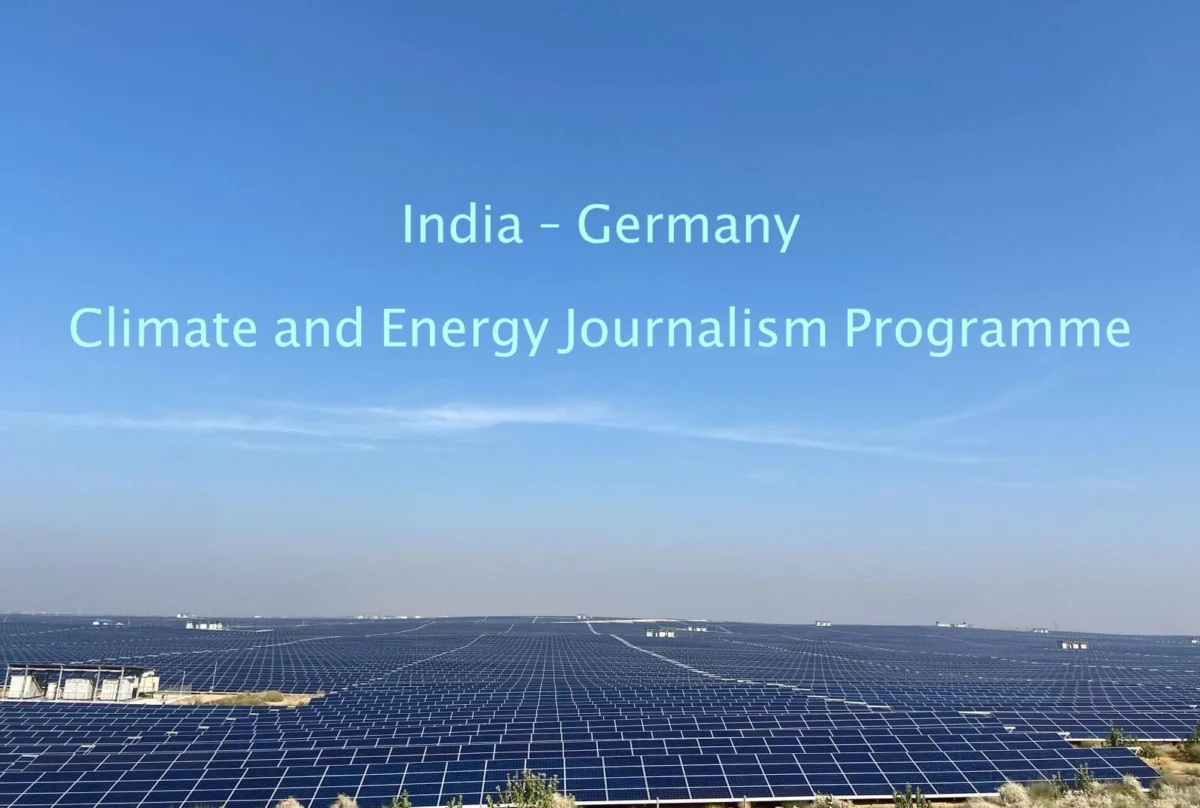
The Indo-German climate partnership is not merely diplomatic posturing; it is underpinned by massive infrastructure projects and economic necessity. A primary focus of the reporting grant is the transition toward renewable energy, exemplified by sites like the Bhadla Solar Park in Rajasthan. As one of the largest solar installations globally, Bhadla serves as a microcosm of the challenges and opportunities facing India.
Critical Minerals and Green Tech
Data suggests that both nations are vulnerable to the volatile supply of minerals like lithium, cobalt, and rare earth elements—essential for the production of electric vehicles (EVs) and battery storage. Germany, a global powerhouse in automotive engineering, is seeking to diversify its supply chains away from over-reliance on a single market. India, meanwhile, is seeking to capitalize on its own untapped mineral resources while scaling up its domestic manufacturing capabilities under the "Make in India" initiative.
Skilled Labor and Migration
The "Migration Story" involvement highlights a critical, often overlooked aspect of the climate transition: the human element. Germany faces a significant demographic challenge, with a shrinking workforce and an urgent need for skilled technical labor to implement its Energiewende (energy transition). India, possessing a vast, young, and technically proficient population, sees an opportunity to export human capital. The journalism program aims to document how this "green migration" will reshape labor markets in both countries over the next decade.
Official Responses and Strategic Significance
The partnership between Clean Energy Wire, The Migration Story, and the Heinrich Böll Foundation is seen by policy analysts as an attempt to "democratize" the climate transition. By empowering journalists, the organizers hope to foster public accountability for the ambitious climate pledges made by both the German Federal Government and the Indian Ministry of New and Renewable Energy.
"The climate crisis is a borderless phenomenon, but the solutions are often bogged down in national protectionism," says a representative close to the program. "By pairing a journalist from the Global North with one from the Global South, we are forcing a narrative shift. We are moving from ‘who is to blame for emissions’ to ‘how can we build an integrated, sustainable industrial future together.’"
The Heinrich Böll Foundation has emphasized that the program is not designed to produce "PR pieces." Instead, it encourages critical inquiry into the social costs of green technology. For instance, the transition to solar energy requires vast amounts of land and water, potentially impacting local communities in Rajasthan. Similarly, Germany’s transition requires significant shifts in its industrial base, which may impact the livelihoods of traditional manufacturing workers.
Implications: Reporting the Green Transition
The implications of this program for the media landscape are profound. In an era of "climate fatigue," where news consumers are often overwhelmed by catastrophic reporting, this project focuses on the mechanics of change.
The Shift Toward Collaborative Journalism
For many journalists, reporting on international climate policy is hindered by a lack of access to local contexts. An Indian journalist may understand the local socio-economic impacts of a new solar farm but may lack the technical knowledge of German green-subsidy frameworks. Conversely, a German journalist may grasp the policy implications of the Green Industrial Act but may lack the on-the-ground reporting capabilities to witness the human impact in India. This program bridges that gap, effectively creating a "transnational newsroom."
Geopolitics and the Energy Trilemma
The reporting produced through this grant will likely examine the "Energy Trilemma"—the struggle to balance energy security, equity, and environmental sustainability.
- Energy Security: How can India and Germany secure their energy independence in a world where fossil fuel exports are used as political leverage?
- Equity: How can the green transition be made fair for the workers whose jobs are being displaced by the move away from coal?
- Sustainability: What are the ecological impacts of the "green" infrastructure, such as large-scale solar and wind farms?
The Role of the Media as a Bridge
Ultimately, the success of this program will be measured by its impact on public opinion in both India and Germany. If the reporting can successfully demonstrate that India and Germany are not merely trading partners but are part of a shared, interconnected climate destiny, it may provide the necessary political cover for governments to pursue even more aggressive climate policies.
The program also signals a broader trend in journalism: the move away from the "parachute" reporting style—where a journalist drops into a country, reports for a few days, and leaves—toward a model of sustained, collaborative, and in-depth investigation.
Looking Ahead
As the world watches the unfolding cooperation between New Delhi and Berlin, the journalists selected for this program will occupy a unique position. They will be the chroniclers of a historic shift in industrial relations. Their reports will likely be scrutinized by policymakers, academics, and the public alike.
Whether this leads to a genuine shift in how climate change is communicated or remains an academic exercise in international cooperation remains to be seen. However, by providing the tools, the funding, and the cross-border network, Clean Energy Wire and its partners have set the stage for a new kind of climate journalism—one that is as complex, demanding, and vital as the energy transition itself.
In conclusion, as we move through the late 2020s, the synergy between Indian innovation and German engineering will define the success of the global green transition. Through this program, journalists are being tasked with the responsibility of documenting that evolution, ensuring that the transition is not only technological but also transparent, inclusive, and deeply understood by the citizens of both nations. The upcoming months will undoubtedly produce a body of work that serves as a benchmark for international environmental reporting for years to come.
